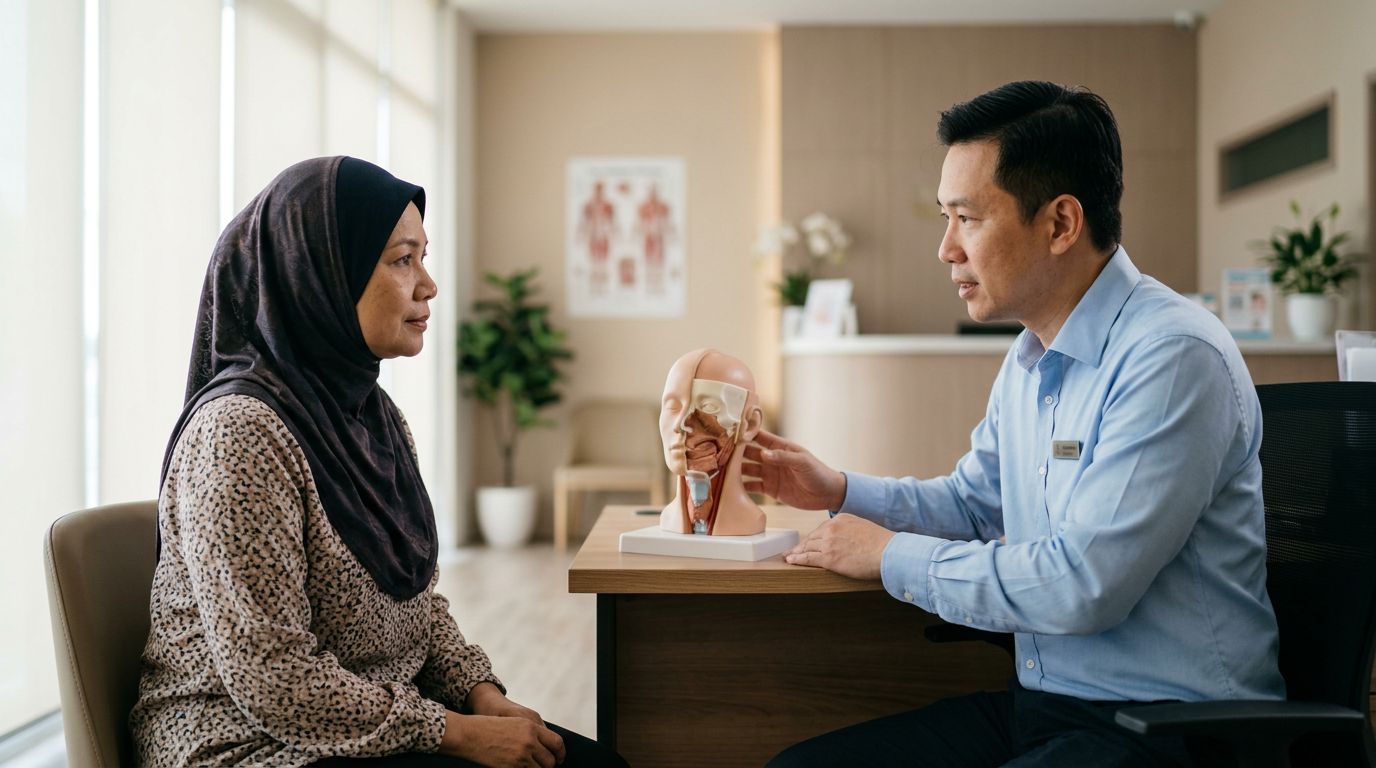
A mammogram Malaysia services provide can find changes in breast tissue before you feel a lump, which is vital for early detection. That makes it an important part of breast cancer screening, especially as your age and personal risk change.
In Malaysia, the right time to book a mammogram depends on whether you have symptoms, a family history, or known genetic risk. You don’t need to wait until you feel unwell to discuss screening with a doctor.
Quick answer: If you are aged 50 to 74 and have average risk, Malaysia’s Ministry of Health recommends a screening mammogram every two years. If you are younger but have a close family history, genetic risk, previous breast condition, or symptoms, speak to a doctor sooner.
Key Takeaways
- For average-risk women aged 50 to 74, a mammogram Malaysia screening program is generally recommended every two years as part of routine breast cancer screening.
- A new lump or thickening, nipple discharge, skin changes, or persistent breast pain requires a prompt medical assessment, regardless of your age.
- Your doctor may suggest earlier or more frequent screening if you have a family history involving a first-degree relative with breast cancer or a known inherited gene mutation.
- A mammogram is a screening test. An unusual result does not confirm a cancer diagnosis.
- If breast cancer is diagnosed, your cancer treatment plan should follow scans, biopsy findings, cancer stages, biomarkers, medical history, and an oncologist’s assessment.
When to Book a Mammogram in Malaysia
For most women with no symptoms and no major breast cancer risk factors, the official screening guidelines from Malaysia’s Ministry of Health recommend mammography every two years between ages 50 and 74. This is called biennial screening. You can review the evidence behind this approach in this Malaysian breast screening policy review.
However, age is only one part of the decision. Your personal and family history matters too. A doctor can help you decide whether you need screening earlier, more often, or with an additional diagnostic tool such as a breast ultrasound or MRI. Many screening facilities in Kuala Lumpur and other major urban areas offer these advanced imaging options for a more comprehensive check.
The general guide below can help you start the conversation.
| Your situation | When to discuss a mammogram |
|---|---|
| You are 50 to 74 with average risk and no symptoms | Book every two years |
| You are a woman aged 40 to 49 with a mother, sister, or daughter diagnosed with breast cancer | Ask about annual screening |
| You have a BRCA1, BRCA2, or PALB2 mutation | Ask a breast specialist about annual MRI and mammography |
| You have had chest radiotherapy at a young age | Ask for a personalised screening schedule |
| You notice a breast symptom at any age | Book a medical review promptly |
For women aged 40 to 49 with average risk, routine screening is not automatically recommended under the national screening guidelines. Still, your preferences and concerns matter. A doctor can explain the chance of finding an early cancer alongside the possibility of false alarms and extra tests.
Private hospitals may use different screening schedules. For example, some providers recommend annual mammograms starting from age 40 or 45. The breast cancer screening guidance from Sunway Cancer Centre outlines how screening schedules can differ for women at higher risk.
If you have a concerning breast change, don’t wait for your next scheduled screening date. You need a clinical assessment and possibly diagnostic imaging.
Breast Symptoms and Signs of Breast Disease
Breast cancer symptoms do not always indicate cancer, as cysts, hormonal shifts, infections, and harmless tissue changes can cause similar signs. Still, you should arrange an appointment if a change is new, persistent, or worsening, as these could be early indicators of breast disease.
Pay close attention to any lump or thickening in your breast, armpit, or near the collarbone. A suspicious area may feel firm, fixed, or distinct from the surrounding tissue. Keep in mind that some breast cancers are not painful, while many non-cancerous lumps can feel tender.
Other changes that need professional evaluation include:
- A nipple that turns inward when it was not previously inverted
- Blood-stained or clear nipple discharge that should be evaluated by a healthcare professional
- Skin dimpling, thickening, redness, or a rash that does not resolve
- A noticeable change in breast size, shape, or contour
- Persistent pain localized to one specific area
- Swelling in the breast or underarm
A routine mammogram is intended for people without symptoms. If you exhibit signs of potential breast disease, your doctor may arrange a diagnostic mammogram and a breast ultrasound to get a clearer picture. Depending on your age and the specific findings, you may require a biopsy for further investigation.
Practicing breast self-examination is useful because it helps you understand what is normal for your body. However, this practice does not replace a clinical breast examination or formal mammography. Malaysia’s public health programme offers clinical breast examination for women aged 30 and above at Ministry of Health facilities, providing a professional referral if the examination reveals anything unusual.

What Happens During a Mammogram Appointment
A mammogram is a low-dose X-ray examination of the breast. During the procedure, a radiographer places one breast at a time between two plates for a few seconds. The gentle but firm compression spreads the breast tissue out, which helps produce clearer images for an accurate diagnosis. Many facilities now offer advanced options like a 3D mammogram, also known as digital tomosynthesis, which provides a more detailed view of the breast tissue. You may wish to check with your preferred health screening centre to see if these advanced imaging technologies are available.
Most appointments take about 20 to 30 minutes, though the actual imaging process is much shorter. You may feel pressure or brief discomfort, but please tell the radiographer if it becomes painful. They can guide you through the positioning and pause if needed.
Try to book your appointment when your breasts are least tender, if you still have menstrual periods. Many women prefer the week after their period ends. On the day of your visit, avoid using deodorant, talcum powder, lotion, or perfume around your breasts and underarms because some ingredients in these products can affect the quality of the image.
Wear a two-piece outfit, as you will need to remove your clothing from the waist up. Bring any previous mammogram images and reports if you have had screening done at another facility. Comparing older images can help the radiologist identify whether a change is new or has been present for some time.
You may hear terms such as dense breasts during your consultation. Dense breast tissue is common, particularly before menopause, and it can make mammograms harder to interpret. While dense tissue is also linked with a higher breast cancer risk, it does not mean you have cancer. Your doctor may discuss whether an additional ultrasound or MRI scan for cancer is appropriate for your specific health situation.
How Your Risk Affects Mammogram Timing
Your screening schedule should be tailored to your specific risk level, rather than just your age. If you have a family history of breast cancer, particularly if a first-degree relative (a mother, sister, daughter, or father) was diagnosed at a younger age, you may be considered to be in a moderate-risk group.
High risk patients, including those with a confirmed BRCA1, BRCA2, or PALB2 mutation, a strong family pattern of breast or ovarian cancer, or previous radiotherapy to the chest, require a more proactive approach. Genetic testing can clarify inherited risks in selected families, though it is not necessary for everyone. For these individuals, a professional health screening centre might tailor specific surveillance plans. Your doctor may recommend an annual MRI breasts exam starting at a younger age, with mammography added at the appropriate time. While MRI breasts scans are often more sensitive in dense breast tissue, they can occasionally detect changes that later prove to be harmless.
Your family history should be discussed clearly during your consultation. It is helpful to write down which relative had cancer, the type of cancer, and their age at diagnosis if known. This detailed family history helps your doctor decide whether you need genetic counselling, earlier imaging, or a referral to a cancer specialist.
Screening recommendations also change over time. A new diagnosis in your family, an abnormal prior mammogram, or a genetic test result may mean you need an updated plan. Research on mammogram uptake in Malaysia also reflects the national guidance for low-risk women aged 50 to 74.
If Your Mammogram Shows an Abnormality
An abnormal mammogram result can feel alarming, but it is not the same as a cancer diagnosis. Many findings turn out to be benign. The report may describe a cyst, calcification, fibroadenoma, asymmetry, or an area that needs clearer pictures. These findings often help medical professionals differentiate between normal changes in your breast tissue and signs of breast disease.
Your next step may be additional mammogram views, a breast ultrasound, an MRI, or a breast biopsy. These procedures act as an essential diagnostic tool to investigate findings further. A breast biopsy removes a small sample of tissue so a pathologist can examine the cells, as only pathology can confirm whether cancer is present.
If testing confirms breast cancer, your medical team will assess the cancer stages. Staging often uses the tumour size, lymph node involvement, and whether scans show spread elsewhere. A CT scan for cancer, PET scan for cancer, MRI, blood tests, and tumour marker tests may be used when clinically appropriate, though these tests are not required for every patient.
Your pathology report review should also cover hormone receptors, HER2 status, tumour grade, and other biomarker testing where suitable. These results influence breast cancer treatment options, as a tumour’s features matter as much as its location.
Treatment may involve cancer surgery, chemotherapy, radiotherapy, hormone therapy, targeted therapy, or immunotherapy. Some people need one treatment, while others need a sequence. Your oncologist will recommend care based on cancer stage, biopsy and pathology findings, biomarkers, scans, general health, hospital availability, and your own treatment priorities.
Mammogram Cost and Where You Can Book
Mammogram Malaysia costs can vary significantly based on the facility, your location, and whether your selected screening package includes additional diagnostic tools like an ultrasound. If you are budgeting for your healthcare, it is always wise to request a written estimate from your chosen health screening centre before your appointment.
You can book your screening through various providers, including public hospitals, private medical centres, and specialized diagnostic imaging clinics. For those based in Kuala Lumpur, there are numerous high-quality screening facilities that offer comprehensive check-ups. Additionally, the National Population and Family Development Board, or LPPKN, offers a mammogram subsidy programme for eligible women aged 40 to 70. This initiative helps make essential preventative care more accessible, though it remains subject to current criteria and the availability of participating providers.
When comparing different screening facilities, verify exactly what is included in the price. Ask whether the quoted fee covers the radiologist’s report, a professional clinical breast examination, any necessary breast ultrasound, and a follow-up consultation. Sometimes, a low initial price may exclude essential follow-up imaging, which can lead to unexpected costs later.
While choosing a cancer hospital with a dedicated breast unit is helpful if your results require further investigation, you do not need to select a treatment hospital before you have a confirmed diagnosis. Your primary goal should be to find a reputable provider that offers accurate imaging, clear diagnostic reports, and timely medical advice to ensure your peace of mind.
Questions to Ask After Screening or Diagnosis
A short list can help when you feel rushed or worried. Bring someone you trust if possible, and take notes during your oncology consultation with your healthcare professional.
You may want to ask:
- Is this a screening result or a finding that needs diagnostic testing following a clinical examination?
- What does the mammogram report show, and do I need follow-up imaging like an ultrasound, MRI, 3D mammogram, digital tomosynthesis, or a biopsy?
- If cancer is confirmed, what is the cancer stage and what does my pathology report say?
- Which breast cancer treatment options suit my diagnosis, and why?
- Will I need cancer surgery, chemotherapy, radiation therapy, hormone therapy, targeted therapy, or a combination?
- What is the expected treatment timeline, likely side effects, and cancer treatment quotation?
- Should I seek a cancer second opinion or request a medical report review before starting treatment?
A second opinion can be helpful when your diagnosis is uncommon, treatment choices are complex, or you want reassurance before major surgery. It can also help if you are considering advanced cancer treatment, clinical trials, or overseas cancer treatment. A second opinion should add information, not delay urgent care without reason.
Bring your imaging discs, biopsy results, pathology report, scan reports, treatment summary, and medication list. A cancer treatment plan review is most useful when the reviewing specialist has complete records.
A Mammogram Is One Part of Breast Health
While a mammogram is a vital tool for early detection, it remains just one component of your overall breast health strategy. Mammograms can identify early changes, but they cannot provide a complete picture on their own. Factors such as your clinical examination, breast density, family history, and previous imaging results all provide necessary context for your diagnosis.
If you are eligible for breast cancer screening, be sure to put a regular reminder in your calendar. Should you notice any new or concerning changes, do not wait for a routine checkup; instead, arrange a professional medical review immediately. By staying proactive with your mammogram Malaysia appointments, you can take a significant step toward maintaining your long term health.
Frequently Asked Questions
Can you get a mammogram before age 40 in Malaysia?
Yes, but it typically requires a specific medical reason, such as the presence of symptoms, a strong family history, previous chest radiotherapy, or a known genetic risk. While standard screening guidelines often focus on women aged 40 and above, your doctor may recommend an MRI breasts scan, or an ultrasound, instead of or alongside mammography, depending on your age and breast tissue characteristics.
Can a mammogram detect every breast cancer?
No. Mammograms can miss some cancers, particularly in women with dense breasts. These exams can also show changes that require further investigation even when they are not cancerous. Because of this, you should always report new symptoms to your healthcare provider, even if you recently had a normal mammogram or breast ultrasound.
Should you get a mammogram if you have breast implants?
Yes. Be sure to inform the imaging centre when you book your appointment. The radiographer will use special positioning and extra views to capture as much breast tissue as possible, ensuring a thorough examination despite the presence of implants.
Is ultrasound better than a mammogram?
They serve different purposes. Mammography remains the primary screening tool for many women, whereas ultrasound is often used as a diagnostic tool to assess a specific lump or to clarify an area of concern seen on a mammogram. Your doctor will determine if you need one, or both, of these tests based on your clinical needs.
Do you need a second opinion after a breast cancer diagnosis?
Seeking a second opinion is a valid choice if you want another specialist to review your diagnosis or treatment plan. It is especially reasonable to do so before undergoing complex cancer surgery or when multiple treatment options are available. Simply ask your current medical team for copies of your reports and scans to facilitate the process.
Medical Disclaimer
This content is provided for general information purposes only. It may not be fully verified, current, or applicable to every individual patient, and it is not intended to serve as professional medical advice, a diagnosis, or a specific treatment recommendation.
You should consult your own doctor, oncologist, or qualified healthcare professional before making any medical decision. SureLah does not take responsibility for medical decisions, treatment outcomes, doctor recommendations, hospital choices, or patient actions based on the information provided in this article.