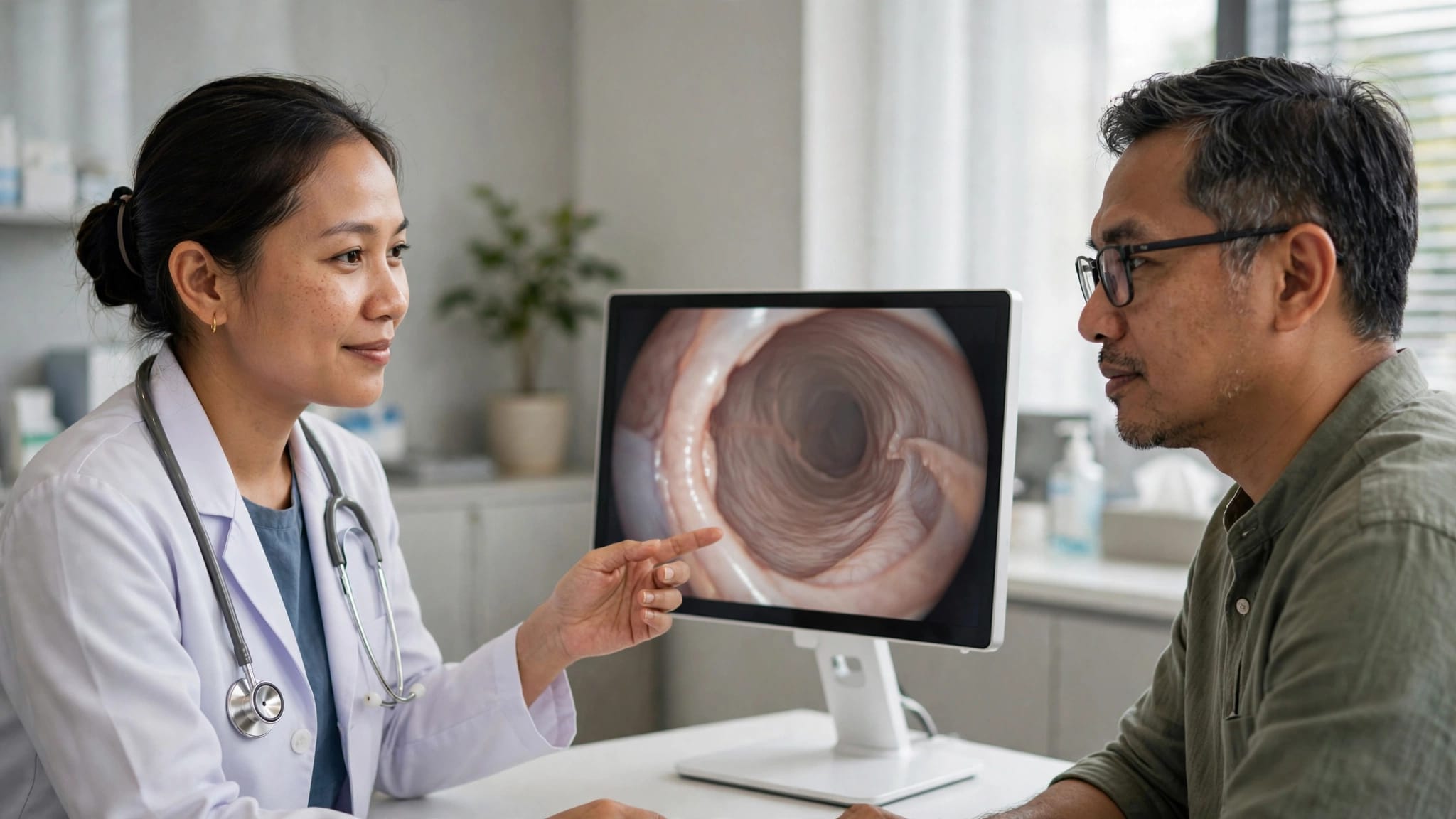
A PSMA PET scan Malaysia search often begins after a prostate cancer diagnosis, a rising prostate specific antigen (PSA) level, or suspected recurrence. It may also be discussed when there’s a specific staging question or uncertainty about whether cancer has spread. It isn’t automatically appropriate after one raised result.
Your urologist or oncologist may discuss PSMA PET-CT alongside your biopsy, pathology, PSA trend, digital rectal examination, MRI, CT, and other findings. The result can help guide staging and cancer treatment decisions, but it won’t replace clinical assessment or specialist advice.
Quick Answer
A PSMA PET CT scan uses a small amount of radioactive tracer, such as Gallium-68 PSMA, to highlight prostate cancer cells carrying prostate-specific membrane antigen. Doctors may discuss it when the disease is high risk, when spread to lymph nodes or bones is a concern, or when PSA rises after surgery or radiotherapy.
Before choosing advanced imaging, a clinician may also consider examination findings, including a digital rectal examination where clinically appropriate.
The scan can support cancer detection and staging of suspicious disease, but it can’t confirm prostate cancer on its own. A prostate biopsy and pathology report remain necessary to confirm cancer and describe its Grade Group or Gleason score.

5 Key Takeaways
- PSMA PET-CT is usually discussed after prostate cancer is confirmed or recurrence is suspected, rather than after one raised PSA result.
- The scan may identify disease in lymph nodes, bones, or other areas that conventional imaging does not show clearly. It also has limits and may not show every cancer focus.
- A publicly advertised Malaysian example is RM3,500 at Sunway Cancer Centre. Prices, inclusions, quotations, and availability must be confirmed directly.
- Preparation instructions differ by centre, so follow the nuclear medicine department’s written advice rather than general online rules.
- A second specialist opinion may confirm your current plan, clarify scan findings, or suggest further assessment. It doesn’t guarantee a different treatment outcome.
What a PSMA PET-CT Scan Shows
PSMA stands for prostate specific membrane antigen, a protein that may be present at higher levels on many prostate cancer cells. A radiotracer attaches to PSMA, and a PET CT scan detects where it collects. CT supplies anatomical detail, making this a diagnostic imaging test rather than a biopsy or treatment.
It can help assess cancer spread
A PSMA PET scan may show prostate cancer in pelvic lymph nodes, bone metastases, and other distant sites. The Mayo Clinic explanation of PSMA PET notes that the scan can identify spread to lymph nodes and other parts of the body.
This information may change how your team describes your cancer stages. It can also help them decide whether radiation therapy, another local treatment, systemic treatment, or further tests should be discussed.
It has limits that matter
PSMA uptake is not always cancer. Some non-cancerous tissues and conditions can show tracer activity. Very small deposits may also remain below the scanner’s detection limit.
A clear scan doesn’t prove that no cancer exists. Likewise, an abnormal area needs interpretation alongside your PSA, biopsy findings, previous scans, symptoms, and medical history.
A PSMA PET-CT result is one part of staging. It does not replace a biopsy, pathology report, MRI, or discussion with the specialists managing your care.
When Doctors May Discuss a PSMA PET Scan Malaysia
The EANM/SNMMI PSMA PET/CT guideline describes standards for when and how a PSMA PET CT scan is used in prostate cancer. Your doctor will decide whether the likely information gained is useful for your next decision. The scan may inform staging and treatment discussions, but it doesn’t independently select a treatment.
At initial staging for higher-risk disease
After a biopsy confirms prostate cancer, a PSMA PET-CT may be considered when findings suggest a greater risk of spread. Doctors may consider PSA trends, biopsy pathology, Grade Group, MRI findings, digital rectal examination results, and possible lymph node involvement.
It is not routinely required for every localised prostate cancer. Men with low-risk disease may instead discuss active surveillance, repeat PSA testing, MRI follow-up, or other appropriate prostate cancer treatment options.
When PSA rises after previous treatment
PSA should usually fall to a very low level after prostate removal. After radiotherapy, the pattern differs, but a rising PSA can still lead to further assessment. Doctors call this biochemical recurrence.
In that setting, PSMA imaging may help locate possible recurrent disease before a treatment plan review. Findings can influence discussions about salvage radiation therapy, systemic treatment, further imaging, or observation.
When conventional scans leave questions
CT scans and bone scans remain useful in many situations. Other contrast imaging may also help answer specific clinical questions.
However, a review of PSMA PET imaging reports better accuracy than conventional CT and bone scanning for high-risk prostate cancer in selected patients.
That does not mean PSMA PET is automatically better for every purpose. Scan availability, image quality, specialist reporting, and your clinical question all matter.
Malaysian Hospitals, Access, and Published Costs
Several private centres publicly advertise Gallium-68 PSMA PET-CT services.
Availability can change because these scans depend on tracer supply, nuclear medicine scheduling, equipment, and trained staff. Ask whether the scan is available on your preferred date. Confirm that it performs the specific PSMA study your doctor requested.
Published prices below are advertised figures, not guaranteed quotations. Package inclusions may vary.
| Centre or source | Publicly available information | What to confirm directly |
|---|---|---|
| Sunway Cancer Centre | A Ga-68 PSMA PET CT scan package is listed at RM3,500. | Whether the current package includes consultation, reporting, CT contrast, or extra charges. |
| Beacon Hospital | A My1Health listing quotes RM3,400 for a combined Ga-68 PSMA/Dotatate PET-CT listing. | The current PSMA-only price and what the quotation covers. |
| Pantai Hospital Kuala Lumpur | Its nuclear diagnostic centre advertises PSMA PET-CT. | Current price, tracer availability, and reporting time. |
| Mahkota Medical Centre | Its PET-CT centre advertises a Ga-68 PSMA PET-CT service. | Price, referral process, and appointment wait time. |
Before booking, ask the hospital or oncology centre to confirm the service and referral process. Confirm tracer supply, reporting arrangements, and the total quotation directly.
A cancer treatment cost estimate should include the scan, radiotracer, radiologist report, consultation, contrast if needed, and any follow-up appointment. Insurance cover, panel status, and pre-authorisation rules vary by policy, so contact your insurer before booking.
Preparing for Your Appointment
Your hospital will provide written preparation guidelines from the nuclear medicine team. Follow those instructions carefully. Do not stop prescribed medicines or change diabetic treatment unless the team caring for you tells you to do so.
Food, fluids, and medicines
Preparation differs between PET tracers, and fasting hours vary by tracer and centre. Do not assume fasting is needed for every Gallium-68 PSMA appointment. Sunway Cancer Centre’s patient information states that no specific preparation is needed, patients can eat normally, and good hydration is encouraged before and after the scan.
Bring your referral letter, PSA results, biopsy and pathology reports, medication list, and prior MRI, CT, bone scan, or PET images. Original image files, often supplied on a disc or secure link, can help the reporting doctor compare changes over time.
Questions for people with diabetes
Diabetes does not automatically prevent a PSMA PET-CT scan. Still, tell the centre about insulin, tablets, continuous glucose monitors, kidney problems, and any recent illness.
Ask whether you should eat normally, whether medication timing needs adjustment, and what glucose information the team needs on arrival. This protects you from avoidable low blood sugar and helps the department prepare safely.

What Happens During the Scan
A staff member injects the tracer into a vein, then you wait while it circulates. At Sunway, published information describes an approximate 50-minute wait after injection and a scan lasting around 10 to 15 minutes. Timings may vary by provider.
You lie still on a padded table while it moves through the scanner for the PET CT scan. The scan is painless, although holding still can be uncomfortable if you have back or hip pain. Let staff know before the appointment if you’re claustrophobic, have difficulty lying flat, or need mobility support.
Radiation and tracer safety
The scan exposes you to radiation from both the tracer and the CT component. This is different from radiation therapy, which is a treatment rather than an imaging scan. Nuclear medicine teams plan the study to obtain useful images while managing radiation exposure. The IAEA clinical PET-CT information explains the wider role of PET-CT and molecular imaging in cancer care.
After the scan, staff may advise you to drink fluids and pass urine often to help clear the tracer. Follow your centre’s instructions about close contact with young children or pregnant people for the rest of the day.
When results are ready
The radiologist or nuclear medicine physician needs time to review the images and compare them with your other records. No consistent public reporting timeframe is available across Malaysian providers.
Ask when the written report will be released, who will explain it, and whether your urologist or oncologist will receive the images directly. A report should lead to a clinical discussion, not a rushed decision based on a single phrase.
Using the Result in Treatment Planning
PSMA PET findings may affect diagnosis and treatment planning, but they don’t decide treatment alone. Your team may consider the primary tumour’s location, PSA trend, biopsy and pathology findings, Grade Group, scans, and stage. Specialist assessment also weighs prior surgery or radiotherapy, other health conditions, and your preferences.
Where available, a multidisciplinary team may review these findings together. This may include urology, medical oncology, radiation oncology, radiology or nuclear medicine, and other relevant specialists.
Discussing treatment options after staging
For disease limited to the prostate, options may include active surveillance, cancer surgery, radiation therapy, brachytherapy, or hormone therapy in selected situations. If cancer has spread, your oncologist may discuss systemic approaches. These may include hormone therapy, chemotherapy, targeted therapy, or other advanced cancer treatment where medically appropriate.
For advanced cancer, options depend on the extent of disease, prior treatment, overall health, and specialist review.
For a clear overview of pathways you may discuss with your treating team, Explore Cancer Treatment Options. This is an informational and medical-travel coordination resource, not a treatment recommendation.
Reviewing records or seeking another perspective
A cancer second opinion can be useful if staging is unclear, if treatment choices feel difficult, or if you are considering care at another hospital. Another qualified specialist may confirm the original plan, explain it more clearly, request further assessment, or identify an appropriate alternative approach.
Organised records make an oncology consultation more productive. If you need help preparing scans, pathology documents, and treatment history for external review, Explore Medical Report Review Support.
Different hospitals may have different imaging services, radiotherapy technologies, specialist teams, costs, and waiting times. If you are considering care abroad, Explore Overseas Hospital Options for hospital-enquiry and medical-travel coordination support. Overseas cancer treatment is not automatically more suitable than treatment available in Malaysia.
Questions to Ask Before You Book
- Why is a PSMA PET-CT being recommended for my situation, and what decision could it help us make?
- Has my prostate cancer diagnosis been confirmed by biopsy and pathology?
- If the initial assessment is incomplete, would a digital rectal examination or another clinical assessment be needed before the scan?
- Could the scan result change my cancer staging or treatment discussions?
- Which tracer will be used, and do I need to alter food, fluids, or medicines?
- What is the full quoted cost, including the tracer, scan, report, consultation, and contrast?
- When will my report be ready, and which cancer specialist will interpret it with me?
- Would a cancer second opinion or treatment plan review be reasonable before I choose treatment?
If you need coordination support for an independent specialist review, Explore Cancer Second Opinion Support. This coordination support is not the medical opinion. A qualified doctor must review your full clinical records before providing advice.
Frequently Asked Questions
Is a PSMA PET scan needed for every patient with a high PSA or prostate cancer?
No. A high PSA alone doesn’t automatically justify PSMA imaging. Suitability depends on the PSA trend, biopsy and pathology findings, MRI or other scans, cancer stage, previous treatment, overall health, and specialist assessment. Doctors usually consider whether the scan can answer a specific clinical question.
Can a PSMA PET scan replace a prostate biopsy?
No. The scan can show areas suspicious for prostate cancer or possible spread, but it can’t confirm cancer cells. A biopsy and pathology report are needed to confirm cancer and describe its grade.
Is the scan painful?
The injection may cause brief discomfort. Otherwise, the scan is usually painless. You need to remain still during imaging, so tell staff if pain or anxiety may make that difficult.
Will a PSMA PET scan show every cancer deposit?
No imaging test finds every deposit. Very small areas may not be visible, and some findings remain uncertain. Your care team interprets the scan alongside other tests and clinical information.
What should I confirm before booking a PSMA PET scan in Malaysia?
Ask which tracer will be used and what preparation is required. Also confirm the total quotation, reporting arrangements, and whether a referral or specific medical documents are needed.
A Clearer Next Step After PSMA PET
A PSMA PET scan can bring useful detail to a difficult prostate cancer decision. Its value depends on how well it answers a specific question about staging, recurrence, or treatment planning. The scan does not determine treatment by itself, and specialist interpretation remains essential.
Keep copies of your report, images, PSA results, pathology, and referral letters. With a complete record, you can have a more focused discussion about cancer treatment options with your own urologist or oncologist. Depending on your circumstances, these may include surgery, radiation therapy, systemic treatment, or observation.
Medical disclaimer: This article is for general educational information only and may not apply to every patient. It is not medical advice, a diagnosis, or a treatment recommendation. Cancer treatment decisions depend on individual clinical circumstances, including pathology, scans, stage, prior treatment, overall health, and specialist assessment. Consult your own doctor, oncologist, or qualified healthcare professional before making medical decisions.