Food getting stuck on the way down can be unsettling. If swallowing has become difficult, an esophageal cancer diagnosis in Malaysia usually starts with an upper endoscopy, followed by a biopsy if your specialist finds an area of concern. For suspected oesophageal cancer, the biopsy confirms what the tissue is; staging tests show how far a confirmed cancer has grown or spread.
Many other conditions can cause swallowing problems, so symptoms alone cannot tell you whether you have cancer. Knowing what each test does can help you prepare for the next appointment.
Quick Answer
Your doctor may recommend an upper endoscopy to look inside your oesophagus, the tube that carries food to your stomach. During the procedure, the specialist can take small tissue samples for a pathologist to examine. If the biopsy confirms cancer, scans and sometimes endoscopic ultrasound help determine its stage.
The exact tests depend on your symptoms, biopsy findings, general health and specialist assessment. You may not need every test described here.
Key Takeaways
- Persistent difficulty swallowing deserves medical assessment, especially if it worsens or comes with unexplained weight loss.
- Upper endoscopy lets a specialist inspect the oesophagus and take a biopsy; appearance alone cannot confirm cancer.
- A pathology report identifies the cancer type, while staging assesses its extent.
- CT, PET/CT and endoscopic ultrasound answer different questions, so your specialist selects them for your situation.
- In Malaysia, ask for test dates, an itemised cost estimate and copies of your reports.
When swallowing symptoms need a closer look
Possible signs and symptoms of esophageal cancer include food feeling stuck, pain when swallowing, persistent chest discomfort, regurgitation or weight loss without an obvious reason. Symptoms may become more noticeable as the passage through the oesophagus narrows. Reflux and other non-cancerous conditions can cause similar problems, so a medical assessment matters more than guessing the cause.
Contact a doctor if swallowing difficulty persists or gets worse. Seek urgent care if you cannot swallow liquids or saliva, become dehydrated, vomit blood or develop severe symptoms. Tell the clinician when the problem began and whether solids, liquids or both are difficult to swallow.
Two main types are squamous cell carcinoma, which develops from cells lining the oesophagus, and adenocarcinoma, which often develops in its lower portion. Smoking and alcohol consumption are risk factors, particularly for squamous cell cancer. Long-standing reflux and Barrett’s oesophagus are linked to adenocarcinoma. In this condition, some cells lining the lower oesophagus change after prolonged acid exposure; most people with it do not develop cancer.
Oesophageal cancer is less common in Malaysia than several leading cancer types, as discussed in a review of its burden in Malaysia. Even so, your symptoms need attention regardless of how common a disease is.
How endoscopy starts an esophageal cancer diagnosis in Malaysia
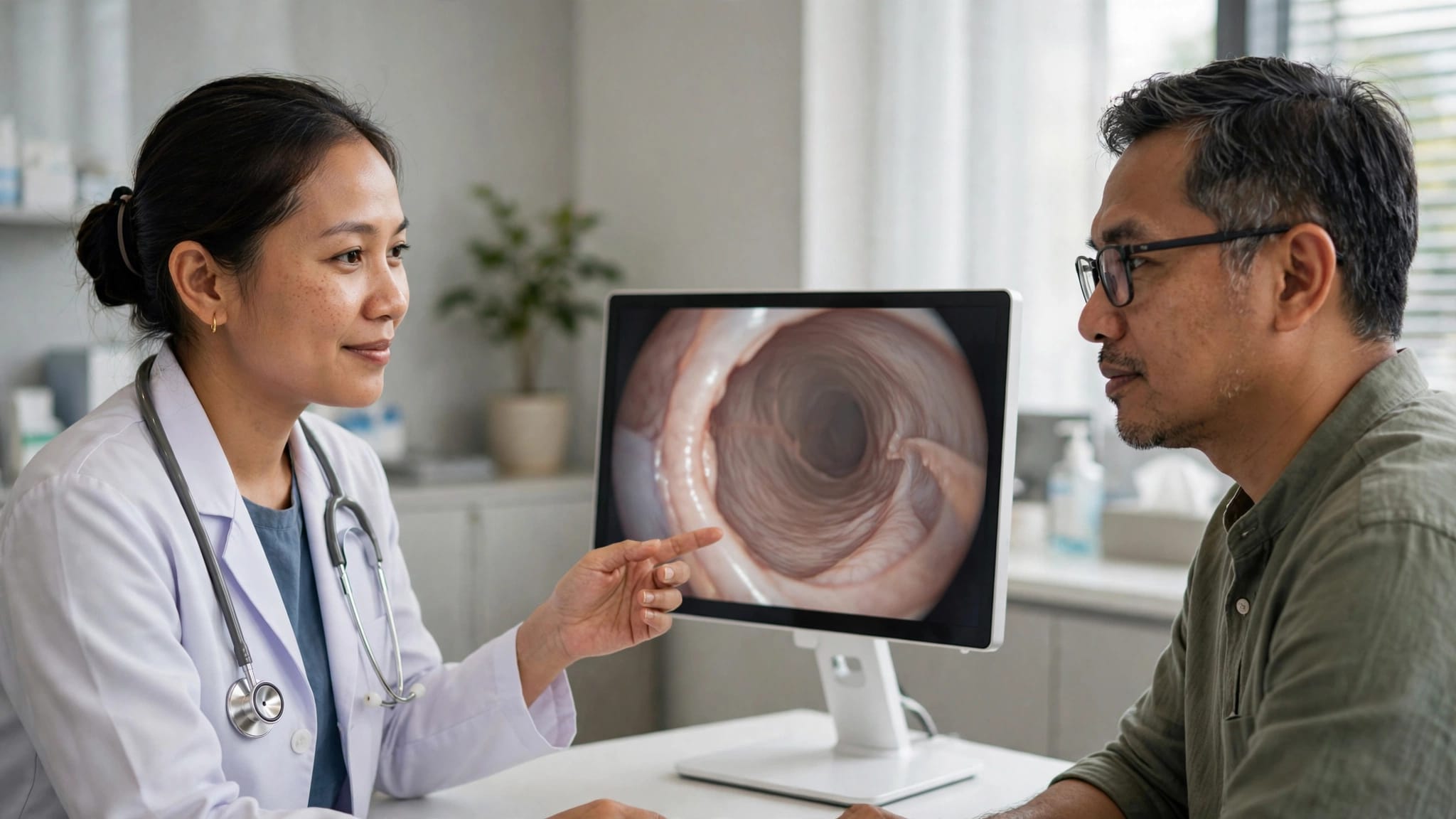
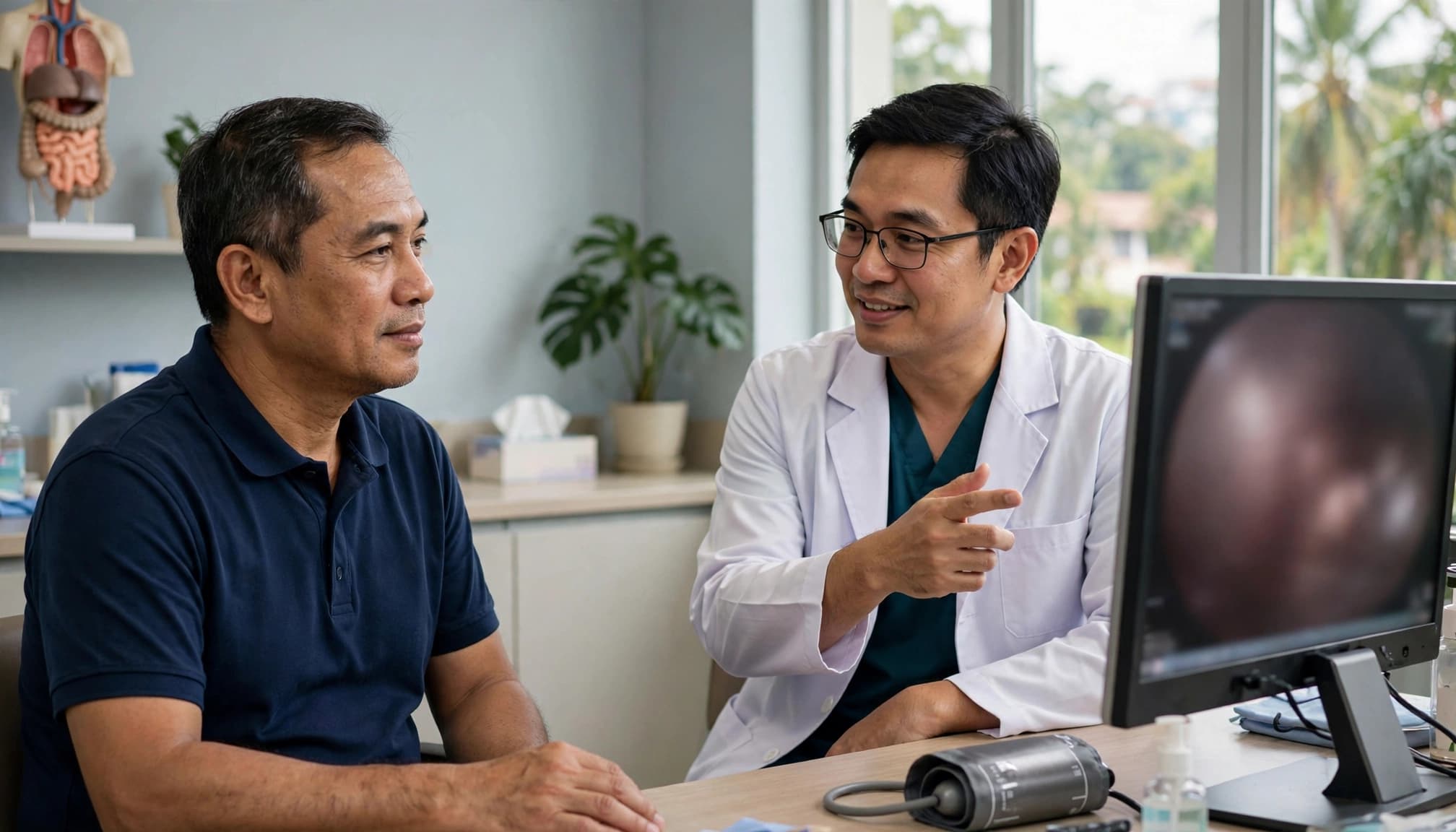
An upper endoscopy, also called gastroscopy or OGDS, is usually the main test when a specialist needs to inspect the oesophagus. It provides a direct view and allows a biopsy during the same procedure.
What happens during the procedure
A specialist passes a thin, flexible camera through your mouth and down your throat. They look for narrowing, inflammation or an abnormal area. If anything needs checking, they take small tissue samples through the scope. According to an esophageal cancer work-up overview, endoscopy with biopsy is the primary way to establish the diagnosis.
You may receive throat-numbing medicine, sedation or both, depending on the facility and your clinical needs. Ask beforehand whether someone must accompany you home, particularly if you will have sedation. The team should explain the procedure’s benefits and risks before you consent.
What to tell the endoscopy team
Mention blood-thinning medicines, diabetes medicines, allergies, previous sedation problems and any difficulty swallowing liquids. Follow the facility’s fasting instructions rather than assuming the same rules apply everywhere. Don’t stop a prescribed medicine unless your treating team tells you how to manage it.
A barium swallow, which uses X-rays after you drink a contrast liquid, may show where swallowing is obstructed. It can help in selected situations, but it cannot provide the tissue sample needed to confirm cancer.
What your biopsy and pathology report mean
Seeing an abnormal area on a camera doesn’t confirm cancer. A pathologist examines the tissue sample under a microscope to check for cancer cells.
What the report can establish
The report may identify squamous cell carcinoma or adenocarcinoma and describe other findings in the sampled tissue. Your specialist will explain how the result fits with the endoscopy findings. A small sample may not answer every question about the tumour, so further sampling or review may sometimes be needed.
A biopsy confirms the type of tissue sampled. It doesn’t, by itself, show whether cancer has spread to lymph nodes or distant organs. That requires a separate staging assessment.
If the result is unclear or takes longer
Ask when the report is expected and who will contact you. Turnaround varies with the hospital, laboratory workload and any additional tests. If your symptoms continue despite an inconclusive result, return to your specialist rather than treating it as a final answer.
Keep the endoscopy and pathology reports together. If another specialist needs to review the diagnosis, ask the hospital how to obtain the relevant slides or tissue blocks as well.
How doctors determine the cancer stage
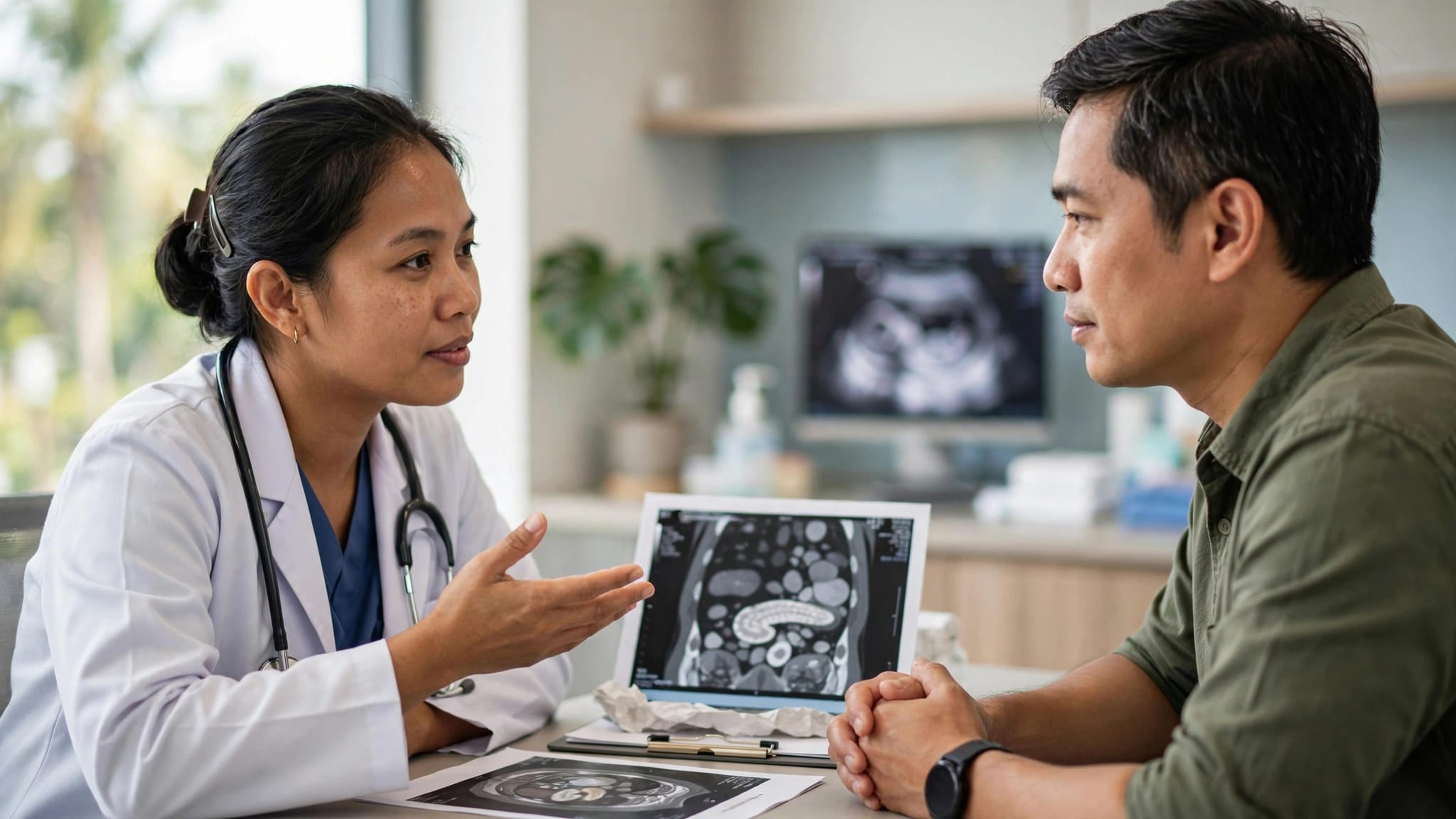
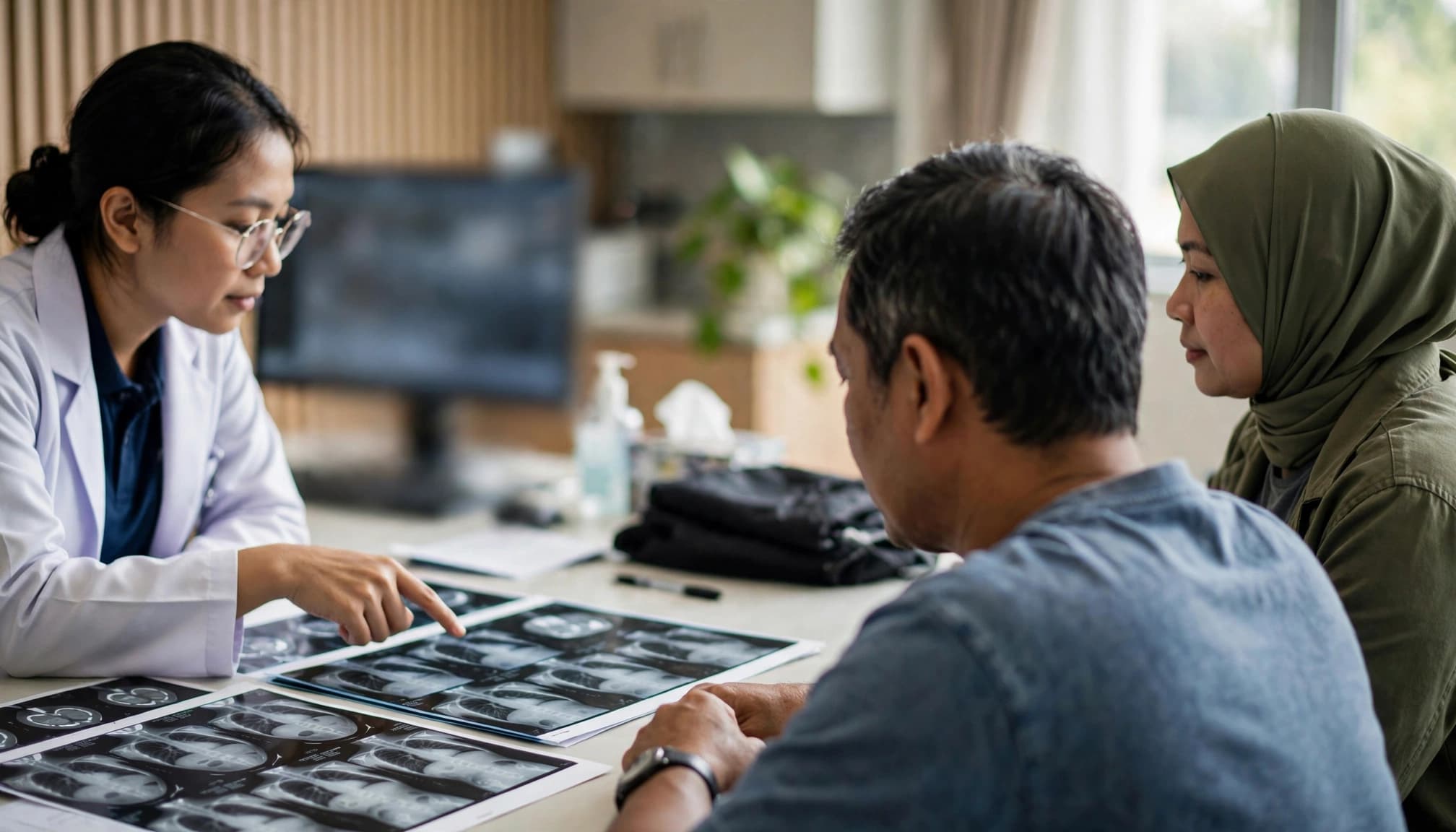
Staging describes how far cancer has grown into the oesophageal wall, whether nearby lymph nodes are involved and whether it has reached distant organs. Your team may use several tests because each shows a different part of the picture. Some tests may overlap while a biopsy result is pending.
Endoscopic ultrasound checks nearby structures
Endoscopic ultrasound, or EUS, combines an endoscope with ultrasound. It helps the specialist assess how deeply a tumour may have grown and check nearby lymph nodes. In some cases, the specialist can use a fine needle to sample a suspicious node.
An endoscopic ultrasound staging review describes EUS as particularly useful for assessing the tumour and nearby nodes. It may be less suitable if a tight narrowing prevents the scope from passing. Your specialist will decide whether it could change the next step in your care.
CT and PET/CT look further afield
Computed tomography (CT) creates detailed images of areas such as the chest and abdomen. A PET/CT scan can help investigate possible cancer activity elsewhere when your doctor thinks it is needed. The American Cancer Society’s diagnosis and staging guide explains how these tests help assess spread.
In selected cases, bronchoscopy may be considered if the tumour’s position makes it important to assess the airway. It is not a routine test for everyone, and your specialist will decide which tests are appropriate.
An unusual spot on a scan does not always mean cancer. Your team may compare earlier images, arrange another test or sample an area before making a major treatment decision. Ask your specialist which results are confirmed and which remain uncertain.
Getting tests and results in Malaysia
Your first appointment may be with a GP, Klinik Kesihatan clinician, gastroenterologist or hospital specialist. The referral route depends on your symptoms and whether you use public, university or private services. Tell the clinician clearly if swallowing has worsened or you’re struggling to eat or drink.
Ask for a date-based plan
Before leaving an appointment, find out when the endoscopy can happen, when the biopsy result is expected and who will explain it. If cancer is confirmed, ask who will coordinate staging and your referral to oncology services. Dates depend on clinical urgency, available appointments and the tests you need. No single Malaysian waiting-time estimate applies to everyone.
Public and private hospitals may differ in referral requirements, specialist access and appointment systems. If you change facilities, request copies of your reports and scan images so the next team can see what’s already been done.
Check the full cost, not only the test fee
Ask for a written estimate that separates consultation, endoscopy, sedation, biopsy and pathology charges. If staging is needed, request separate prices for CT, PET/CT or EUS where applicable. Confirm whether follow-up visits, additional tissue tests and admission are included.
Check insurance pre-authorisation, panel requirements and outpatient coverage directly with your insurer. If costs are difficult to manage, ask the hospital about billing advice or financial support. The National Cancer Society of Malaysia’s policy brief also highlights that referral circumstances can affect charges at public hospitals, so verify how your own referral will be classified.
What happens after staging
Once the diagnosis and stage are clear enough, your team can discuss cancer treatment options. Depending on the tumour and your health, these may include surgery, radiation therapy, chemotherapy or combinations given in a particular order. Selected patients may also be assessed for immunotherapy or targeted therapy, sometimes with further testing of tumour tissue.
Ask your specialist what the proposed treatment is intended to do, why that sequence suits your case and which findings could change the plan. The stage may be updated if later tests or surgery provide new information.
If the pathology is unclear or you face a major treatment decision, a cancer second opinion may help. Another qualified specialist may confirm the existing plan, clarify it or suggest further assessment. It doesn’t mean your first doctor was wrong. Gather your biopsy report, endoscopy findings, scan reports and images before requesting a review, and discuss the timing with your team so it doesn’t delay urgent care.
Frequently Asked Questions
Can a scan diagnose esophageal cancer without a biopsy?
A scan may show a suspicious area, but a biopsy is generally needed to confirm whether it is cancer and identify the type. Your specialist will explain if taking a sample is difficult or unsafe in your circumstances.
Does everyone need an endoscopic ultrasound?
No. EUS is useful when a closer look at tumour depth or nearby lymph nodes could affect treatment planning. Your specialist may choose other tests if EUS is unsuitable or unlikely to add useful information.
How long do biopsy and staging results take in Malaysia?
There is no reliable single timeframe. It depends on the laboratory, additional testing, scan availability and clinical urgency. Ask for an expected date and a contact number if you have not heard back.
Should you seek another opinion before treatment?
You can discuss one if you need clarification about pathology, stage or treatment choices. Ask your current team whether waiting for a review is medically safe, especially if symptoms are worsening or treatment is time-sensitive.
A clear diagnosis gives you a clearer next step
Difficulty swallowing needs an explanation, but it doesn’t reveal the cause on its own. Endoscopy helps your specialist see the problem, biopsy checks the tissue and staging tests guide the discussion that follows.
Keep your reports, ask which findings remain uncertain and make sure you know who will explain the next result. Your own test results matter more than a standard list of tests.
This article is for general educational purposes only and may not apply to every patient. It is not medical advice, a diagnosis or a treatment recommendation. Consult your own doctor, oncologist or another qualified healthcare professional before making medical decisions.