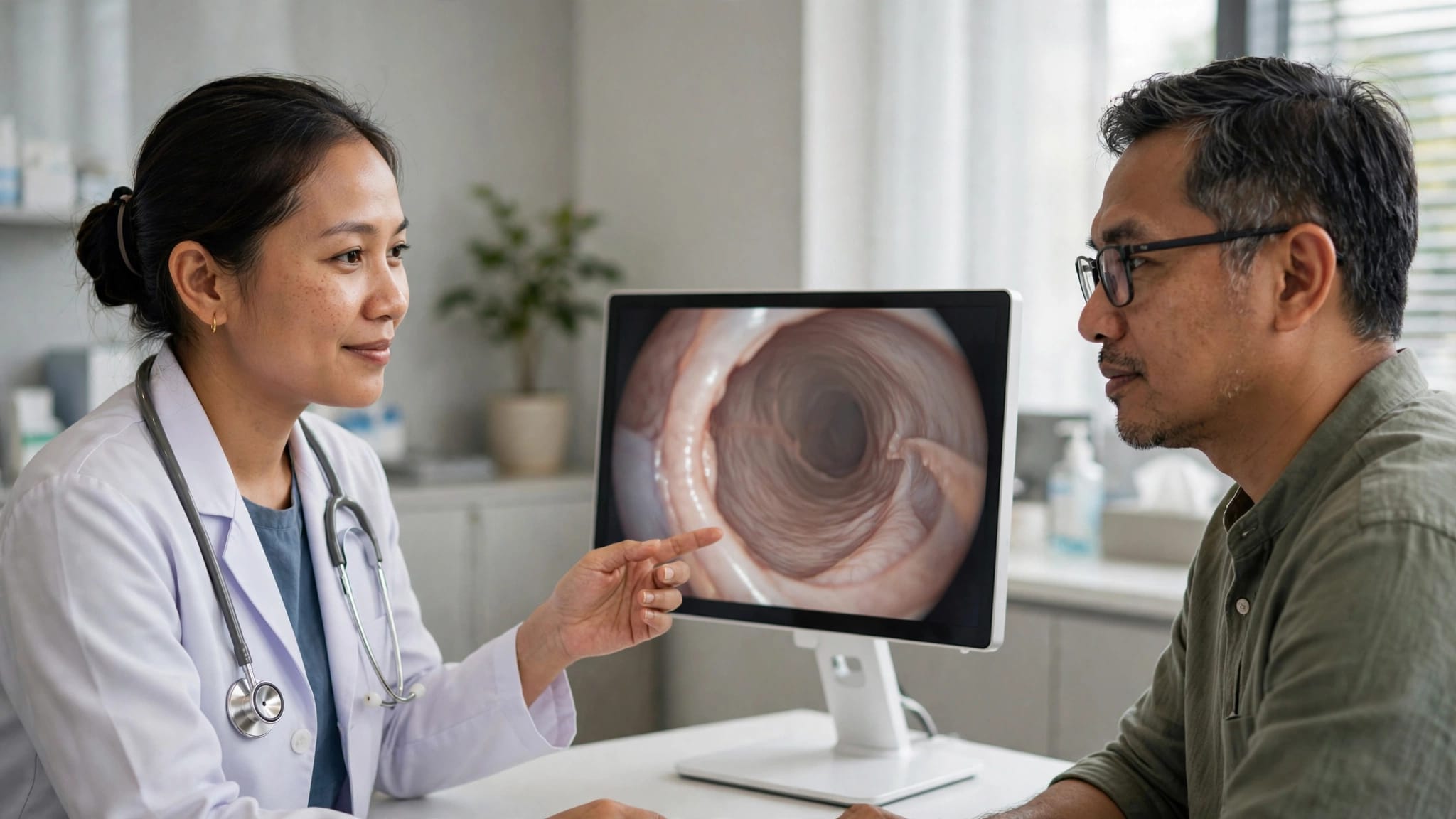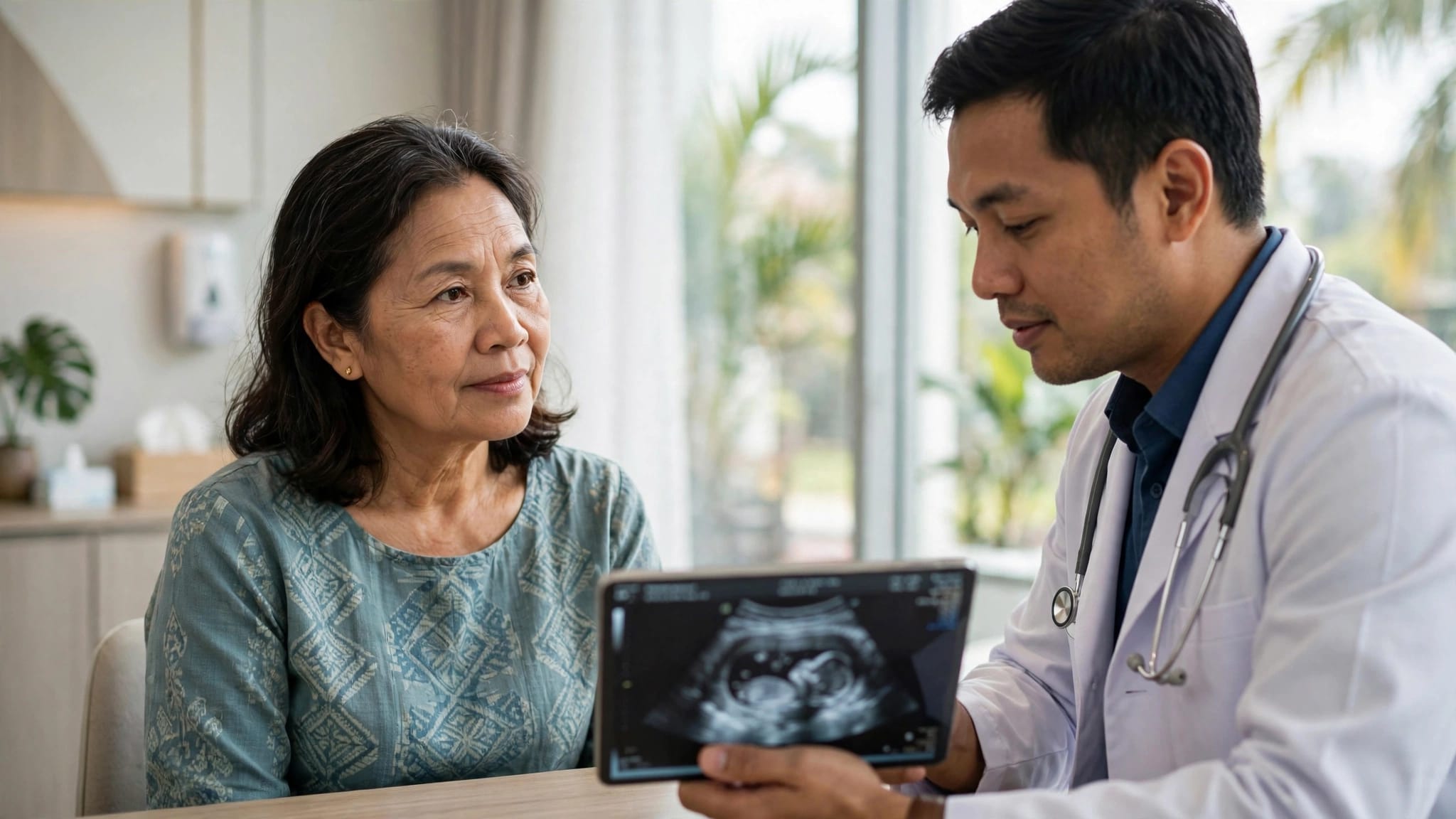
Recognizing early lung cancer symptoms Malaysia residents should be aware of is vital for timely medical intervention. A cough often follows a cold, haze exposure, or a chest infection, but a persistent cough that changes or involves coughing up blood deserves a professional medical check, particularly if you have a history of smoking.
Quick answer: Lung cancer symptoms in Malaysia can include a persistent cough, coughing up blood, chest pain, unexplained breathlessness, repeated chest infections, unexplained weight loss, and unusual fatigue. These symptoms do not always mean cancer, but early assessment can clarify the cause and help you move forward with the right care.
Key Takeaways
- A persistent cough lasting more than a few weeks, particularly if it worsens, should be discussed with a doctor.
- Coughing up blood, shortness of breath, facial swelling, or severe chest pain needs urgent medical attention.
- A chest X-ray, CT scan, and biopsy may be necessary before a formal cancer diagnosis is confirmed by a specialist.
- The appropriate lung cancer treatment depends on the cancer stage, tumour type, biomarker testing, overall health, and your oncologist’s assessment.
- If you need a cancer second opinion, bring your scans, biopsy slides, pathology report, and current treatment plan.
When a Cough May Need More Than Home Remedies
Many lung cancer symptoms overlap with common health conditions. Flu, asthma, allergies, acid reflux, COVID-19, tuberculosis, bronchitis, and pneumonia can all cause coughing or breathlessness. You should not assume the cause is cancer; however, it is important to be aware that certain risk factors can increase your likelihood of developing respiratory issues.
A symptom that does not settle needs professional attention. Lung cancer can develop without obvious pain during its early stages. Some people continue to treat what seems like a stubborn cough with home remedies because they otherwise feel well.
Make an appointment if you notice a cough that lasts three weeks or longer, or if a long-term cough changes in sound, frequency, or severity. Tell your doctor how long it has been happening and whether it interrupts your sleep, exercise, work, or meals.
You should also discuss your medical history and potential risk factors with your physician, such as whether you have a history of smoking cigarettes, used vaping products, or worked around dust, fumes, asbestos, diesel exhaust, or industrial chemicals. Your doctor will consider these details alongside your age and overall health.
In Malaysia, doctors may also investigate infections such as tuberculosis. That is a useful step because symptoms can look similar, yet the diagnostic tests and treatment plans are very different.
A persistent symptom is not a diagnosis. It is a reason to get a proper medical assessment.
Common Lung Cancer Symptoms to Watch For
You may have one symptom, several symptoms, or none at all. The pattern matters more than any single sign. Keep a note of when symptoms started and whether they are getting worse.
Symptoms you should raise during an oncology consultation or GP visit include:
- A persistent cough that becomes more frequent or lingers for weeks.
- Coughing up blood, even if it appears as only a small streak in phlegm.
- Chest pain that worsens when you cough, laugh, or take a deep breath.
- Shortness of breath during activities you previously managed comfortably.
- Wheezing that is new or unexplained.
- A hoarse voice lasting longer than expected.
- Repeated chest infections, bronchitis, or pneumonia.
- Unusual tiredness that does not improve with rest.
- Reduced appetite or unexplained weight loss.
- Shoulder pain, upper back pain, or pain in the bones.
Less common symptoms can occur when a tumour affects nearby structures or when cancer has spread. These may include headaches, dizziness, weakness in one arm or leg, seizures, trouble with balance, yellowing of the skin, or swelling in the face and neck.
Some people dismiss weight loss because they welcome the change. However, losing weight without a clear change in diet or activity is worth mentioning to your doctor. The same applies to fatigue that feels out of proportion to your daily routine.
While smoking is a well-known factor that raises lung cancer risk, people who have never engaged in smoking can also develop the disease. Do not let your history with smoking, your age, or your fitness level stop you from seeking medical care if you notice concerning changes in your health.
Symptoms That Need Urgent Medical Care
Call emergency services or visit an emergency department immediately if you cough up more than a small amount of blood, experience sudden shortness of breath, have severe chest pain, faint, or become confused. These symptoms can indicate several serious underlying health issues and should not wait for a routine appointment.
You should also seek a prompt medical assessment for swelling of the face, neck, or upper chest, particularly if it is accompanied by difficulty breathing. This can occur when pressure affects a large vein in the chest.
If you already have a cancer diagnosis, contact your treatment team right away if you develop new symptoms. For instance, experiencing a fever during chemotherapy, sudden breathlessness, severe pain, or confusion often requires same-day medical care.
Avoid trying to self-diagnose based on symptoms alone. A day without obvious discomfort does not rule out a potential medical problem, while a worrying symptom does not necessarily confirm a cancer diagnosis.
How Doctors Confirm a Lung Cancer Diagnosis
Your first appointment often begins with a detailed history and physical examination. Your doctor may listen to your lungs, check lymph nodes, ask about work exposures, and review your smoking history.
A chest X-ray can identify some abnormalities, but it cannot confirm lung cancer. If the findings or symptoms need further investigation, a CT scan provides a more detailed view of the lungs and chest.
Doctors may then recommend tests such as:
- A PET scan to see whether suspicious areas are active and whether the disease may have spread to other parts of the body.
- An MRI scan when there is a reason to examine the brain, spine, or another part of the body.
- A biopsy, where a doctor removes cells or tissue for laboratory testing.
- Bronchoscopy or endobronchial ultrasound, which can help collect samples from the airways or lymph nodes.
- A tumour marker test in selected situations, although tumour markers alone cannot diagnose lung cancer.
- A liquid biopsy, which tests cancer-related material in blood when it is appropriate.
The pathology report identifies the cancer type. The two broad groups are non-small cell lung cancer and small cell lung cancer. Common types of non-small cell lung cancer include adenocarcinoma, squamous cell carcinoma, and large cell carcinoma.
A medical report review can help you understand terms such as lesion, nodule, lymph node involvement, margin, mutation, and metastasis. If you submit medical report documents for coordination or a second-opinion service, remove unnecessary personal details where possible and use secure channels.
Why Biomarker and Genetic Testing Matter
For many people with non-small cell lung cancer, the laboratory may perform biomarker testing, molecular testing, and genetic testing for cancer. These tests look for specific changes in the tumour that may affect your treatment choices.
Results may include EGFR, ALK, ROS1, BRAF, KRAS, MET, RET, NTRK, or PD-L1 testing. Your oncologist will explain which results apply to you and whether they affect the cancer treatment plan.
A test result is only one part of the decision. Your scans, pathology, cancer staging, symptoms, organ function, other health conditions, and preferences also matter.
Understanding Cancer Stages Without Guesswork
Cancer stages describe the size and location of the tumour, whether lymph nodes contain cancer, and whether it has spread to distant organs. For non-small cell lung cancer, doctors commonly use stages I to IV to categorize the disease. Understanding these stages is essential, as they provide critical information that helps oncologists estimate survival rates and tailor care.
Early-stage disease is generally limited to the lung or nearby tissue. Locally advanced disease may involve nearby lymph nodes or structures. Stage 4 lung cancer indicates that the disease has spread to distant parts of the body, which is defined medically as metastasis.
Small cell lung cancer is often described as limited stage or extensive stage. Your cancer specialist may also discuss TNM staging, which refers to the primary tumour, lymph nodes, and the extent of spread.
Staging can change after more scans or biopsy results arrive. That does not mean someone made a mistake. It often means the medical team has more complete information.
Ask for a copy of your imaging reports, pathology report, clinic letters, and treatment summary. Keeping these records together makes a cancer treatment plan review or cancer second opinion easier.
Lung Cancer Treatment Options Depend on Your Results
When navigating your lung cancer treatment, it is important to remember that there is no single plan that suits every patient. Your clinical team will determine the best treatment options based on the specific type of cancer, cancer stages, CT and PET scan findings, biopsy results, pathology reports, biomarkers, genetic testing, medical history, facility availability, and your oncologist’s assessment.
For some early-stage cancers, surgery may remove the tumour and nearby lymph nodes. A surgeon may remove a small section of the lung, a lobe, or in some cases, an entire lung. Robotic surgery may be available in selected centres, but suitability depends on the tumour size and a surgical assessment.
Radiotherapy may be used to treat a local tumour when surgery is not an option or as part of a regimen before or after surgery. Some patients receive highly focused treatment such as stereotactic body radiotherapy. Techniques such as TrueBeam, TomoTherapy, MR Linac, proton therapy, or proton beam therapy may be discussed at certain centres, though access does not automatically mean a method is appropriate for your specific case.
For locally advanced lung cancer, treatment can include chemotherapy combined with radiotherapy, often followed by immunotherapy for suitable patients. For advanced lung cancer that has spread, your oncologist may recommend chemotherapy, immunotherapy, targeted therapy, or a combination of these approaches.
Targeted therapy is only suitable when tumour testing identifies a specific genetic marker. Similarly, the use of immunotherapy may depend on factors such as PD-L1 expression levels, the specific cancer type, previous treatments, and your overall health.
Other treatment names can be confusing. Modalities such as CyberKnife, Gamma Knife, brachytherapy, radioisotope therapy, nuclear medicine, photodynamic therapy, ablation, HIFU, Nanoknife, and IRE may have roles in carefully selected situations, but they are not standard choices for every lung cancer diagnosis.
Treatments such as heavy ion therapy, CAR T-cell therapy, stem cell transplants, and bone marrow transplants are generally associated with different types of cancer or clinical settings. They should not be assumed to be lung cancer options without a specialist’s recommendation.
Do Not Compare Lung Cancer Care With Unrelated Treatments
Cancer treatment options differ sharply between various types of malignancy. For example, hormone therapy can be central to breast cancer treatment or prostate cancer treatment, but it is not a standard approach for lung cancer.
Liver cancer treatment may include TACE, SIRT, Y-90 radioembolization, or Lutetium-177 therapy in selected cases. PSMA therapy is typically linked to prostate cancer care. HIPEC surgery may arise in discussions about colorectal cancer treatment, ovarian cancer treatment, stomach cancer treatment, pancreatic cancer treatment, or certain sarcoma treatment plans.
Likewise, brain tumour treatment, nasopharyngeal cancer treatment, cervical cancer treatment, kidney cancer treatment, bladder cancer treatment, thyroid cancer treatment, leukaemia treatment, lymphoma treatment, multiple myeloma treatment, skin cancer treatment, and head and neck cancer treatment all follow separate clinical pathways.
Precision oncology can help match specific treatments to your tumour features. However, it does not replace a full oncology consultation with a doctor who understands the nuances of your diagnosis.
Getting a Second Opinion and Comparing Care Options
You may need a cancer second opinion if your initial diagnosis is unclear, treatment choices feel difficult to navigate, or you simply want professional confirmation before starting a major treatment plan. Seeking a second opinion is a common practice that can help you ask more informed questions. It does not mean you lack trust in your current doctor, but rather that you are being proactive about your health.
When preparing for your consultation, bring your pathology report review, biopsy slides or tissue block if requested, CT scan and PET images, blood results, clinic notes, and a complete list of your current medications. Always ask the receiving cancer hospital exactly what files they need before your appointment to ensure a smooth transition.
When you compare cancer hospitals, consider the experience of the lung cancer multidisciplinary team, as well as access to thoracic surgery, pathology services, radiology, radiation oncology, respiratory medicine, palliative care, and support for side effects. Cancer treatment waiting time also matters, although faster is not always better if key test results are still pending.
You may also want to explore overseas cancer treatment. An overseas review can offer another perspective or provide access to a specific service not currently available locally. However, travel, follow-up care, language barriers, insurance, visa requirements, and emergency support need careful planning. Coordination support can help you organize records and appointments, but remember that it cannot provide a medical diagnosis or replace your primary treating team.
Cancer treatment cost varies by hospital, procedure, medications, scan needs, length of admission, insurance coverage, and potential complications. If the projected cancer treatment feels too expensive, request a written cancer treatment quotation. Ask whether the estimate includes doctor fees, pathology, medicines, scans, ward charges, radiotherapy planning, and follow-up visits so you can plan your finances accordingly.
Questions to Ask Your Oncologist
Write your questions down before the appointment. It is often helpful to bring a family member or trusted friend along for support and to help you take notes during your consultation.
- What type of lung cancer do I have, and how would you describe my diagnosis?
- Which specific scan or biopsy results support this diagnosis?
- Do I need molecular testing, genetic testing, or a formal pathology report review to better understand my condition?
- Based on my results, what are the most effective treatment options available, and why do you recommend this specific path?
- What side effects should I expect during this process, and whom should I contact if I have concerns after clinic hours?
- Are cancer surgery, radiotherapy, chemotherapy, immunotherapy, or targeted therapy suitable for me?
- Would a formal review of my cancer treatment plan or a second opinion change my prognosis or outlook?
- What is the estimated total for my cancer treatment cost, and what specific items does the quotation include?
Receiving clear answers from your oncologist can make a difficult period feel more manageable. Remember that you do not need to finalize your decisions during the first conversation unless your medical team indicates that starting your care is urgent.
Final Thoughts
Lung cancer symptoms can resemble many everyday illnesses, but persistent or changing symptoms deserve a proper assessment. Early medical review gives you clearer information than waiting and worrying. When considering your health, it is vital to remember that addressing risk factors, such as smoking, remains essential for both prevention and the possibility of earlier detection.
A confirmed diagnosis requires scans, tissue testing, and specialist interpretation. Your primary doctor and your cancer specialist are the best resources to help you navigate these results and guide your next steps.
Frequently Asked Questions
Can a chest X-ray rule out lung cancer?
No. A chest X-ray may find some changes, but it can miss small or hidden abnormalities. If symptoms or findings remain concerning, your doctor will likely recommend a CT scan to get a more detailed look at your lungs.
Does coughing up blood always mean lung cancer?
No. Infections, airway irritation, tuberculosis, bronchiectasis, blood-thinning medicines, and other conditions can cause blood in phlegm. However, you should seek prompt medical assessment because the underlying cause needs to be identified by a professional.
Can non-smokers get lung cancer?
Yes. Smoking is a major risk factor, but lung cancer can occur in people who have never smoked. Family history, exposure to second-hand smoke, radon, air pollution, and other environmental factors may also contribute to the development of the disease.
Should you get a second opinion before treatment starts?
A second opinion can be useful when you have time and want more clarity regarding your diagnosis, staging, surgery, radiation therapy, or systemic treatment options. It is also common to seek further advice when evaluating complex care plans that involve radiotherapy. Ask your current oncologist whether waiting for another review could affect your overall care timeline.
Medical Disclaimer
This content is for general information only and may not be fully verified or applicable to every patient. It should not be treated as medical advice, diagnosis, or treatment recommendation. You must consult your own doctor, oncologist, or qualified healthcare professional before making any medical decision. SureLah does not take responsibility for medical decisions, treatment outcomes, doctor recommendations, hospital decisions, or patient actions based on this article.