A scan can show a suspicious lung spot, but it can’t confirm a malignant tumour, establish its histological subtype, or identify biomarkers. For people searching lung cancer biopsy Malaysia, the next steps can feel urgent and confusing. The appropriate next step depends on the scan findings and a clinician’s assessment.
A biopsy, pathology report, scans, and molecular tests each answer a different question. This article covers biopsy routes, tissue adequacy, result turnaround, treatment planning, costs, and second opinions. Understanding what each result means can help you prepare for an oncology consultation and take part in treatment-plan discussions.
Key Takeaways
- A suspicious scan cannot confirm lung cancer, its histological subtype, or biomarker profile; suitable tissue and pathology are usually needed.
- The biopsy route depends on the lesion’s location, lymph-node accessibility, lung function, bleeding risk, and overall health. Possible approaches include bronchoscopy, percutaneous needle biopsy, and surgery.
- Ask whether the sample will provide enough material for histology, immunohistochemistry, PD-L1 testing, and molecular tests such as focused mutation testing or next-generation sequencing.
- Liquid biopsy may help identify treatment-relevant mutations when tissue is limited or another biopsy is risky, but a negative result does not reliably rule out a mutation or replace tissue testing in every case.
- Treatment discussions depend on pathology, cancer stage, biomarkers, fitness, treatment goals, access, timing, and cost. Keep complete records and consider a second opinion when recommendations are unclear or complex.
Why an abnormal scan may lead to a biopsy
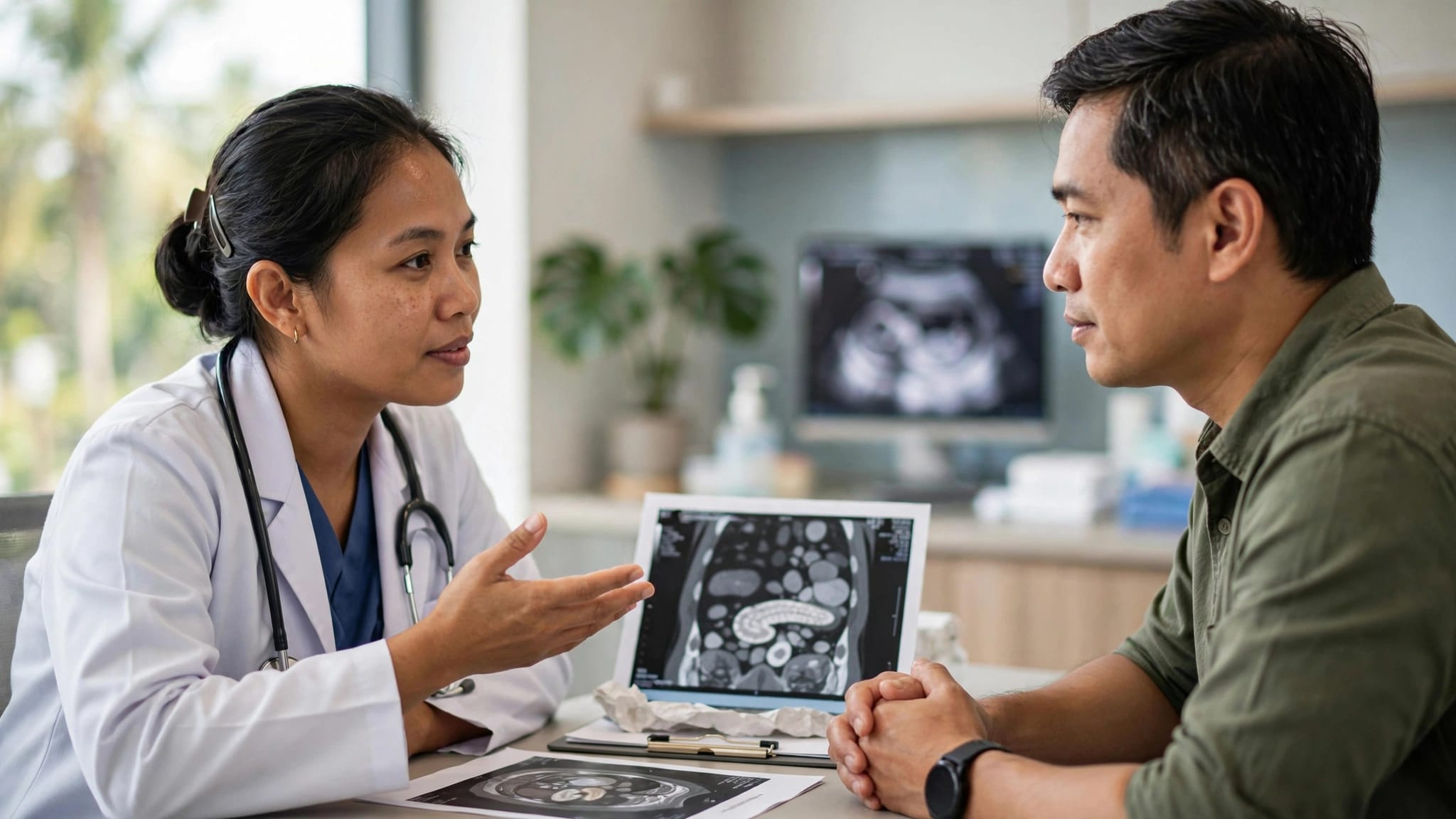
A chest X-ray or computed tomography (CT) scan for cancer can reveal a lung nodule, mass, enlarged lymph node, or fluid around the lung. However, infection, inflammation, old scarring, and other conditions can sometimes look concerning on imaging.
A PET scan for cancer may show areas with higher metabolic activity and help with cancer staging, but imaging cannot identify the exact cancer type or biomarker profile. Pathology from a suitable tissue sample is usually needed for a firm cancer diagnosis.
Lung cancer screening is intended for selected people without symptoms. It depends on age, smoking exposure, local recommendations, and clinician assessment. Screening may support early detection in some higher-risk groups, but it is not the same as investigating a suspicious scan or persistent symptoms.
Symptoms that should prompt medical review
See a doctor if you have a cough that persists or changes, cough up blood, experience ongoing chest pain, become short of breath, lose weight without trying, or feel unusually tired. These symptoms have many possible causes, but they still deserve medical review.
Risk factors include smoking, second-hand smoke, radon exposure, air pollution, workplace exposures, family history, previous chest radiation, and age. Lung cancer can also occur in people who have never smoked. Tell your doctor about current or past household or workplace exposure to second-hand smoke. These factors don’t prove cancer is present.
Why diagnosis can happen at a later stage
Early lung cancer often causes no symptoms. A cough or breathlessness may also be mistaken for a chest infection, asthma, smoking-related illness, or ageing. As a result, some people only seek care after symptoms become more noticeable.
Getting assessed promptly does not mean assuming the worst. It gives your doctor a clearer route toward diagnosis and treatment.
Lung cancer biopsy Malaysia: what happens after an abnormal scan
A lung biopsy removes cells or tissue so a pathologist can examine them. The pathology report may show whether a malignant tumour is present, distinguish its broad type, and indicate which additional stains or molecular tests may be appropriate. The lung biopsy overview from Johns Hopkins Medicine explains why tissue remains central to diagnosing abnormal lung cells.
Your respiratory physician, radiologist, surgeon, or cancer specialist chooses the biopsy route. The safest and most informative option depends on the lesion’s position, lymph-node accessibility, lung function, bleeding risk, and overall health.
Common ways doctors collect tissue
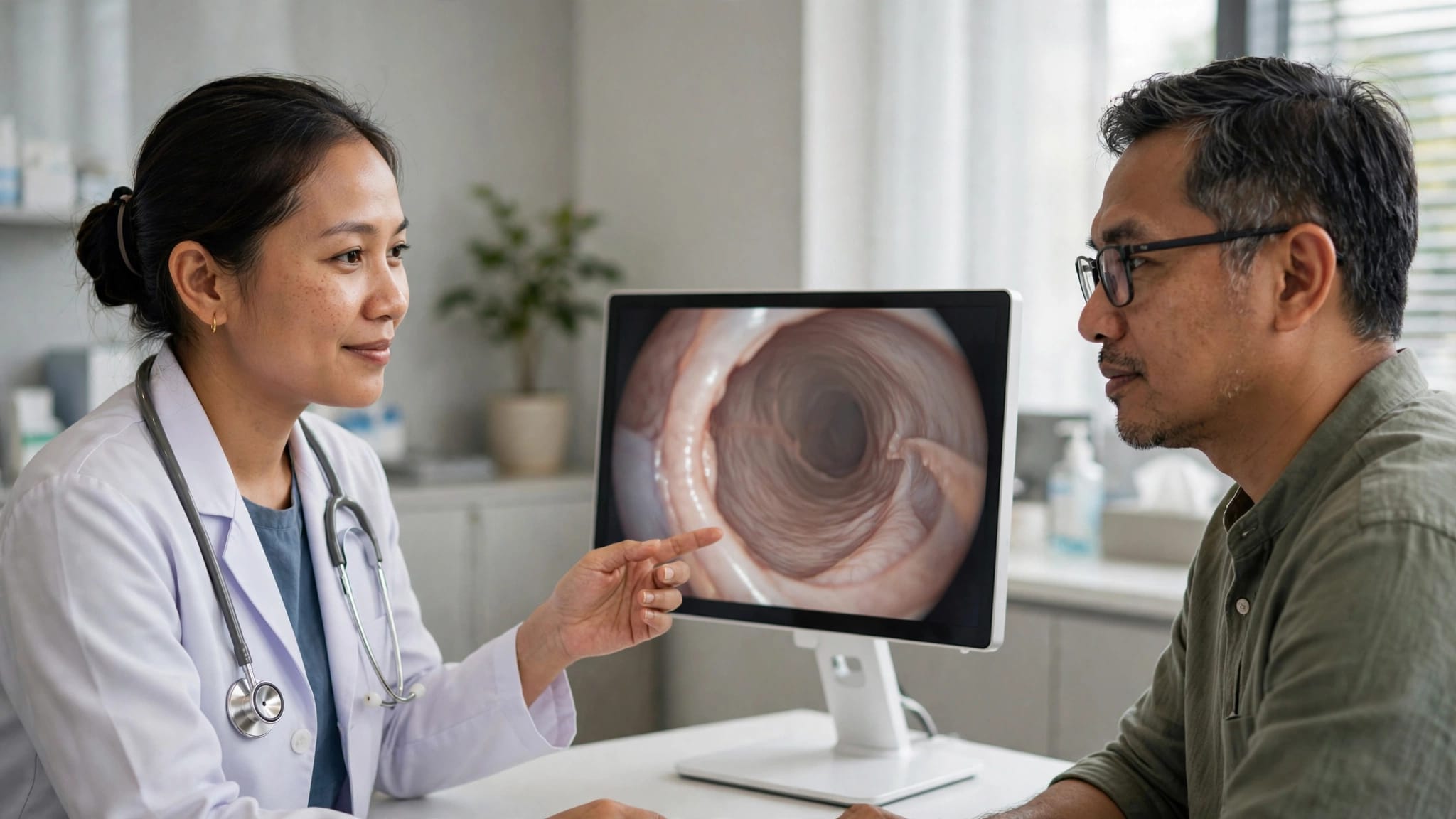
Bronchoscopy passes a thin flexible tube through your mouth or nose into the airways. It may suit a tumour near a larger airway or lymph nodes that can be sampled with ultrasound guidance.
A percutaneous lung biopsy uses a needle through the chest wall, usually with CT guidance, for lesions closer to the outer lung. A surgical biopsy may be needed when less-invasive methods are unsuitable or don’t provide enough tissue.
Risks include bleeding, infection, and pneumothorax, which means air collects around the lung and may cause it to collapse. Your team should explain your individual risk, what to expect on the day, and when to contact them urgently for worsening breathlessness, chest pain, fever, coughing blood, or heavy bleeding. The clinical review of lung biopsy techniques describes the different approaches and their clinical roles.

Ask whether enough tissue is being saved
Malaysian guidance advises teams to obtain and preserve enough material for several tests. These may include histology, immunohistochemistry, PD-L1 testing where relevant, and molecular testing for driver mutations and other treatment-relevant genomic changes.
Depending on the procedure, the specimen may be a core biopsy, small tissue fragments, cytology, or a cell block. Preservation and handling affect which tests remain possible.
This matters because a repeat biopsy can delay decisions and may not always be practical. Ask whether the sample is likely to provide enough material for histology, biomarker testing, and possible future tests.
A biopsy is more useful when it answers both “what is the tumour?” and “which markers could affect treatment?”
How molecular testing guides cancer treatment
Pathology usually begins by identifying the tumour’s histology. Most cases are non-small cell lung cancer (NSCLC), including adenocarcinoma and squamous cell carcinoma. Final classification may involve tumour morphology and immunohistochemistry, or IHC.
Another major group is small cell lung cancer (SCLC). SCLC generally follows a different diagnostic and treatment pathway because it often grows and spreads quickly.
A pathology report may list the histologic type first, followed by IHC findings and biomarker results. Genomic findings may appear as detected, not detected, or inconclusive.
For many people with advanced NSCLC, especially those with non-squamous disease, the pathology team may request biomarker testing. This testing looks for genomic changes that could influence treatment options after diagnosis.
Focused gene mutation testing may examine one alteration. These driver mutations can define whether a tumour has a treatment-relevant genomic alteration. Biomarker results contribute to precision medicine, where treatment discussions are matched to tumour findings and patient factors.
What next-generation sequencing can find
NGS examines multiple genes or genomic alterations in one panel. A broad panel may detect several possible driver mutations. The included genes depend on the laboratory panel, tumour subtype, stage, and current clinical guidance, and may include EGFR, ALK, ROS1, BRAF, MET, RET, KRAS, or ERBB2.
If a tumour has an actionable marker, an oncologist may discuss targeted therapy. Other evidence-based options may include chemotherapy, radiation therapy, cancer surgery, or combinations.
Finding or not finding driver mutations does not by itself determine the complete treatment plan. Suitability depends on cancer stage, tumour location, symptoms, other illnesses, prior treatment, and access.
The Malaysian consensus on molecular testing for advanced NSCLC supports testing beyond a single gene where appropriate. Private laboratories and major hospitals may offer broader panels, but a larger panel is not automatically better.
In Malaysia, focused tests may return sooner. Outsourced or broad panels can take longer, sometimes several weeks. Ask whether treatment can safely wait for the results.
PD-L1 and treatment planning
PD-L1 is a protein test, usually performed with immunohistochemistry rather than NGS. The pathology report may show a tumour proportion score or another laboratory measure. This result may inform immunotherapy discussions, but it does not select treatment by itself.
A biomarker result does not automatically select one medicine. Your doctor must consider the entire pathology report, scan findings, cancer stage, health status, medicine access, possible side effects, and available evidence.
The Asia-Pacific guidance on metastatic NSCLC testing notes that focused single-gene tests can return sooner than broader NGS panels. Broad panels may take three weeks or longer. Population-level overall survival statistics cannot predict an individual patient’s outcome.
When liquid biopsy may help, and when it cannot
A liquid biopsy is a blood-based test that may analyse circulating tumour DNA, or ctDNA. Cancer cells can release tiny DNA fragments into the bloodstream. Testing these fragments can sometimes identify a treatment-relevant alteration without another invasive procedure.
In Malaysia, this approach may identify driver mutations, including acquired resistance changes such as T790M, in suitable clinical situations. A positive result may provide actionable information, but it identifies a treatment-related mutation rather than confirming cancer itself. It may be helpful when tissue is too limited, a biopsy carries higher risk, or cancer changes after treatment.
A negative blood test does not rule out a mutation
Liquid biopsy does not replace tissue biopsy in every case. Some tumours release too little ctDNA into the blood for the test to detect, so a negative or non-informative result may not exclude a mutation. Your oncologist may therefore recommend tissue testing if it is safe and feasible.
The European Respiratory Society’s review of liquid biopsy limits explains that test sensitivity depends on how much tumour DNA is present and the mutation being assessed. The amount of circulating tumour DNA released can vary between tumours and disease settings. Ask what the result can confirm, what it cannot exclude, and whether tissue testing is still needed. In Malaysia, ask which laboratory performs the assay, what sample is required, how long results may take, and what the quoted cost includes.

Linking biopsy findings to cancer stages and treatment
Cancer staging shows the tumour’s size, lymph-node involvement, and whether it has spread. CT, PET-CT, brain imaging when indicated, and biopsy results contribute to staging, while discussions differ for small cell lung cancer and NSCLC. Stage guides treatment, but molecular testing, fitness, pathology, and treatment goals also influence decisions.
Early and locally advanced disease
For some people, Stage 2 cancer treatment options may include surgery followed by chemotherapy, with biomarker-guided targeted therapy in selected cases. Stage 3 cancer treatment options may involve chemotherapy, radiation therapy, immunotherapy, surgery, or combinations based on pathology and fitness. Published overall survival figures are population-level measures influenced by stage and treatment era.
Your team may discuss your case in a multidisciplinary meeting. This brings together respiratory physicians, surgeons, medical oncologists, radiation oncologists, radiologists, and pathologists. The goal is a coordinated multi-modality therapy plan that matches your individual findings, fitness, biomarkers, and treatment goals. Relevant clinical trials may also be discussed when available in Malaysia or elsewhere, but they aren’t automatically superior.
Advanced lung cancer treatment
Stage 4 cancer treatment may include testing-guided targeted therapy for actionable driver mutations, immunotherapy, or chemotherapy. Radiation may address symptoms or specific sites, while supportive or palliative care may accompany active treatment when appropriate. These options may be combined or used at different points, so Stage 4 treatment is not fixed. Overall survival figures cannot predict an individual’s outcome.
Ask your oncologist how each proposed treatment connects to your pathology, molecular profile, fitness, and treatment goals. You can also Explore Cancer Treatment Options for general information and coordination support when discussing possible approaches with qualified clinicians.
Costs, hospital access, and organising your records
Treatment cost varies widely in Malaysia. Public and private hospitals may differ in specialist availability, testing access, waiting times, medication coverage, and fees. A hospital may send complex molecular tests to an external laboratory, affecting timing and cost.
Publicly available information does not support a single national price for NGS, PD-L1 testing, liquid biopsy, or treatment. Request an itemised estimate separating biopsy or procedure fees, pathology, biomarker testing, computed imaging, consultations, medicines, hospital charges, and follow-up. The quoted amount may change if additional tissue testing, repeat sampling, or outsourced laboratory work is needed.
Plan for testing costs before treatment starts
Earlier Malaysian reporting found that EGFR, ALK, and PD-L1 testing had clearer reimbursement pathways than many expanded molecular tests. Coverage can change, and access to or co-payment for medicines such as targeted therapy may vary. Check current details with your insurer, employer benefit provider, hospital financial counsellor, and oncology team.
Keep copies of your referral letter, CT and PET scan reports, image discs or secure links, biopsy procedure note, pathology report, biomarker results, current medication list, and prior treatment records. You can Explore Medical Report Review Support if you need help organising records for a specialist or hospital review. This support coordinates information, while clinical interpretation remains with your treating doctors.
When another specialist perspective may be useful
A cancer second opinion can help when pathology or staging is unclear. It may also be useful if biomarker testing wasn’t discussed, a major procedure is proposed, recommendations conflict, or the treatment plan is complex. An oncology second opinion may confirm the current plan, clarify it, request further tests, or suggest another medically appropriate approach.
You may also explore overseas cancer treatment if a particular service isn’t available locally or you want information about another hospital’s capabilities. Different hospitals can offer different specialist teams, technologies, services, costs, and waiting times. You can Explore Overseas Hospital Options for coordination of hospital enquiries and records. Overseas care isn’t automatically better.
Questions to ask at your oncology consultation
Bring a caregiver if you can, and write down the answers. These questions can help you understand your diagnosis and treatment without overwhelming the discussion:
- What type of lung cancer does my pathology report show?
- Is the biopsy sample adequate for EGFR, ALK, ROS1, PD-L1, and broader molecular testing?
- What happens if the tissue sample is insufficient for all recommended tests?
- What is my cancer stage, and which scans established it?
- Would a liquid biopsy or next-generation sequencing be appropriate in my situation? Its usefulness depends on the clinical setting, and a negative result may not exclude a mutation.
- Could my smoking or second-hand smoke exposure change the assessment or testing plan?
- How long will the pathology and molecular results take?
- Could waiting for molecular results affect the proposed treatment plan?
- What are my cancer treatment options now, and what is the purpose of each one?
- Which costs may be covered, and which tests need separate approval?
- Would a second opinion for cancer add useful information in my situation?
Your exposure history provides important background information. It does not, by itself, establish cancer or determine the biopsy route.
Don’t replace prescribed oncology care with unproven alternative cancer treatment claims. Complementary measures, such as counselling, nutrition support, symptom management, gentle activity, or relaxation techniques, may support wellbeing. Discuss supplements, herbs, and traditional remedies with your oncology team because they can interact with treatment.
Frequently Asked Questions
Does a suspicious lung scan mean I have cancer?
No. Infection, inflammation, scarring, and other conditions can look concerning on a scan, so imaging alone cannot confirm malignancy. Your doctor will assess the scan alongside your symptoms and may recommend tissue sampling or other tests.
Which lung biopsy method is used in Malaysia?
The safest and most informative method depends on the lesion’s position, lymph-node accessibility, lung function, bleeding risk, and general health. Options may include bronchoscopy, a CT-guided needle biopsy through the chest wall, or surgical biopsy.
Will one biopsy provide enough tissue for all the tests?
Often, the sample is used for histology, immunohistochemistry, PD-L1 testing where relevant, and molecular testing. Ask whether enough material is being preserved for recommended and possible future tests, because a limited sample may require repeat testing or another biopsy.
Can a liquid biopsy replace a lung biopsy?
Not in every situation. A blood-based liquid biopsy may identify treatment-relevant mutations when tissue is limited or another biopsy carries higher risk, but a negative or non-informative result does not exclude a mutation and tissue testing may still be needed.
How long do pathology and molecular biopsy results take?
Timing varies according to the procedure, laboratory, test type, and whether samples are sent to an external laboratory. Focused tests may return sooner than broad molecular panels, so ask when results are expected, whether treatment can safely wait, and which costs are included in the estimate.
A clear result supports a clearer decision
A lung biopsy starts the process, but pathology, staging, and molecular results often shape what follows. These findings inform treatment discussions, but they cannot predict an individual’s overall survival.
A second perspective may help when decisions are complex, or confirm that your current plan is appropriate. Discuss tissue adequacy, biomarker testing, timing, costs, and treatment goals with your treating specialist. Bring complete, up-to-date records if you seek a second opinion.
Medical disclaimer: This article is for general educational information only and may not apply to every patient. It is not a diagnosis or personalised medical advice, and it does not replace consultation with a qualified doctor or oncologist.