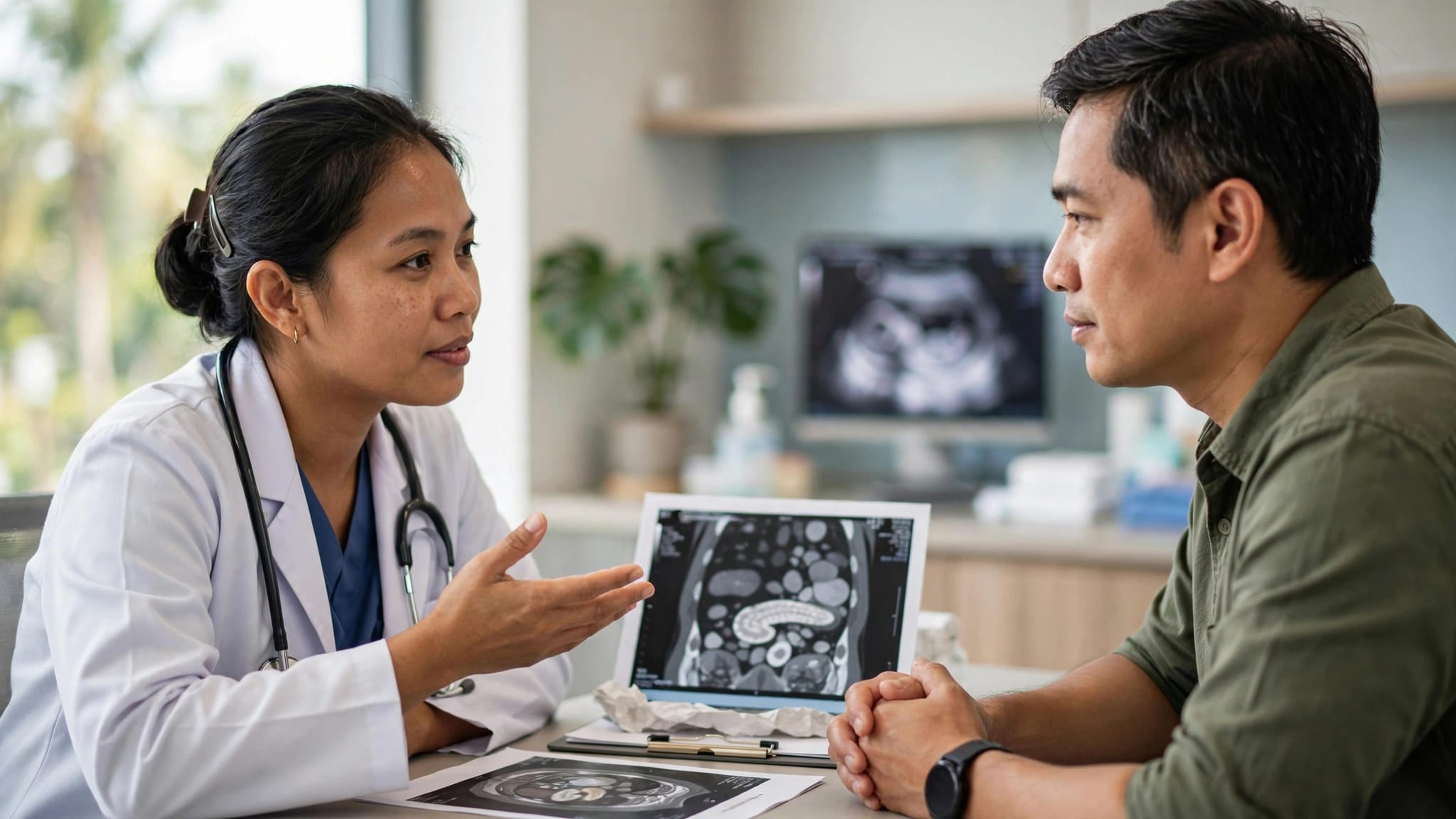
A breast cancer diagnosis and the accompanying financial burden can make every decision feel urgent, including the financial ones. When planning for breast cancer treatment costs Malaysia, patients often find that expenses can range from subsidised public hospital charges to hundreds of thousands of ringgit in private care.
Your final bill depends on your cancer stage, tumour biology, treatment plan, hospital, insurance cover, and whether you need long-term medicines. Start by asking for a written estimate that separates one-off costs from costs that repeat every cycle or month.
Key Takeaways
- Breast cancer treatment in public hospitals can cost far less, while care in private hospitals may range from tens of thousands to RM395,000 in complex cases.
- Surgery, chemotherapy, radiotherapy, targeted therapy, scans, medicines, and follow-up visits can all appear on separate bills.
- Your cancer treatment plan, especially for early-stage breast cancer, depends on the biopsy, pathology report, cancer staging, biomarkers, scans, medical history, and your oncologist’s assessment.
- A cancer second opinion can help you check treatment recommendations and compare quotations before you commit to a private package.
- Ask your hospital for an itemised cancer treatment quotation, including likely costs after the first treatment phase.
Quick Answer: How Much Does Breast Cancer Treatment Cost?
Published figures show a wide range because breast cancer does not have one standard treatment path. A person with early-stage breast cancer who has breast-conserving surgery and radiotherapy faces very different costs from someone who needs chemotherapy, targeted therapy, surgery, radiation therapy, and years of hormone therapy.
A 2017 to 2021 study at Hospital Canselor Tuanku Muhriz reported an average breast cancer treatment cost of RM6,938.82. This reflects a specific public teaching-hospital setting, not a national private-care price. In contrast, published private-sector estimates place total breast cancer care between about RM18,000 and RM395,000, depending on the stage and treatment intensity. When calculating your chemotherapy cost and overall care, Health365’s Malaysian cancer cost overview discusses why these figures differ so sharply.

The first quote you receive may cover only the consultation, biopsy, surgery, or first chemotherapy cycle. Ask what comes next. A complete estimate should cover tests, doctor fees, medicines, ward charges, procedures, scans, and follow-up appointments.
A low initial estimate can still lead to a high overall bill if it excludes medicines, imaging, complications, or later treatment phases that increase your out of pocket spending.
Why Breast Cancer Costs Vary So Much
Your treatment costs follow the details of your cancer diagnosis, particularly the type and stage of cancer. Before your cancer specialist recommends treatment, they usually consider the tumour size, lymph nodes, cancer stages, hormone receptor status, HER2 status, grade, biopsy findings, and scan results.
For example, an oestrogen receptor-positive cancer may require hormone therapy after active treatment. A HER2-positive tumour may need targeted therapy. Those medicines can change the total cost more than surgery alone.
The setting also matters. Government public hospitals subsidise many services for eligible patients, although waiting time and referral pathways may differ by facility. Private hospitals may offer faster appointments, more choice over specialists, private rooms, and shorter scheduling intervals, but charges are usually higher.
The table below gives broad published ranges to help you ask informed questions. They are not fixed prices or medical recommendations.
| Treatment or service | Published Malaysian cost range | What can change the price |
|---|---|---|
| Oncology consultation | Varies by hospital | Specialist fees, referral route, follow-up visits |
| Lumpectomy | RM100 to RM1,500 public, RM8,000 to RM15,000 private | Theatre fees, surgeon, hospital stay, pathology |
| Mastectomy | RM200 to RM3,000 public, RM12,000 to RM25,000 private | Reconstruction, node surgery, admission length |
| Chemotherapy | About RM4,000 to RM8,000 per cycle privately | Drug regimen, number of cycles, supportive medicines |
| Radiotherapy | About RM6,000 to RM30,000 per course | Technique, planning scans, treatment sessions |
| PET scan for cancer | About RM2,500 to RM7,000 per scan | Hospital, tracer, clinical indication |
| Targeted therapy | From about RM4,000 per session or cycle | Drug, dosage, HER2 status, treatment duration |
| Immunotherapy | About RM8,000 to RM25,000 per session | Medicine used and treatment schedule |
Onco Life Centre’s published breast cancer cost guide lists similar private-care estimates for surgery, chemotherapy, radiotherapy, diagnostic imaging like PET scans, advanced targeted therapy, and modern immunotherapy.
The figures are useful for planning, but your own quotation matters more. Prices can change, and doctors may adjust treatment after surgery or new scan results.
What Your Breast Cancer Treatment Plan May Include
When considering your breast cancer treatment options, doctors often combine local treatment with systemic treatment. Local treatment addresses the breast and nearby lymph nodes. Systemic treatment travels through the bloodstream to treat cancer cells elsewhere in the body.
Cancer surgery may involve breast-conserving surgery, also called a lumpectomy, or a mastectomy. Your surgeon may also assess lymph nodes under the arm. Reconstruction may happen during the same operation or later, depending on your situation and preferences.
Chemotherapy may be given before surgery to shrink a tumour, or after surgery to reduce the risk of recurrence. It is commonly billed per cycle, so ask how many cycles your doctor expects and whether growth-factor injections, blood tests, anti-nausea drugs, or day-care charges are separate.
Radiotherapy, also called radiation therapy, often follows breast-conserving surgery. Some people need radiation after mastectomy as well. The quoted course may include planning CT scans, immobilisation devices, treatment sessions, and review appointments.
Hormone therapy may be recommended for hormone receptor-positive breast cancer. Although tablets can cost less than intravenous treatment, treatment may continue for years. Include medicine refills and follow-up consultations in your longer-term budget.
Targeted therapy and immunotherapy are only suitable for selected tumours. HER2 testing and biomarker testing help your oncologist decide whether these medicines may be appropriate. Treatment is not chosen on cost alone.
Newer terms such as precision oncology, genetic testing for cancer, and liquid biopsy can appear during a treatment plan review. They are not routine for every patient. Their value depends on your pathology report, cancer stage, previous treatment, and the clinical question your specialist is trying to answer.
Some patients ask about proton therapy, proton beam therapy, MR Linac treatment, TrueBeam radiotherapy, TomoTherapy, CyberKnife treatment, Gamma Knife treatment, or robotic cancer surgery. These technologies are not automatically better for breast cancer. Availability, expected benefit, tumour location, and your oncologist’s assessment should guide any discussion.
Public and Private Cancer Treatment: Budgeting for Both Paths
If cancer treatment feels too expensive and creates a heavy financial burden, ask your doctor about referral options early. You may be able to begin within the Ministry of Health system through a Klinik Kesihatan, government hospital, or specialist referral route. Subsidised care can reduce direct charges, although demand may affect cancer treatment waiting time.
Private hospitals often provide a quicker oncology consultation and may coordinate scans, surgery, and treatment within one network. However, you should compare more than the headline package price. A cheaper surgery quote may exclude pathology, anaesthesia, implants, ward stays, rehabilitation, or later radiotherapy.
Private estimates cited by CodeBlue’s report on cancer costs in Malaysia show why patients need to plan for the full course rather than a single procedure. It also notes an average cancer hospital episode cost of RM7,087 in 2017, which should not be mistaken for the total cost of breast cancer care.
Check your health insurance and critical illness insurance policies carefully to manage your medical expenses and reduce unexpected out of pocket spending. Look at the annual limit, lifetime limit if applicable, co-payment, panel hospital rules, waiting periods, exclusions for pre-existing conditions, and whether outpatient cancer drugs are covered. A medical card may cover inpatient treatment but limit outpatient medicines or treatments given in a day-care unit.
If you are uninsured or underinsured, speak with the hospital’s financial counsellor or medical social worker. Ask about welfare funds, payment arrangements, drug-assistance programmes, and charity support. Keep every quotation, receipt, approval letter, and medical report in one folder.
Symptoms, Diagnosis, and Staging Can Change the Cost
Breast cancer symptoms may include a new lump, skin dimpling, nipple discharge, changes in breast shape, persistent redness, or swollen lymph nodes. These symptoms do not always mean cancer, but you should arrange a medical assessment rather than wait for them to settle.
Cancer screening can find some breast changes before symptoms develop. If a doctor sees an abnormality, you may need various diagnostic tests such as a mammogram, ultrasound, MRI scan for cancer, or biopsy for cancer. A biopsy confirms the cell type and supports later treatment decisions.
Your pathology report may include tumour type, grade, hormone receptors, HER2 status, and lymph-node findings. A pathology report review can be useful when results are unclear or when a new treatment recommendation depends on a complex finding.
Cancer staging combines information from the tumour, lymph nodes, and possible spread to identify conditions like metastatic breast cancer. Your team may request CT scan for cancer staging, bone imaging, or a PET scan for cancer when clinically appropriate. A tumour marker test is not a stand-alone test for diagnosing breast cancer, so ask what any result means in your case.
Earlier diagnosis and treatment can significantly improve the cancer survival rate. While earlier stages may involve fewer treatment components, you should never assume your costs from stage alone. Two patients with the same stage can receive different treatment because their tumour biology and health needs differ.
When a Second Opinion May Help
You may need a cancer second opinion if you have received different recommendations, face a high private quotation, have an uncommon pathology result, or want confirmation before major cancer surgery. Seeking another consultant oncologist’s view does not mean you distrust your first doctor, as exploring various treatment options can provide clarity and peace of mind.
A medical report review usually needs your biopsy slides or tissue blocks, pathology report, scan images, scan reports, treatment summary, and current medicine list. Ask the first hospital how to obtain certified copies and whether there is a release process for slides.
A cancer treatment plan review can clarify whether you need chemotherapy before surgery, whether breast-conserving surgery is suitable, or whether a listed targeted therapy matches your biomarker results. It can also identify which costs are necessary now and which may only arise later.
If you are considering overseas cancer treatment, request a written medical review before travelling. You should compare the full cost, including travel, accommodation, follow-up in Malaysia, medicine supply, and emergency care. Overseas treatment may be appropriate for selected cases, but it should not delay urgent local care without your oncologist’s advice.
You can also use general lifestyle support while treatment is underway. Better rest may help you cope with fatigue and stress, so these practical sleep tips for Malaysians may be useful alongside advice from your clinical team.
Questions to Ask Before You Accept a Quotation
Bring a family member to your oncology consultation if you can. Write answers down, because it is easy to miss details when you feel overwhelmed.
- What is my cancer stage, tumour subtype, and treatment goal?
- Which diagnostic tests, scans, or biomarker testing are still needed before breast cancer treatment starts?
- Does this quotation cover surgery, pathology, anaesthesia, ward charges, and follow-up?
- How many chemotherapy cycles, radiotherapy sessions, or targeted therapy doses might I need?
- Which medicines are included, and what could raise the cancer treatment cost later?
- Is treatment available at a public hospital, and what is the likely waiting time?
- Should I submit medical report copies for a cancer second opinion before surgery?
- Who can explain insurance approvals, welfare support, and payment options?
A clear answer to these questions helps you compare cancer hospitals fairly. It also gives you a record of what your doctor expects, while leaving room for changes that may follow surgery or new test results.
A More Manageable Way to Plan Treatment Costs
The most useful number is not a single national average. It is an itemised estimate based on your own diagnosis, treatment sequence, and likely medicines to help you navigate breast cancer treatment costs Malaysia and plan your medical expenses effectively.
Ask for the current cost and the probable next cost. With clear records, a second opinion when needed, and early financial questions, you can make choices with more confidence during a difficult time.
Frequently Asked Questions
Is breast cancer treatment free in Malaysia?
Government hospitals provide heavily subsidised care for eligible patients, but some charges may still apply. Your payment depends on your citizenship status, referral route, services needed, ward class, medicines, and hospital policies. Patients looking for extra financial support can also explore available options through a patient assistance programme.
How much is chemotherapy for breast cancer in Malaysia?
Published private estimates commonly place chemotherapy at about RM4,000 to RM8,000 per cycle. Your actual bill depends on the drug regimen, number of cycles, body weight or dosage, supportive medicines, blood tests, and day-care charges.
Does insurance cover breast cancer treatment?
Many medical and health insurance plans cover eligible cancer treatment, but coverage depends on your policy terms. Check annual limits, panel requirements, co-payments, exclusions, waiting periods, and whether outpatient medicines and targeted therapy are included.
Can I choose a public hospital after seeing a private doctor?
You can ask about referral options, although the process differs by hospital and your clinical condition. Bring your medical reports, pathology results, scans, and treatment summary so the receiving team can assess you without unnecessary delays.
Do I need advanced cancer treatment equipment?
Advanced cancer treatment equipment is suitable only in selected situations. Your oncologist will consider the breast cancer type, cancer stage, imaging, biopsy, pathology report, biomarkers, medical history, hospital availability, and expected treatment benefit before recommending a technique.
Medical disclaimer: This article is for general information only. It may not be fully verified, current, or applicable to every patient, and it is not medical advice, a diagnosis, or a treatment recommendation. You must consult your own doctor, oncologist, or qualified healthcare professional before making any medical decision. SureLah does not take responsibility for medical decisions, treatment outcomes, doctor recommendations, hospital decisions, or patient actions based on this article.