A colorectal cancer diagnosis can make the next few days feel uncertain. If you are researching care in Malaysia, a useful first step is understanding how your colorectal cancer diagnosis, scans, pathology results, and overall health shape the treatment plan.
Surgery is often the main treatment for cancer that has not spread widely. However, your team may discuss other treatment options before or after an operation.
Quick Answer
Colorectal surgery removes the bowel section containing the tumour, nearby lymph nodes, and a margin of healthy tissue. In many cases, the surgeon reconnects the remaining bowel ends.
For colorectal cancer that has not spread widely, surgery may be the main treatment. Your operation may be open, use a laparoscopic approach, or involve robotic surgery.
The right approach depends on the tumour’s location, cancer stage, previous operations, body anatomy, medical history, scan findings, hospital equipment, and your colorectal surgeon’s assessment.
A surgery plan should be based on your biopsy, CT or MRI scans, pathology report, and fitness for surgery, not on the name of a surgical technique alone.
Your hospital stay may last several days, followed by weeks of rebuilding strength, appetite, and bowel confidence. Some patients also need chemotherapy after surgery, especially when lymph nodes contain cancer cells.
Key Takeaways for Patients and Families
- Surgery for colorectal cancer often removes a bowel segment and nearby lymph nodes in one operation.
- A colonoscopy and biopsy confirm the diagnosis, while scans stage the cancer; checking polyps and risk factors supports early detection.
- Minimally invasive approaches may use smaller incisions, but they aren’t automatically suitable for every tumour.
- Quotes from a private hospital can vary widely because they may include different tests, hospital stays, pathology services, and surgeon fees.
- A cancer second opinion can help confirm the recommended operation or compare cancer hospitals without abandoning your current care team.
- Your recovery plan should cover food, movement, wound care, bowel changes, pain control, and emotional support.
Symptoms, Risk Factors, and Getting a Clear Diagnosis
Colorectal cancer is a major health concern in Malaysia and can affect Malaysian men and women. Published research on Malaysia’s colorectal cancer burden has also highlighted the need for early detection and timely treatment.
Cancer symptoms you should not ignore
Blood in stool, black stools, persistent changes in bowel habits, or unexplained iron-deficiency anaemia need medical assessment. These symptoms can come from conditions other than cancer, such as haemorrhoids or bowel inflammation. Still, they should not be self-treated for weeks without a review.
You should also speak with a doctor if you have ongoing abdominal discomfort, bloating, increasing fatigue, unexplained weight loss, or a feeling that your bowel does not empty fully. This disease can occur in younger adults too, so being under 50 does not rule it out.
Risk factors include older age, previous bowel polyps, inflammatory bowel disease, or a first-degree relative with the disease. A family history may also point to inherited conditions such as Lynch syndrome or familial adenomatous polyposis. Smoking, heavy alcohol intake, obesity, and a low-fibre diet may also contribute. A healthy diet may lower risk, but it cannot eliminate it.
Tests that confirm colon cancer
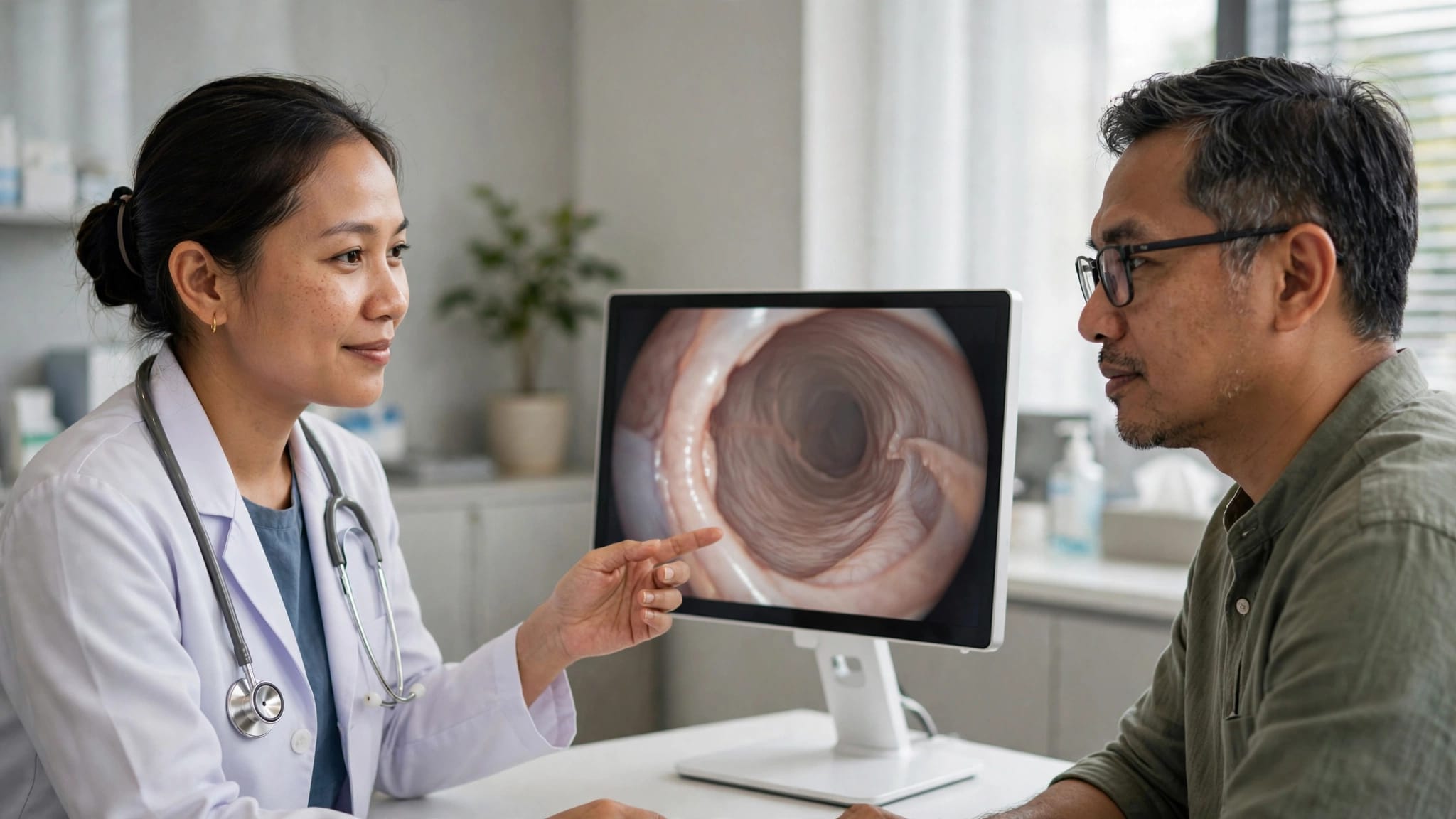
A colonoscopy is the main test for examining the inside of the large bowel. During the procedure, a gastroenterologist can remove or sample polyps and take a biopsy from an abnormal area. A biopsy gives the pathology laboratory tissue to examine under a microscope.
A faecal occult blood test can detect hidden blood, but it does not diagnose cancer. A concerning result or persistent symptoms still need diagnostic follow-up.
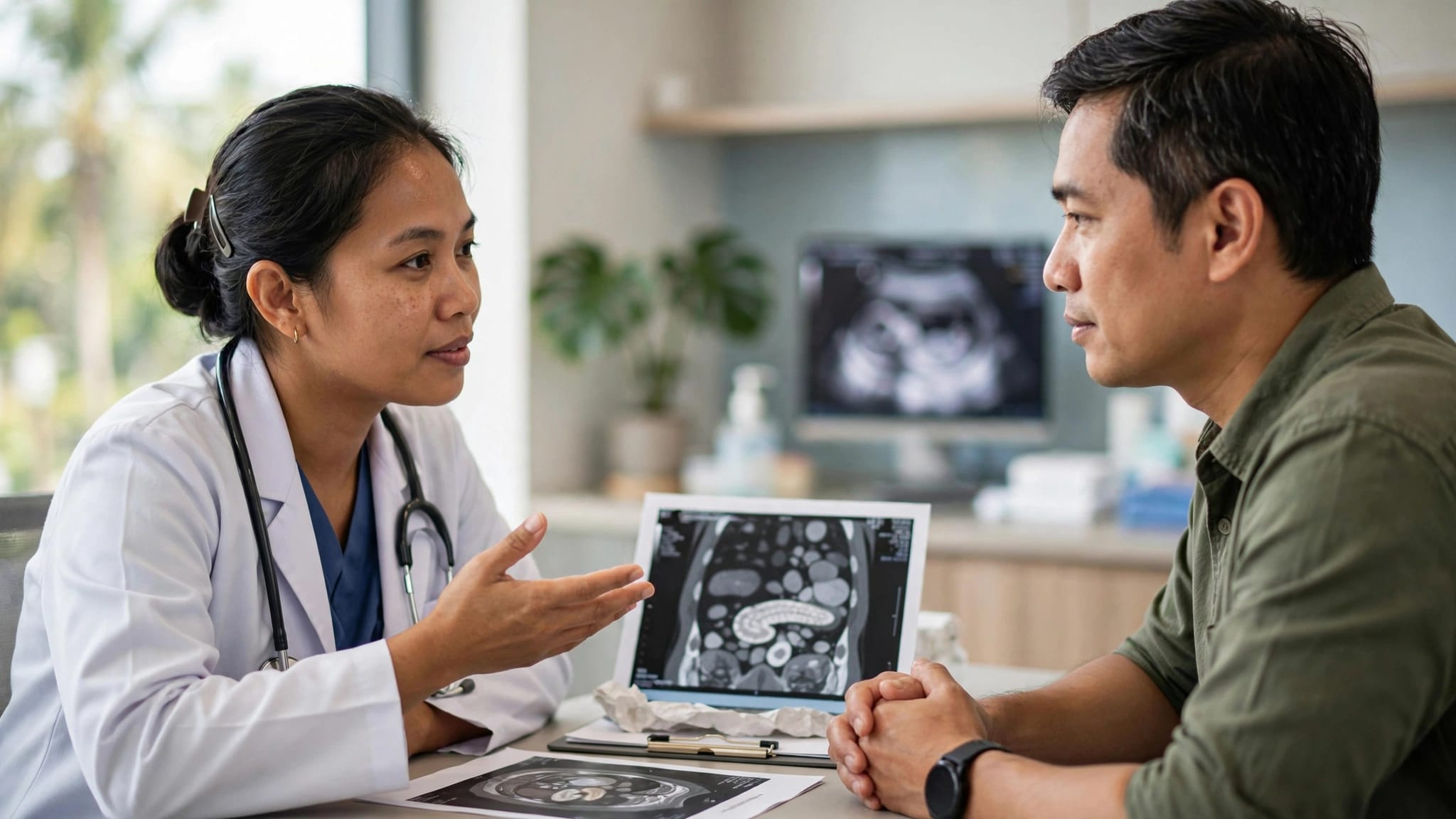
After a colorectal cancer diagnosis, your doctor may arrange blood tests, a CT scan of the chest, abdomen, and pelvis, and a tumour marker test such as CEA. MRI scans are more commonly used when the tumour is in the rectum. Some people also need genetic testing, especially when they are young or have a strong family history.
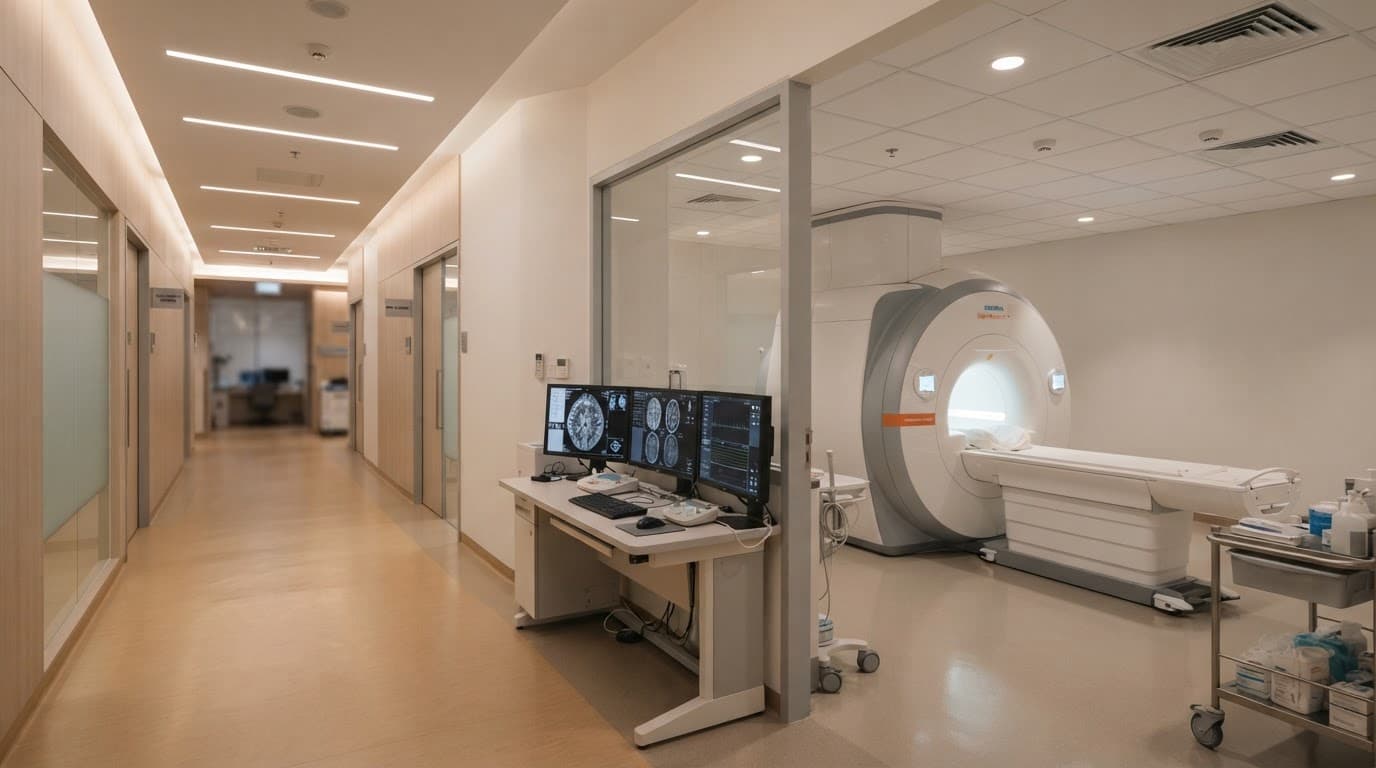
Keep copies of your colonoscopy report, biopsy result, scan images, pathology report, and referral letters. They can make a medical report review or cancer treatment plan review faster if you change hospitals or seek another opinion.
Colon Cancer Surgery Malaysia: How Your Care Team Plans Treatment
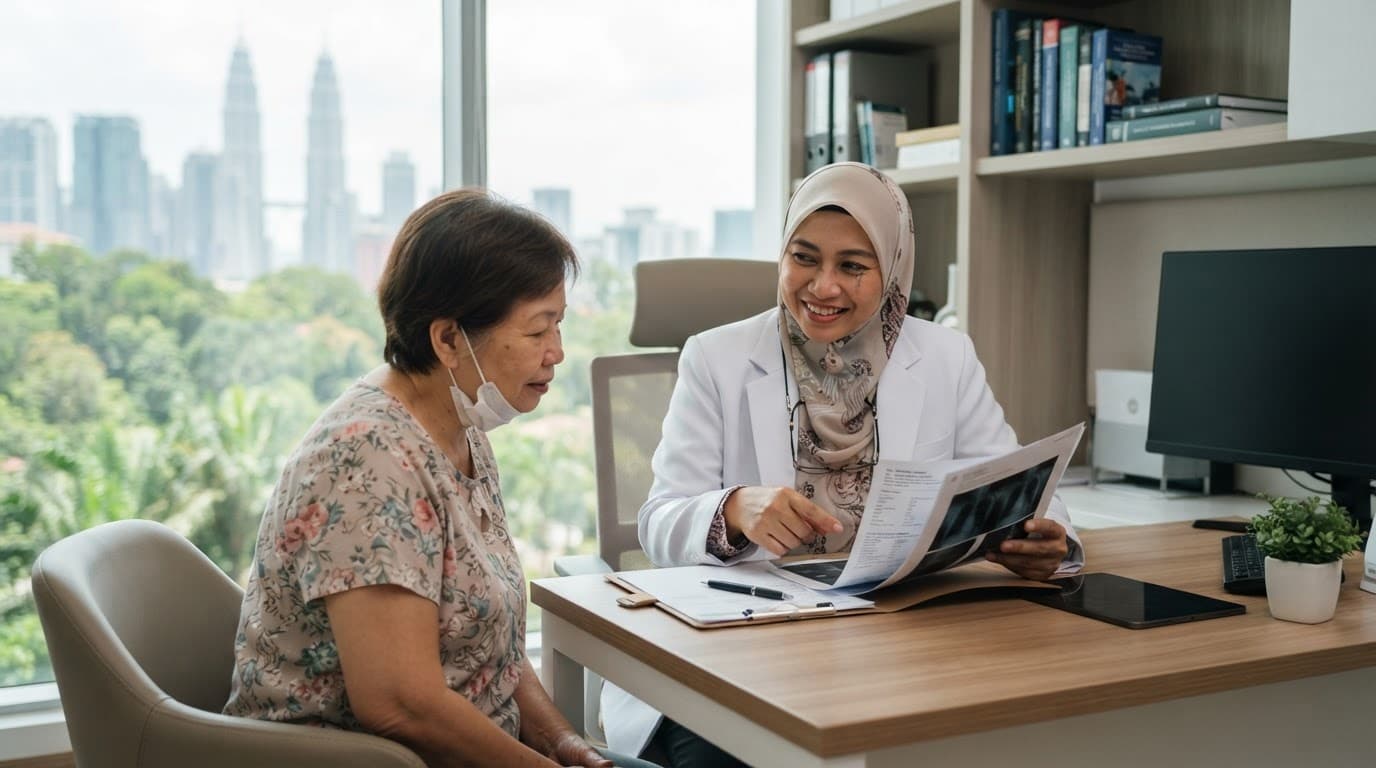
A colorectal surgeon does not plan colorectal surgery in isolation. Your case may involve a medical oncologist, radiologist, pathologist, stoma nurse, dietitian, and anaesthetist. This shared approach is also described in Pantai Hospital’s colorectal cancer care overview.
Staging helps the team plan the purpose and timing of colorectal cancer treatment. Population-level survival rates vary by stage and pathology, so they cannot predict an individual patient’s outcome:
- Stage 0 disease may be removed during an endoscopic procedure when it is limited to the bowel’s superficial lining.
- For colon cancer in stages I to III, surgery often involves removing the affected colon segment and regional lymph nodes.
- Stage II disease may or may not need additional drug treatment after surgery. The decision depends on pathology features and other risks.
- Stage III cancer has reached nearby lymph nodes, so chemotherapy after surgery is often discussed.
- Stage IV colorectal cancer has spread to distant organs or tissues. Treatment options may include systemic drug treatment, targeted therapy, immunotherapy, or surgery in selected situations. Palliative care can support symptoms and quality of life alongside disease-directed treatment.
Radiation therapy, also called radiotherapy, is less commonly used for tumours in the colon than for rectal cancer. If your tumour is close to the rectum, your team may explain a different sequence of treatment.
For advanced disease, biomarker testing can guide whether targeted drugs or immunotherapy may be appropriate. Your cancer specialist will consider tumour genetics, mismatch-repair status, biopsy findings, family history, organ function, treatment availability, and your priorities.
Open, Laparoscopic, and Robotic Colon Surgery Compared
During colorectal surgery such as a colectomy, the surgeon removes the diseased section of colon. The healthy ends are joined where safe, creating an anastomosis. A safe join and complete cancer clearance depend on the operation and individual findings, not the technology label alone. If reconnecting the bowel isn’t safe at that time, the surgeon may create a stoma, an opening on the abdomen that directs stool into a pouch.
A stoma may be temporary or permanent. Its likelihood depends on the tumour location, bowel condition, emergency status, and type of operation.
| Surgical approach | How it is performed | When it may be considered | Points to discuss |
|---|---|---|---|
| Open surgery | One larger abdominal incision | Large tumours, emergency obstruction, complex disease, or difficult anatomy | Wound size, expected pain control, length of admission, and recovery support |
| Laparoscopic surgery | Several small incisions and a camera | Many planned colon resections | Surgeon experience, conversion to open surgery if needed, and cost |
| Robotic surgery | Small incisions with robotic instruments controlled by the surgeon | Selected cases where the hospital has the system and trained team | Added equipment charges, availability, and whether it changes your expected outcome |
A minimally invasive approach can mean less wound discomfort and earlier movement for suitable patients. However, open surgery may offer the safest route in some circumstances. Robotic surgery can give the surgeon greater instrument movement in tight spaces, yet it isn’t automatically better for every patient. The chosen operation must still support safe bowel joining and complete cancer removal.
The final pathology report after colorectal surgery is also important. It confirms the tumour type, margin status, number of lymph nodes removed, and whether cancer cells were found in those nodes. For colorectal cancer, these findings help confirm the stage and guide decisions about further treatment. Your oncology consultation after surgery should use that report to decide if further cancer treatment is needed.
What Recovery After Colorectal Surgery Can Look Like
Your recovery from colorectal cancer starts before the operation. The hospital may ask you to stop certain medicines, take bowel preparation, follow fasting instructions, arrange transport home, and bring a list of your medications. If you smoke, stopping before surgery can lower respiratory and wound risks.
In the first 24 hours, staff will monitor your blood pressure, pain, urine output, wound, and bowel recovery. You may have a drip, catheter, oxygen support, and medication to prevent blood clots. Most teams encourage gentle walking as soon as it is safe because movement supports circulation and lung function.
Eating and bowel changes after surgery
Your surgeon will decide when you can start drinking and eating. Many patients begin with fluids, then progress to light food as nausea settles and the bowel begins working again. Small meals, adequate fluids, and protein-rich foods can help when your appetite is low.
For the first few weeks, you may need to limit foods that cause gas, loose stools, or discomfort. Do not follow strict online diets, as a healthy diet may need to be adjusted to your symptoms and recovery. Ask before changing your food choices or taking supplements, especially during chemotherapy.
Bowel habits may change for a while. You may pass stool more often, feel urgency, or have alternating constipation and loose stools. A stoma nurse can teach you pouch care, skin protection, and when to seek help.

Going home and returning to routine
After laparoscopic surgery, some patients have a hospital stay of four to seven days, but this is only a general example. Discharge depends on your pain control, mobility, bowel function, food intake, and any complications. Open surgery, emergency surgery, and existing health conditions can extend this timeline.
Most people need several weeks before returning to normal daily routines. Avoid heavy lifting until your surgeon clears you. Keep follow-up appointments, even if you feel well, because the team needs to review your wound and pathology results.
Contact your hospital promptly for fever, increasing abdominal pain, repeated vomiting, wound redness or discharge, chest pain, breathlessness, heavy rectal bleeding, or no stoma output with cramping. Your discharge papers should include an after-hours contact number.
Colorectal Treatment Costs and Hospital Choices in Malaysia
The colorectal cancer treatment cost depends on the scope of care. It may cover diagnostic work-up, surgery only, a full admission, or a complete pathway with additional oncology treatment and follow-up scans.
These private hospital figures are broad planning estimates, not fixed prices:
| Care item | Indicative private-sector range |
|---|---|
| Diagnostic endoscopy with biopsy | RM2,500 to RM4,500 |
| Laparoscopic colectomy package | RM25,000 to RM45,000 |
| Surgical episode with broader hospital charges | RM30,000 to RM80,000 |
| Full treatment pathway | RM68,000 and above, depending on treatment needed |
A larger estimate does not always mean better care or better outcomes. It may include a longer hospital stay, ICU cover, specialist fees, imaging, pathology, complications cover, or oncology care. For context, a Malaysian government-hospital cost study found that treatment costs rose sharply with later-stage colorectal cancer. Those figures were provider costs, not private patient bills.
When the treatment cost feels too high, ask the private hospital for an itemised quotation. Check whether it covers the colorectal surgery package, surgeon and anaesthetist fees. Ask about the operating theatre, implants or stapling devices, pathology, room, medicines, ICU care, stoma supplies, scans, and post-operative visits.
Some third-party estimates place overall treatment in Malaysia between USD20,000 and USD50,000. See this Malaysia treatment cost overview for context. Treat such figures as a starting point only. Get written quotations directly from the hospital.
Patients in Kuala Lumpur and Selangor often compare colorectal services. Options include Pantai Hospital, Gleneagles Hospital, Prince Court Medical Centre, Sunway Medical Centre, Subang Jaya Medical Centre, and hospitals within the KPJ network. Public hospitals can also provide colorectal care through referral pathways.
When deciding where to treat cancer, ask whether the hospital has a specialist colorectal team, medical oncology access, pathology support, and stoma nursing. Also check for intensive care services and a clear plan for complications. Hospital availability and cancer treatment waiting time can change, so confirm dates directly.
Second Opinions and Questions for Your Oncologist
A second opinion can be useful before major colorectal surgery, when the proposed plan is unclear, or when you are considering another hospital. It does not mean you distrust your first doctor. It gives you another review of the evidence and may help compare reasonable treatment options.
If you are exploring overseas cancer treatment, request complete records before travelling. Include your scans, biopsy results, pathology report, and proposed colorectal cancer treatment sequence. A coordination or hospital-matching service can help with logistics, but it cannot replace an assessment by a qualified cancer specialist.
Bring a family member to your oncology consultation. If possible, ask a colorectal surgeon to review your case, and bring genetic-test results, family history, and relevant medical records. Write down answers to these questions:
- Where is the tumour, and what are my confirmed cancer stages?
- What operation do you recommend, and why is this approach suitable for me?
- Is there a chance I will need a temporary or permanent stoma?
- What does my treatment plan include after surgery?
- Should I have biomarker testing or genetic testing?
- What are the likely recovery milestones and warning signs after discharge?
- What is included and excluded in the written quotation?
Moving Forward With a Clear Colorectal Cancer Plan
Surgery for colorectal cancer is a major event, but you do not need to make decisions with incomplete information. A clear diagnosis, careful review of scans and pathology, and an honest discussion of costs can give you a firmer basis for choosing care.
The most useful next step is usually a colorectal surgery consultation. Your surgeon or oncologist can explain your treatment plan in plain language. Your individual medical details matter more than a general online timeline.
Frequently Asked Questions
How long does colon cancer surgery take?
The length of colon cancer surgery varies with tumour location, procedure type, previous abdominal surgery, and whether the operation is planned or urgent. Your surgeon can give you a realistic estimate after reviewing your scans.
Will I need further cancer treatment after surgery?
It depends on the pathology report and cancer stage. Some early cancers need surgery alone, while others may require additional treatment after recovery.
Is robotic surgery safer than laparoscopic surgery?
Both approaches are minimally invasive options. The safest choice depends on your anatomy, cancer location, surgeon experience, hospital resources, and whether plans may need to change during surgery.
Can colon cancer happen if I am under 50?
Yes. Colorectal cancer can affect younger adults, particularly when family history or other risk factors are present. Early detection matters, so persistent blood in stool, unexplained anaemia, or lasting changes in bowel habits should be assessed. Depending on your symptoms and personal history, your doctor may recommend colonoscopy, regardless of age.
How do I choose a cancer hospital in Malaysia?
Compare the treating team’s experience managing colorectal cancer, access to imaging and pathology, oncology support, stoma care, expected waiting time, insurance arrangements, and written costs. The hospital should also explain who will handle post-operative concerns after you go home.
Medical Disclaimer
This content is for general information only. It may not be fully verified, current, or applicable to every patient. It is not medical advice, a diagnosis, or a treatment recommendation.
You must consult your own doctor, oncologist, or another qualified healthcare professional before making any medical decision. SureLah does not take responsibility for medical decisions, treatment outcomes, doctor recommendations, hospital decisions, or actions taken based on this article.