A low reserve price can hide costs that only appear after you’ve won the auction. Before buying an auction property in Malaysia, you need to understand the sale documents, title, occupancy and payment deadlines.
Your safest bidding limit is based on the total acquisition cost, including repairs and any funding shortfall. Start by identifying the auction route, because that determines which documents and procedures govern your purchase.
Quick Answer
Before bidding, review the Proclamation of Sale and Conditions of Sale, arrange a title search, assess occupancy and condition, and confirm who pays outstanding charges.
For a High Court e-Lelong sale, the deposit is 10% of the reserve price, with completion due within 120 days. LACA terms vary, so verify the current sale documents and requirements with the auctioneer and a Malaysian property lawyer. Financing isn’t guaranteed, and the property may still be occupied.
Key Takeaways
- Read the sale conditions before committing money, because auction terms vary.
- A title search should identify caveats, tenure, ownership restrictions and transfer requirements.
- Winning doesn’t guarantee vacant possession or access to inspect the interior.
- Your budget must include fees, arrears, repairs and any loan shortfall.
- Financing delays can put your deposit at risk when completion deadlines expire.
LACA vs Non-LACA: Identify Your Auction Route
LACA means Loan Agreement Cum Assignment. These bank-managed sales may involve properties without an issued individual or strata title. Non-LACA sales often involve titled properties and proceed through a High Court foreclosure route.
These are typical distinctions, not fixed rules. Check the sale documents to confirm the route and terms.
| Issue | LACA | Non-LACA e-Lelong |
|---|---|---|
| Sale route | Bank’s contractual auction | Court-ordered foreclosure |
| Typical title position | Individual or strata title may not be issued | Individual or strata title is often issued |
| Registration deposit | May be 5% or 10%, depending on the terms | 10% of reserve price |
| Completion period | Often 90 days, but conditions vary | Often 120 days, subject to the sale terms |
A bank listing, including one from Maybank, doesn’t establish whether a sale follows LACA or Non-LACA procedures. The sale documents set the route and applicable terms.
Lewis Chong’s auction-buying guide offers more detail on the auction process.
Check when the deposit is due and confirm the completion deadline in the sale conditions.
Read the Proclamation and Conditions of Sale

The Proclamation of Sale identifies the property and auction particulars. Read the Conditions of Sale in full to understand payment obligations, default consequences and other contractual terms.
Match the unit number, address, title particulars and property description. Also identify the deposit recipient, balance-payment deadline, arrears provisions and whether possession is promised.
The Malaysian Bar’s auction-buying guidance explains why these terms matter to purchaser obligations. A short listing advertisement doesn’t replace the complete documents.
Have a Malaysian property lawyer review the complete auction documents against relevant land-office and other authority records before bidding. An unresolved restriction or unexpected cost matters more than the reserve price.
A successful bid commits you to the sale terms before your bank necessarily releases financing.
Search the Title and Understand Transfer Restrictions
Caveats and buyer eligibility
Ask your lawyer to arrange a current land-office title search. It should identify the registered proprietor, any existing charge, a private caveat and restrictions affecting transfer.
Check whether Malay Reserve restrictions, Bumiputera conditions or other eligibility rules apply. These terms aren’t interchangeable, and the actual restriction and relevant land authority determine whether you can buy.
A private caveat may affect registration or financing, depending on the title and circumstances. Your lawyer should assess its effect and confirm the legal route with the relevant land authority.
Leasehold tenure and consent
Read the lease expiry date rather than relying on an advertisement’s “leasehold” label. A short remaining term can affect loan tenure, resale prospects and renewal costs.
There’s no universal remaining-lease cutoff that guarantees financing. Leasehold renewal requires state approval and may involve a premium.
Some titles, including certain strata title properties, require state consent for transfer or charging. Build those requirements into the completion plan. Our guide to freehold and leasehold ownership explains the broader trade-offs, while the actual title determines your purchase restrictions.
Assess Occupancy and Property Condition
Establish who occupies the property
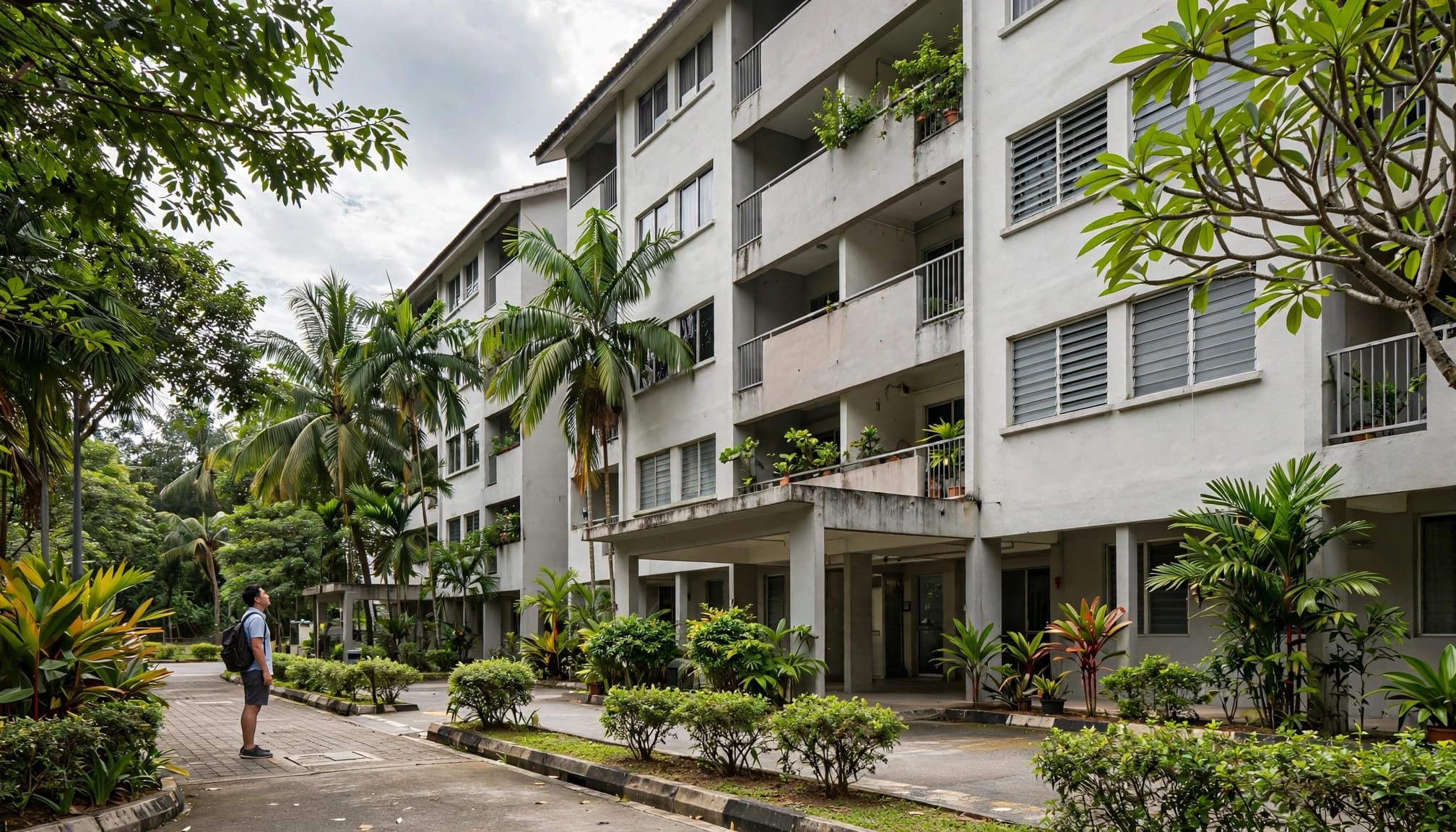
An auction purchase doesn’t automatically include vacant possession. The former owner, a tenant or another occupant may still live there.
Assess occupancy without entering unlawfully or disturbing residents. Where available, obtain tenancy information and have your lawyer explain its effect on possession.
If the sale conditions leave possession to you, allow for legal costs and delays. Don’t base your budget on immediate rental income or moving in straight after settlement. An apparently empty unit also doesn’t prove that handover will be straightforward.
Inspect what you can access lawfully
Internal inspection may be unavailable, so you could bid without seeing concealed defects. Where access is permitted, use an independent inspector.
Look for damp, significant cracks, roof drainage problems and electrical or plumbing concerns. For strata properties, assess lifts, shared areas and visible building upkeep too.
A visual inspection cannot reveal every hidden defect. Therefore, keep a repair contingency rather than treating a tidy exterior as proof of good condition. If access is refused, price that uncertainty into your maximum bid.
Work Out Who Pays Outstanding Charges
Maintenance fees, sinking-fund contributions, quit rent or parcel rent, council assessments and utility balances deserve separate attention.
These charges don’t all follow one universal rule. The sale conditions may allocate them to you, the selling bank or another party. A bank’s undertaking may also have a payment cap, a claim deadline or exclusions.
Obtain available statements from the management body and relevant authorities for your lawyer’s assessment. Separate charges covered by the bank from amounts you must fund.
The previous owner’s personal loans aren’t automatically your debts merely because you buy the property. However, property-related arrears or account arrangements can affect costs and access to services.
For apartments, our explanation of strata and individual titles helps distinguish ownership from shared-building obligations.
Prepare Financing Before You Bid
Calculate your DSR and prepare documents
Seek mortgage prequalification before auction day. Your debt service ratio, or DSR, compares monthly debt commitments with income under the lender’s assessment method.
Include existing repayments and the proposed housing instalment. Banks use different income treatments and approval limits, so one percentage doesn’t establish approval across lenders.
Prepare income evidence, bank statements and existing-loan information early. Our Malaysian DSR guide explains the calculation. Prequalification supports planning, but it doesn’t guarantee approval for a particular auction property.
Plan for the funding shortfall
The bank will assess the property as well as your finances. Its valuation, financing margin, title requirements and disbursement conditions can affect how much you receive.
If financing falls below your expectation, you must cover the difference within the sale deadline. Deposit funds alone won’t cover that risk.
Give your mortgage banker and lawyer the auction documents before bidding. They can assess whether the financing process fits the completion period. Avoid a bid that depends on an unapproved extension or borrowing arrangement.
Budget Beyond the Winning Price
The winning bid is only one part of your cash requirement. A reported 7% to 10% allowance for associated costs is a rough planning estimate, not a standard or guaranteed amount. Actual charges depend on the property, transaction and sale terms.
Separate your budget into these categories.
| Cost category | What it includes |
|---|---|
| Purchase funding | Deposit, required top-up and balance not covered by financing |
| Transaction costs | Transfer duty, loan agreement duty, legal fees, valuation and disbursements |
| Property liabilities | Arrears allocated to you under the sale conditions |
| Post-purchase costs | Repairs, possession expenses and ongoing holding costs |
Don’t add the deposit to the purchase price again. It normally forms part of that price, while fees and repairs require separate funding.
Our guide to transfer stamp duty explains that component. Set your maximum bid only after reserving cash for the other categories and the period before usable possession.
Register, Bid and Complete on Time
Introduced on 1 March 2018 under Order 31A of the Rules of Court, e-Lelong digitised court foreclosure auctions.
The official bidder terms require a bank draft equal to 10% of the reserve price. For e-Lelong, confirm the submission deadline and accepted delivery method for the sale. The official FAQ gives a deadline of no later than one working day before auction when the sale terms require it.
Follow this sequence:
- Register and complete bidder identification. Submit the bank draft to the designated recipient using a method accepted for that sale. Confirm the deposit submission requirements with the auctioneer.
- Bid within your predetermined ceiling. Check the sale terms and the official e-Lelong FAQ for current bidding hours and closure rules.
- Complete the winning-sale documentation and required deposit top-up. Where a 10% final deposit applies, the top-up reflects the winning price rather than the reserve price.
The winning documentation may include a Memorandum of Sale or purchase agreement. Your lawyer and lender must then complete settlement within the applicable completion period.
Frequently Asked Questions
What happens if you miss the completion deadline?
For High Court e-Lelong sales, the 120-day deadline and deposit forfeiture consequences depend on the applicable sale terms. Confirm the legal consequences with a Malaysian property lawyer or the relevant authority. For LACA, check the sale conditions. An extension isn’t guaranteed, and interest may apply under the terms.
Can you bid when a private caveat exists?
A caveat needs legal assessment before you commit. Its effect depends on the underlying claim and transfer position. Don’t assume financing is impossible or that winning the auction will remove the obstacle.
Can someone bid on your behalf?
Representative-bidding requirements depend on the auction. Have your lawyer confirm the permitted documents, including any required Power of Attorney. Settle the representative’s authority and confirm the intended purchaser’s identity before registration.
Conclusion: Set Your Limit Before Auction Day
A low reserve price is useful only when the title, condition and full cash requirement fit your plans. The sale documents determine what you must pay and when.
Before bidding, resolve the legal issues and prepare financing with room for a shortfall. Your bidding ceiling should protect your budget even if repairs or possession take longer than expected.