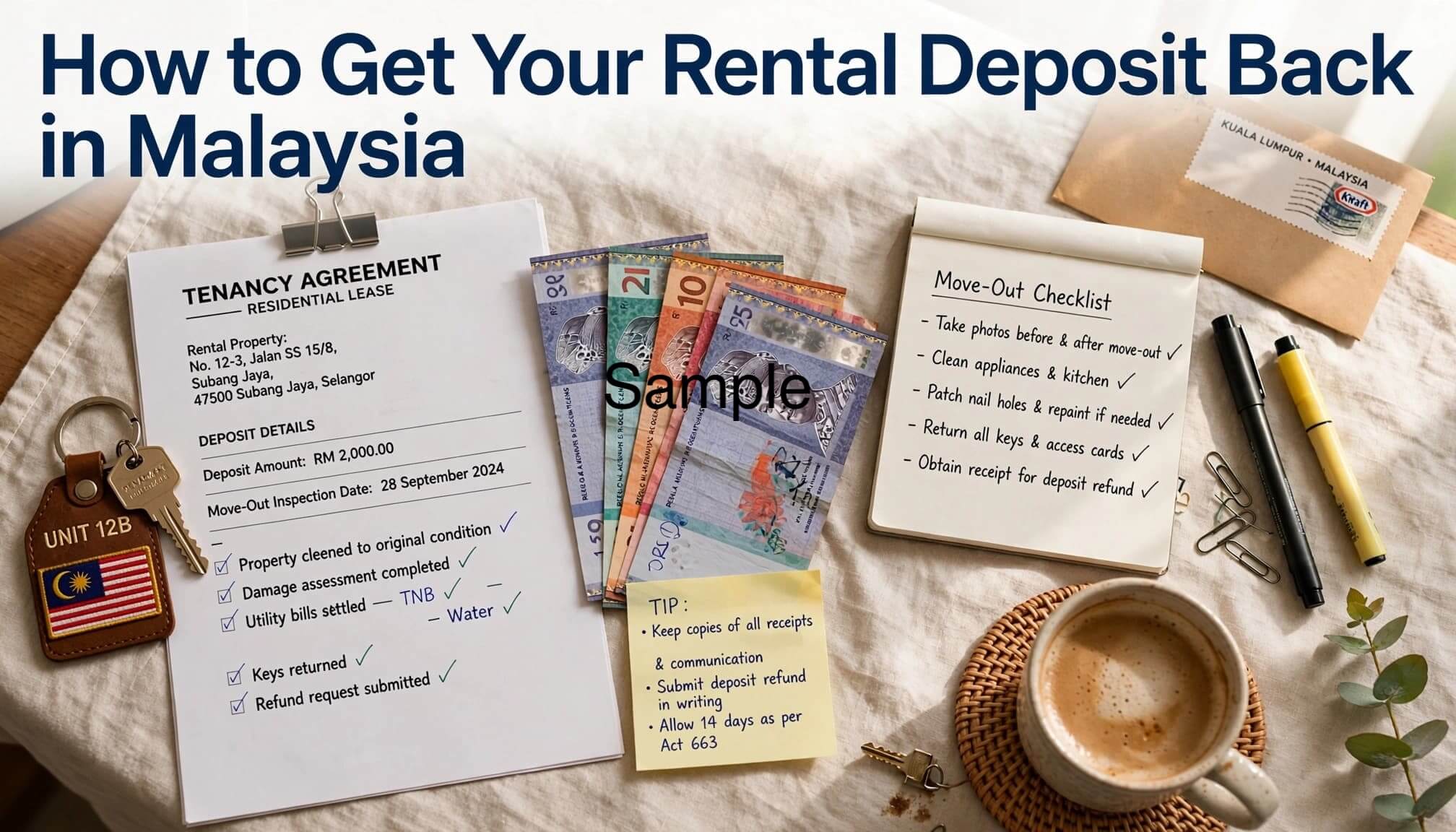
A damaged chair or unpaid electricity bill can turn your deposit into a dispute. This guide to rental deposits in Malaysia explains why clear records, a proper handover and a written request matter.
Your tenancy agreement is the starting point, but evidence matters when you dispute deductions. Check both before moving day.
Quick Answer
Review your tenancy agreement, give the required notice, document the property’s condition, and return every key and access card. Then request your security deposit balance with an itemized statement of any deductions, such as utility arrears.
Deposit types, refund deadlines, and permitted charges depend on your agreement and circumstances. If negotiation fails, an individual claim of RM5,000 or less may qualify for Malaysia’s small claims procedure.
5 Key Takeaways
- Separate your security deposit, utility deposit and advance rent.
- Check notice requirements and refund terms before moving out.
- Keep a dated check-out record with photos, inventories, meter readings and handover messages.
- Ask for evidence supporting each deduction.
- Try written negotiation first, then check appropriate court options if necessary.
Review Your Tenancy Agreement Before Giving Notice
Identify each payment and refund condition
A common Malaysian arrangement includes two months’ rent as a security deposit, half to one month’s rent for utilities, and one month’s advance rent. These are market conventions, not a legally standardised deposit schedule.
Check your receipts against the tenancy agreement. Advance rent pays for an agreed rental period, while a security deposit serves a separate purpose. Also confirm whether any booking payment was credited toward rent or deposits. If an estate agent collected a payment, confirm they’re authorised to collect it and provide a receipt.
SureLah’s guide to Malaysian rental agreement clauses covers payment, repair and termination terms worth checking before you act.
Check notice periods and early termination
Read the notice clause before booking movers. Confirm how much notice you must give, where to send it and whether email is acceptable.
If you’re leaving early, check any termination payment or forfeiture clause. Don’t assume surrendering your deposit settles every obligation. Equally, don’t assume every stated penalty is automatically enforceable; disputed clauses may need legal review.
Finally, locate the refund deadline. There isn’t a universal refund period you should assume covers every tenancy. If the agreement is silent, request a written repayment date.
Document the Property and Complete the Handover
Record the condition before you leave
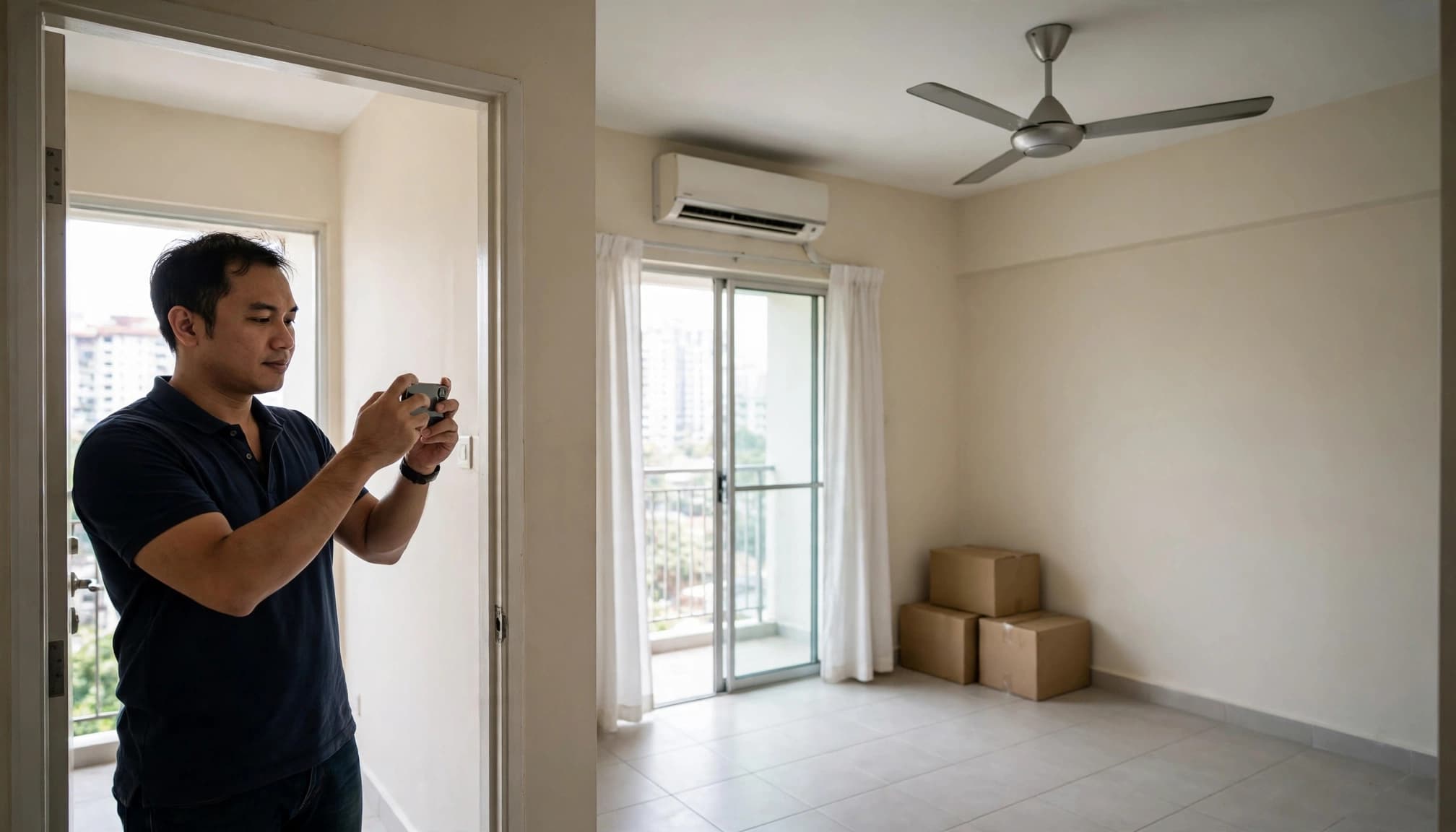
Compare the unit with your move-in inventory and photos. Then photograph each room after cleaning and removing your belongings for your check-out record.
Include floors, walls, bathroom fittings, supplied furniture and appliances. Photograph property damage and existing defects, with close-ups and wider views showing their location. Keep the original files with their dates and metadata. Distinguish fair wear and tear from new damage.
Also photograph electricity and water meter readings. Save final bills, payment receipts and repair messages together. If something broke during your tenancy, explain it honestly and record any agreed solution before handover.
Return keys and confirm vacant possession

Arrange a joint inspection where possible. Return all keys, access cards and parking remotes, then ask for written acknowledgement of their number and the handover date.
The handover record should state any defects identified and issues still awaiting agreement. Read it before signing, particularly any wording that accepts liability.
If the landlord can’t attend, agree on another arrangement in writing. Record when and to whom you delivered the keys. Leaving them with security without permission can create uncertainty about whether handover was completed.
Check Whether Deposit Deductions Are Supported
The agreement and circumstances between landlord and tenant determine whether a deduction is justified. For breach-of-contract compensation, section 74 of the Contracts Act 1950 addresses proven loss arising naturally from the breach, or loss the parties knew was likely. It excludes remote and indirect loss.
Section 74 doesn’t provide a rental-deposit deduction schedule or define fair wear and tear.
Ask what loss each charge covers
Unpaid rent, utility arrears and tenant-caused property damage may support deductions, depending on the agreement and evidence. Check whether the claimed bill relates to your tenancy period.
For repair charges, request the damaged item’s identity, photographs, the work required and a quotation or invoice. A contractor’s breakdown should distinguish labour, materials and replacement costs where relevant.
These documents help you assess the claim, but they’re not a universal statutory checklist. If an older appliance needs attention, ask why replacement is necessary instead of repair.
Distinguish normal wear from new damage
Ordinary fading or deterioration through normal use is generally considered fair wear and tear. A broken door or missing furniture raises a different issue. Consider the item’s age, initial condition and your contractual obligations.
A clean check-out record helps you challenge a later allegation, especially alongside dated photographs. However, it doesn’t automatically prevent every later deduction. A landlord may allege damage discovered afterward.
Ask when the problem was found, who had access after handover and what evidence connects it to your tenancy.
Request an Itemised Breakdown and Refund Date
Send your request through a channel that leaves a record. Include the property address, tenancy end date, handover date and deposit amounts shown in your receipts, including the security deposit.
You can use this wording:
Please confirm the refund amount due from my security and utility deposits, and the refund date. For each proposed deduction, please provide the amount, relevant clause in the tenancy agreement, reason and supporting bill, quotation or photograph. Please also confirm whether you can return the undisputed balance while we resolve the remaining items.
If no deadline is stated, propose a reasonable response date. For example, requesting a reply within seven days is a practical negotiating request, not a universal legal deadline.
Once the itemized statement arrives, respond to each disputed item separately. Attach relevant photos, receipts or the check-out record to support your position on property damage or fair wear and tear.
Keep copies of WhatsApp messages, emails and attachments. After a phone discussion, send a short written summary. If you accept a settlement, confirm the amount and payment date before signing any full-and-final release.
Consider Small Claims if Negotiation Fails
The Malaysian Judiciary’s civil-case procedure guidance confirms that an individual claim of RM5,000 or less can be filed in the Small Claims Court.
A small claims case may suit a disputed rental deposit, but you still need to establish why the money is owed. A delayed refund doesn’t guarantee a successful claim. Try negotiation first as part of dispute resolution, then consider court action if it fails.
Before filing, organise your case in this order:
- Prepare a timeline covering deposit payment, notice, inspection, key return and refund requests.
- Calculate the refund amount, separating deposits, repayments already received and deductions you accept.
- Gather your agreement, receipts, photographs, inventory, check-out record, bills and correspondence. For a disputed deduction, include evidence showing whether damage exceeds fair wear and tear.
- Contact the appropriate Magistrates’ Court registry to confirm jurisdiction, current filing requirements, fees and service instructions.
Use the Judiciary’s small-claims procedure guide as a starting point, then confirm current requirements with the registry. The procedure is governed by Order 93 of the Rules of Court 2012.
Bring an organised evidence bundle to any hearing and follow court directions. If the landlord disputes liability, your documents should connect the amount claimed to the agreement and completed handover.
For a larger or more complicated dispute, get qualified Malaysian legal advice before choosing a procedure or abandoning part of your claim.
Protect Your Next Deposit Before Paying
Deposit protection starts before move-in, especially in Malaysia’s rental market. The Straits Times reported 922 rental-fraud cases and approximately RM2.5 million in financial losses in Malaysia for 2025, highlighting the risk of rental scams.
Inspect the actual rental property and verify the landlord’s identity. Check an estate agent’s authority to collect money to guard against rental scams. Confirm who is authorised to sign the agreement and whether the estate agent can collect payments and issue receipts.
Before transferring funds, check the recipient’s bank account or telephone number through PDRM’s Semak Mule portal. A clear result doesn’t guarantee that a listing is genuine or rule out rental scams, so combine it with identity and property checks.
If payment details change, verify them through a contact you already trust. Keep separate receipts for each payment. Then complete a move-in inventory and obtain written confirmation of existing defects, rather than relying on verbal assurances.
Frequently Asked Questions
Can I use my deposit as the last month’s rent?
Don’t do this unless your agreement allows it or the landlord agrees in writing. Otherwise, unpaid rent may become a separate breach, even if you expect a deposit refund. Continue following the payment terms while discussing repayment.
Does a proposed Residential Tenancy Act control my refund?
Don’t treat a proposal as an operative law. Before relying on any Residential Tenancy Act provision for a residential tenancy, verify its enactment and commencement through current Malaysian government guidance or a lawyer. Check which rules apply to your agreement and dispute.
Is a zero-deposit rental arrangement free?
Not necessarily. A zero deposit arrangement may involve fees, insurance or other contractual obligations. Check whether charges are refundable, what damage liability remains and how disputes work. Compare the full written terms of a zero deposit arrangement with a cash deposit, rather than judging only the upfront payment.
Make Your Refund Claim Easy to Verify
A documented handover, completed payments and a clear refund request support your position. A check-out record can clarify fair wear and tear.
Keep negotiations focused on specific charges, evidence, the itemized statement and the bank account nominated for the refund.
If agreement remains impossible, check current court guidance and get qualified advice where needed, especially if legal disputes arise. (Special note) This information is educational, not legal advice; your agreement and circumstances will affect the outcome.