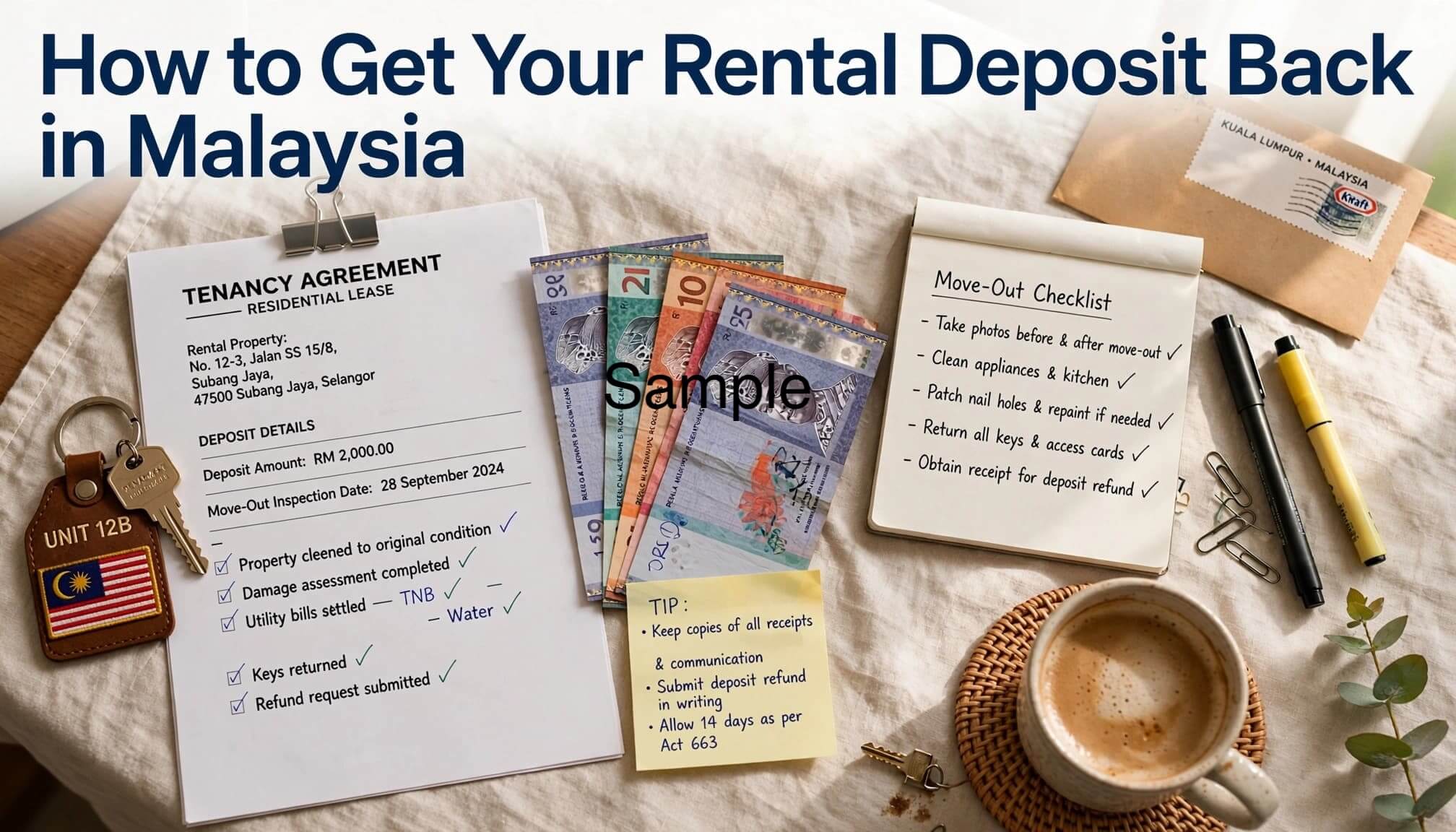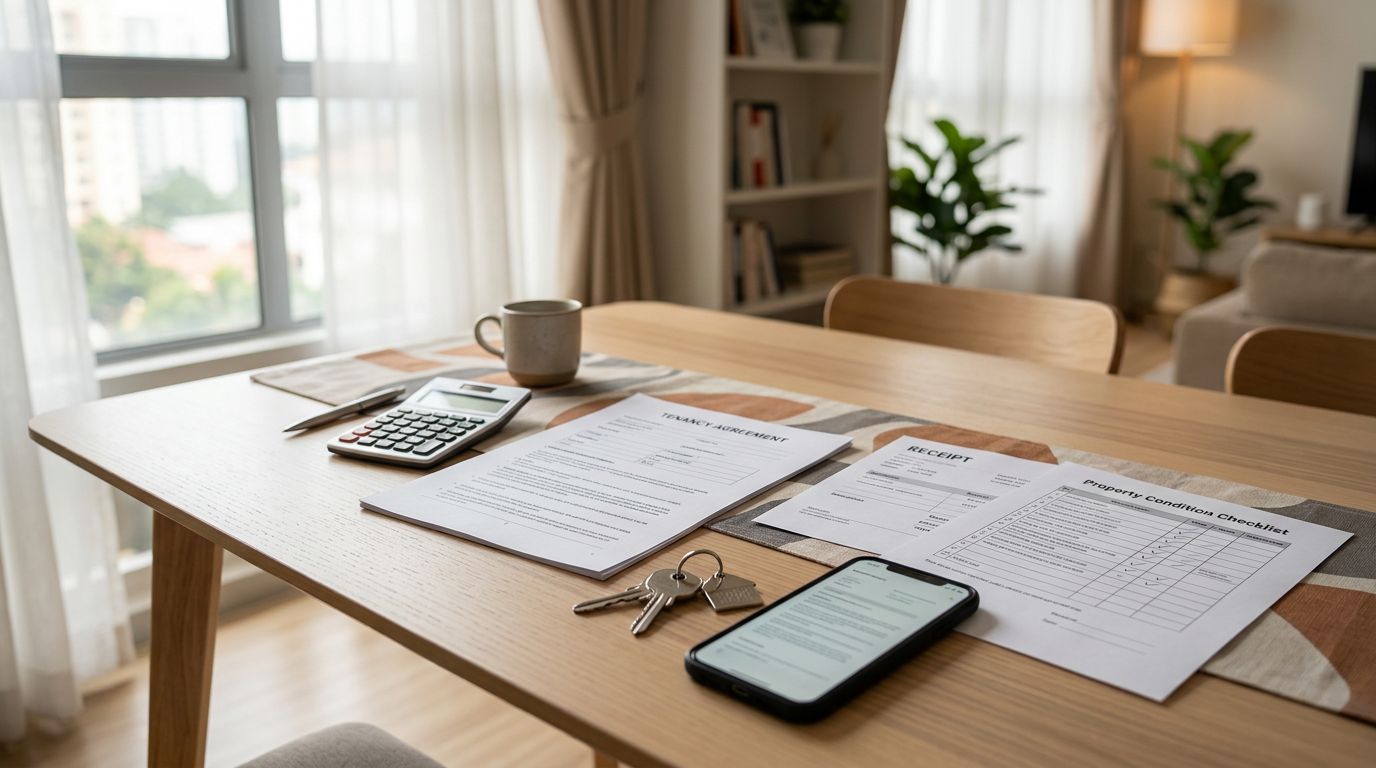
A rental agreement can look routine until a repair bill arrives or you need to move out early. If you’ve searched for “rental agreement Malaysia” before paying a deposit, focus on the terms that determine what you’ll owe, what the landlord must do, and when you can leave.
A standard-looking template won’t answer those questions for your particular home. Start with the clauses that affect your money and daily use of the property.
Quick Answer
Before signing a Malaysian tenancy agreement, check the named parties and property, tenancy dates, rent, deposits, utilities, repairs, landlord access, renewal, termination, and handover terms. Ask for unclear promises or exceptions in writing, including when your security deposit will be returned.
Stamp duty is a separate legal cost, while common deposit amounts and refund periods are generally matters for your agreement. Keep a signed copy, payment records, and photos of the property’s condition.
Key Takeaways
- Confirm the exact unit, tenancy dates, occupants, and renewal process before you pay.
- Separate advance rent, other deposits, and the utility deposit in the agreement.
- Ask who pays for specific repairs, not simply who handles “maintenance.”
- Record the unit’s condition and inventory at both move-in and move-out.
- Check the stamp duty calculation and obtain proof that stamping was completed.
Rental agreement Malaysia checklist: Term and renewal

Check the parties, property, and dates
Your agreement should name the landlord and every tenant, identify the full property address and unit number, and state when possession begins and ends. If an agent handles the paperwork, ask who’s authorised to sign for the landlord and who’ll receive your payments.
Check whether the stated start date matches the day you get usable access. If keys arrive a week late, you shouldn’t have to guess whether rent begins on the original date. Clarify this before signing, particularly if the home needs cleaning or repairs first.
Understand what happens at expiry
A fixed term doesn’t always renew automatically. Look for the notice you must give to request renewal, when a new rent will be agreed, and whether staying after expiry requires a new signed document.
For example, if you hope to stay beyond a one-year term, ask whether the landlord will offer renewal discussions before you must commit to another home. Get any agreed extension in writing. A message saying “we’ll sort it out later” leaves too much unsettled.
Under the National Land Code 1965, tenancies for terms not exceeding three years are generally exempt from registration, while longer arrangements may be treated as leases. The legal requirements depend on the arrangement, so have a Malaysian lawyer review any proposed term exceeding three years.
Rent, deposits, and payment records
Make the payment schedule unambiguous
The rent clause should state the monthly amount, due date, payment method, and account details. Check when a payment counts as received and what happens if it’s late. If the agreement allows a late charge or a rent increase, ask for the amount or calculation method in writing.
Bank transfers give you a useful record. Before sending money, confirm that the payee is the landlord or an authorised recipient. Keep receipts for transfers to an agent too. If the landlord changes bank accounts, request written confirmation through a contact you already trust.
Separate each deposit
In Malaysia, a common arrangement is two months’ rent as a security deposit, half to one month’s rent as a utility deposit, and one month’s advance rent. These are market conventions, not a fixed statutory deposit schedule. An earnest deposit paid to reserve a property is another matter; ask whether it will be credited toward rent or deposits, and what happens if the deal falls through.
At RM1,500 monthly rent, the two-month deposit is RM3,000. A half-month utility deposit adds RM750. Ask for a receipt that identifies each payment rather than one unexplained lump sum.
Your agreement should say what the landlord may deduct, how deductions will be documented, and when the balance will be returned. There isn’t a single universal statutory refund deadline you can safely assume applies to every tenancy. Request a clear contractual date, such as a stated number of days after key return and final utility bills. Also ask whether any disputed amount can be held separately from the undisputed balance.
Utilities and repairs: Find the dividing line
Identify every bill you might inherit
Check who pays electricity, water, internet, sewerage charges, and any other services at the unit. For a condominium, clarify whether the landlord pays building maintenance and sinking fund charges, and whether any facility or access-card fees fall to you.
A serviced apartment’s utility tariff may differ from what you expect for a conventional residence. Request recent bills if monthly costs matter to your budget. At handover, photograph meter readings and agree which date marks the start of your responsibility. The agreement should also address unpaid bills from before your move-in.
Put repair responsibilities in plain terms
“Tenant responsible for all repairs” is broad enough to cause trouble. Ask who pays when an air conditioner fails through ordinary use, a pipe leaks inside a wall, or a tap breaks after accidental damage. The answer may differ for each problem.
Look for a reporting process, a contact for urgent issues, and reasonable timeframes for action. If you’re expected to arrange minor repairs, ask whether there’s a spending limit and whether you need approval first. The contract should distinguish damage you cause from fair wear and tear, rather than treating every mark at move-out as a deduction.
Landlord access, occupants, and house rules
Protect reasonable privacy
Check when the landlord or agent may enter, how much notice you’ll receive, and how inspections will be arranged. Emergency entry needs a sensible exception, but routine viewings shouldn’t leave you guessing who might arrive.
If the owner plans to sell the property during your tenancy, ask how buyer viewings will work. Written notice and agreed viewing times can protect your routine without preventing reasonable access.
Check who may live there
An agreement may restrict extra occupants, subletting, short stays, or pets. Ask what “occupant” means if a family member will live with you, and obtain written permission for any agreed exception.
Condo management rules can apply alongside your tenancy terms. If you have an animal, check both the agreement and the building’s rules. SureLah’s guide to pet rules for Malaysian condos and landed houses covers questions to ask before committing to a home.
Early termination, notices, and disputes
Work out the cost of leaving early
Find the clause for ending the tenancy before it expires. It may require advance notice, impose a payment, or let the landlord retain a stated sum. Don’t assume that forfeiting the security deposit settles every obligation.
If your job could take you to another state, ask whether you can leave early by giving notice and helping find a replacement tenant. Put any agreed arrangement in the contract. Check the landlord’s termination rights too, including what counts as a breach and whether you get time to fix it.
Know how notices and possession work
The agreement should say where formal notices must go and whether email counts. Update those contact details if they change. Keep copies of repair requests, payment confirmations, and notices to establish a timeline if a dispute arises.
A clause threatening an immediate lock change for late rent deserves legal review. The Malaysian Bar’s guidance on recovering possession explains that, under section 7(2) of the Specific Relief Act 1950, a landlord needs a court order to recover possession. A lock change shouldn’t be treated as a substitute for that process.
Inventory and handover: Record what you’re accepting
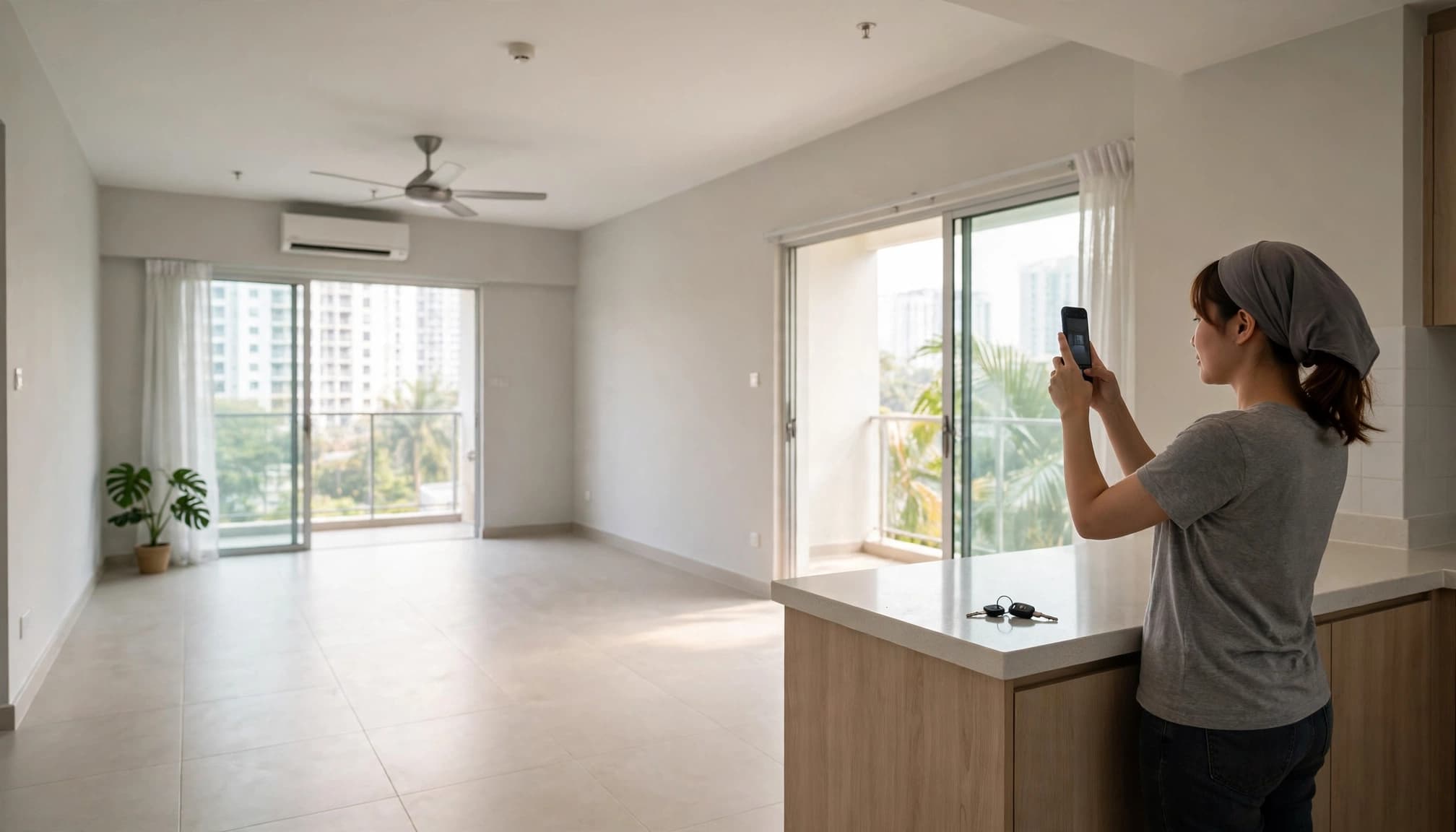
An inventory should identify furniture, appliances, access cards, parking remotes, and keys supplied with the unit. Note existing defects alongside it. A photograph of a scratched floor is more useful when both parties can connect it to a dated handover record.
Test practical items before confirming the property’s condition: taps, lights, air conditioning, door locks, and supplied appliances. Send any missed defects promptly in writing. If the landlord promises to replace an item after you move in, record what will be replaced and when.
At move-out, agree how to return keys, take final meter readings, and inspect the unit. Ask for an itemised explanation of deductions. Clear handover records help you distinguish a new breakage from a fault that was already present.
Stamp duty and the signed agreement
Check the tenancy calculation
Stamp duty on a tenancy agreement is separate from duty on a property purchase or housing loan. For a fixed monthly rent, calculate the annual rent, divide it by RM250, round up to a whole unit, and apply the rate for the agreement term. A current tenancy stamp duty guide sets out these rates under the Stamp Act 1949:
| Agreement term | Duty per RM250 of annual rent, or part thereof |
|---|---|
| One year or less | RM1 |
| More than one year, up to three years | RM3 |
| More than three years, up to five years | RM5 |
| More than five years | RM7 |
For example, RM1,500 monthly rent over 12 months gives RM18,000 in annual rent. That equals 72 units of RM250, so the duty is RM72 at the one-year rate. The former exemption for the first RM2,400 of annual rent was removed from 1 January 2025. Irregular rent or unusual terms may need a different calculation, so ask for a breakdown rather than accepting an unexplained fee.
Confirm who completes stamping
Ask who will submit the signed agreement, who pays the stamp duty, and when you’ll receive the stamped copy or certificate. Agreements signed in Malaysia are generally submitted for stamping within 30 days. Online processes are described in this Malaysia e-stamping guide; confirm the current LHDN procedure when you sign.
An administration or drafting charge isn’t the same as government stamp duty. If an agent quotes one combined figure, ask for separate items. Keep the signed agreement and stamping proof together, since failure to stamp can create problems and extra costs if you later need to rely on the document in a dispute.
Frequently Asked Questions
Can you sign and stamp a tenancy agreement online?
Online stamping and electronic signing are separate steps. Don’t assume that using an e-stamping service resolves every question about signatures. Ask how both parties will sign, retain matching copies, and verify the completed document. For an unusual arrangement, seek legal advice.
Must your landlord return the deposit within 30 days?
Don’t rely on 30 days as an automatic legal deadline for every tenancy. The agreement should specify the refund date, permitted deductions, and how final bills will be handled. If the draft is silent, request a written timeframe before signing.
Is an unstamped agreement automatically worthless?
Don’t assume it has no effect, or that you can use it in court without further steps. Stamping affects how the document can be relied on and may involve additional duty or penalties if delayed. Get advice on your specific agreement if a dispute has already begun.
Sign with the details settled
The biggest risk in a familiar-looking rental agreement is an important detail left to a verbal understanding. Check the amounts, dates, repair duties, exit terms, and handover record against what you’ve actually agreed.
Ask for changes before you sign, and keep the completed documents and payment proof. This is general educational information, not legal advice; a Malaysian lawyer can advise you on disputed or unusual terms.