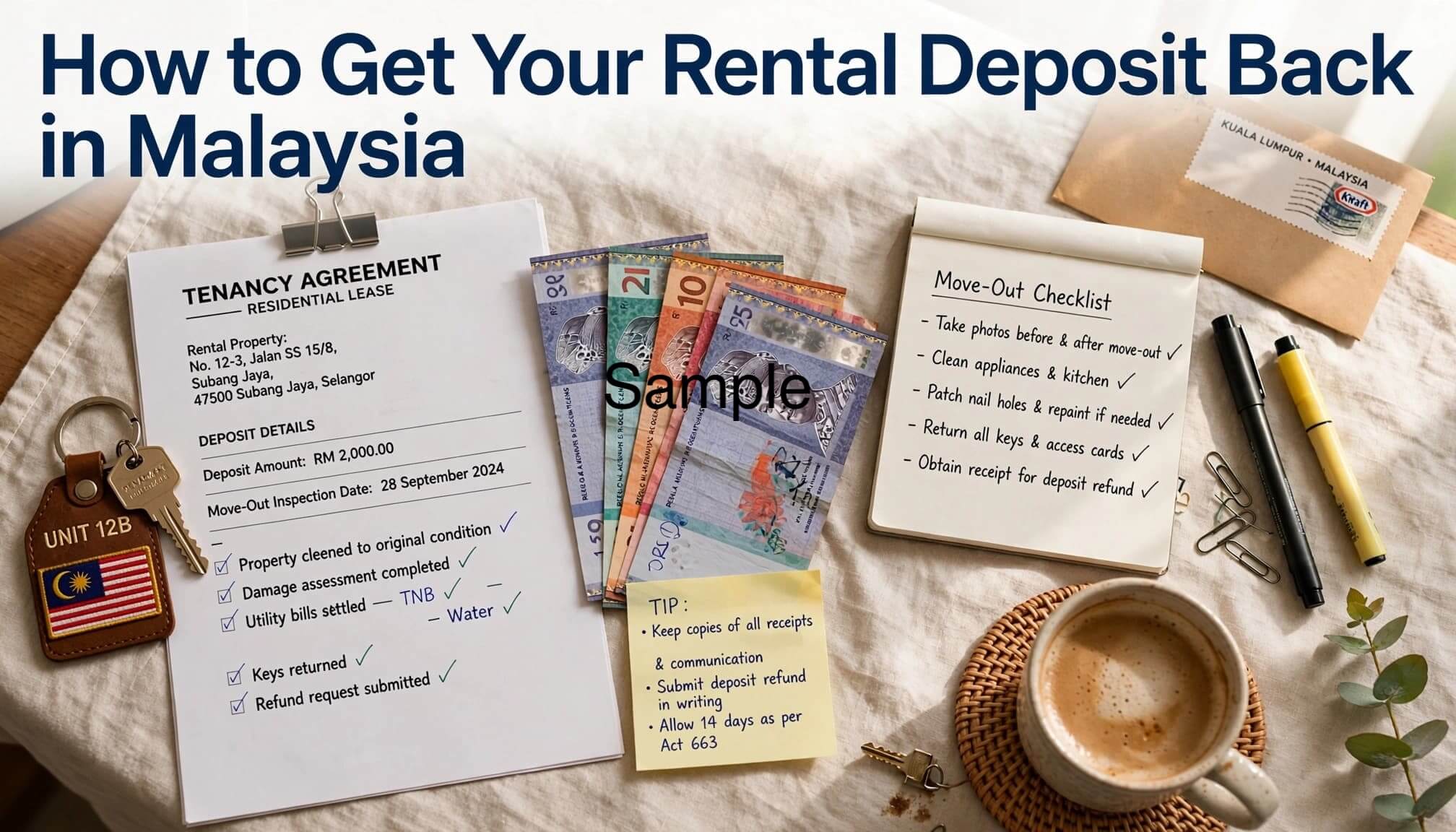
Owning a home in Malaysia can mean paying two separate charges: quit rent to the state land authority and assessment tax to your local council. Together, they form part of your property tax costs, so include both in your ongoing ownership costs, even if you live in the property yourself.
The amount depends on your title, location and local authority. Start by identifying which bill you’re looking at and who collects it.
Quick Answer
You generally pay quit rent (cukai tanah) to the state authority for land held under a title. Parcel rent (cukai petak) may apply to a strata unit with its own strata title, but it doesn’t replace assessment tax, also called cukai pintu. You pay assessment tax to your local council for a rateable property.
These are separate bills. Quit rent is generally annual, while councils commonly bill assessment tax in two instalments. Your rate, deadline and payment channel depend on the relevant state or council, so use the details on your current official bill.
Key Takeaways
- Quit rent goes to the state land authority, while assessment tax goes to your local council.
- A strata property owner may pay parcel rent instead of a share of quit rent under a master title.
- Assessment tax usually depends on the council’s estimated annual rental value and applicable rate.
- Check each authority’s current bill for the amount, arrears, due date and payment options.
- If you receive a formal arrears notice, contact the issuing authority promptly and keep proof of payment.
Quit rent and assessment tax: What is the difference?
These property tax charges are separate in Malaysia, and paying one doesn’t settle the other. The land office and council maintain separate records and issue separate bills.
| Charge | Who collects it | What determines the bill |
|---|---|---|
| Quit rent (cukai tanah) | State or district land authority | Land title details, including area, use category and applicable state rate |
| Parcel rent (cukai petak) | State authority | The strata parcel and applicable rules for strata properties |
| Assessment tax | Local council | The property’s assessed annual value and council rate |
The quickest way to sort your bills is to match each charge to its collecting authority, not just the property address. Quit rent and assessment tax are separate obligations.

Land charges are handled by the relevant authority
For a landed home, the registered proprietor normally receives a land-tax bill from the relevant land office. The state government applies rates based on its rules and the title details, so a neighbour’s bill isn’t a reliable estimate.
The National Land Code provides the land-law framework in Peninsular Malaysia. Sabah and Sarawak have separate land laws, so check the authority named on your title or bill.
Assessment bills come from the council
Assessment tax, also known as cukai pintu, applies to property within a local authority’s area. In Shah Alam, for example, you would contact the municipal council, Majlis Bandaraya Shah Alam (MBSA), about the charge.
In Peninsular Malaysia, local-authority rates are governed by the Local Government Act 1976. Your council sets the valuation and applicable rate under relevant rules. A receipt for one charge doesn’t confirm the other account is clear.
How much will you pay?
There isn’t one nationwide quit-rent rate or assessment-tax rate. To estimate your property ownership cost in Malaysia, check the current land or parcel bill and the council’s assessment record. Previous bills can help with budgeting, but check for revised valuations, rates or arrears.
How assessment tax is calculated
Under the Local Government Act, a municipal council generally calculates annual assessment tax by multiplying the annual value by the applicable rate. Annual value is the council’s estimate of a property’s annual rental value, which isn’t necessarily the rent you receive or an estate agent’s asking price.
For example, an annual value of RM12,000 at a 4% rate produces RM480 in annual assessment tax. If the council splits that amount evenly, the instalments would be RM240 each. This is an illustration, not a rate to apply to your own home.
MBSA’s assessment-tax guidance lists different rates for property types, including landed residential property, residential strata buildings and service apartments. Check the classification on your council record before using any published rate.
What affects quit rent
For quit rent, land size and title category commonly affect the charge. Changes to land use or title details can affect what the state government charges; minimum charges and other state-specific rules may also apply, so a basic area-times-rate calculation might not match your bill.
If you’re choosing between property types, compare actual bills. Our guide to serviced apartment and condo costs covers other expenses that can differ alongside the council’s charges.
Where parcel rent fits for strata homes
If you own a condominium, apartment or other strata properties, check whether your state has issued a separate account for your unit. Parcel rent, also known as cukai petak, is a state land charge linked to the strata parcel. It doesn’t replace assessment tax.
Title status matters. If an individual strata title hasn’t been issued or the account remains under a master title, quit rent may still be handled through the building’s management arrangements. Don’t assume a maintenance statement confirms whether the land authority has billed your parcel directly.
Ask the management body or land office to confirm the title and billing status. For a subsale property transaction, ask your lawyer to check outstanding land charges and council assessment before completion and transfer of ownership. Maintenance fees and sinking-fund contributions are separate costs.
When are these taxes due?
Treat dates in this guide as local examples, not deadlines for every Malaysian home. In Selangor, quit rent is payable before 1 June under the state government’s published guidance. MBSA lists assessment tax instalment periods of 1 January to 28 February and 1 July to 31 August.
Your own land authority and council may use different dates or payment arrangements. Check each current bill for the payment deadline, amount and available payment channels, especially if you own properties in different states. Keep separate reminders for each account.
If you haven’t received a paper bill, don’t wait until a deadline passes. An old mailing address doesn’t remove an outstanding balance. Use the relevant official portal or ask the issuing office to confirm your account and due date.
What happens if you pay late?
A missed payment can grow into arrears, a late payment penalty and enforcement costs. The process differs between quit rent and council assessment tax, so read any notice closely. Its issuing authority, account number, amount and response date tell you what to do next.
Quit rent arrears and Form 6A
For land governed by the National Land Code, the land authority can issue Form 6A, also known as Borang 6A, to demand overdue rent. The Code sets out a notice process and a period to settle the stated amount. Continued non-payment can lead to land forfeiture proceedings, but receiving the notice doesn’t mean you lose the land immediately.
Check the notice against your title and payment records. If you’ve paid, send the receipt to the issuing office and request an updated account statement. If the balance includes older years or charges you don’t recognise, ask for a written breakdown before assuming the current bill is the full amount.
Assessment-tax arrears and Form E
A local council may issue a Form E notice under the Local Government Act 1976 for unpaid assessment tax. Iskandar Puteri City Council’s assessment-tax guidance describes a notice and further enforcement steps if payment remains outstanding. These can include action against movable property.
Pay attention to the deadline and charges on your own council’s notice. If you cannot clear the balance at once, contact the council to ask what payment arrangements, if any, it will accept. Don’t assume that a partial payment stops enforcement without written confirmation.
How to check and pay your bills online
Start with the authority, not a search result promising to handle all Malaysian property taxes. For quit rent, you usually need a title or lot reference; assessment tax bills use an account number. Previous bills, title documents or sale papers may contain those details.

Find the correct account
Check the state’s official land portal for land or parcel rent. e-tanah is state-specific, not a nationwide payment route. In Selangor, the land office explains how owners can check a balance through e-tanah Selangor or request bill details from a district land office using title information. Its land-tax account guidance also covers common billing questions.
For assessment charges, use the website or counter of the municipal council responsible for the property. An address near a local council boundary can be confusing, so check an existing bill or confirm the authority with the council.
Confirm the balance before paying
Penang shows why you may need two platforms. The state’s land-office payment guidance points owners to PgLAND for land or parcel rent and a separate council payment platform for assessment charges.
Before paying, check the property details, tax year, arrears and total due. Use only payment methods listed by the issuing authority or on its verified bill. Save the receipt, then check that the account reflects your payment. If it doesn’t, contact the authority with your transaction reference rather than paying again immediately.
Keep ownership and contact records up to date
Property bills can become confusing after a move, tenancy or inheritance, or following a property transaction. In each case, start with the current title and account records, including quit rent and assessment tax details. A payment receipt helps show what a property owner settled, but it doesn’t update an owner’s name or mailing address by itself.
If you rent out your home or move
As a property owner, you should keep track of the land and council accounts even if a tenant lives in the property. Your tenancy agreement can say whether the tenant reimburses you for a property-related charge, but it doesn’t automatically change the authority’s records or billing responsibility. If you agree to pass on a cost, spell out the amount, payment method and proof required.
Update both authorities when your mailing address changes. In Selangor, registered owners use Borang 26A for a land-title address change, according to the Selangor land office’s address guidance. Check separately with your council about its assessment-account records. The forms and process may differ elsewhere.
If you inherit a property or find old arrears
First, identify the state land authority and local council, then request statements for both accounts. Give the offices the title or lot details, assessment account number and any old receipts you have. Ask each for a year-by-year breakdown if the balance spans several years.
If the registered owner has died, ask the estate’s lawyer or administrator what documents are needed for a transfer of ownership and to deal with the authorities. Inheritance paperwork and title transfer can take time, while bills may continue to arrive. Keep the estate’s payment records together so later payments aren’t mistaken for unpaid years.
FAQs
Do you pay both taxes on an owner-occupied home?
Usually, yes. Living in your own home doesn’t by itself remove quit rent or the council bill. Check which charges apply to your title and property.
Is parcel rent an extra tax on top of quit rent?
For an eligible strata parcel, it generally replaces the direct land charge. You still need to pay the council bill separately. Confirm your unit’s billing status with the state land authority.
Can you use the same portal for both bills?
Don’t count on it. Land authorities and councils issue separate accounts, and payment channels vary. In Penang, for example, owners use different platforms for the land charge and assessment tax.
Conclusion
Two property tax bills mean two accounts to check. Match each bill to its issuing authority. Check quit rent with the land authority and assessment tax with your local council, then confirm your title or parcel status and rely on the current bill for the amount and deadline.
If a bill is missing or an old balance appears, request a statement before paying an uncertain amount. Clear records make the next bill much easier to handle.