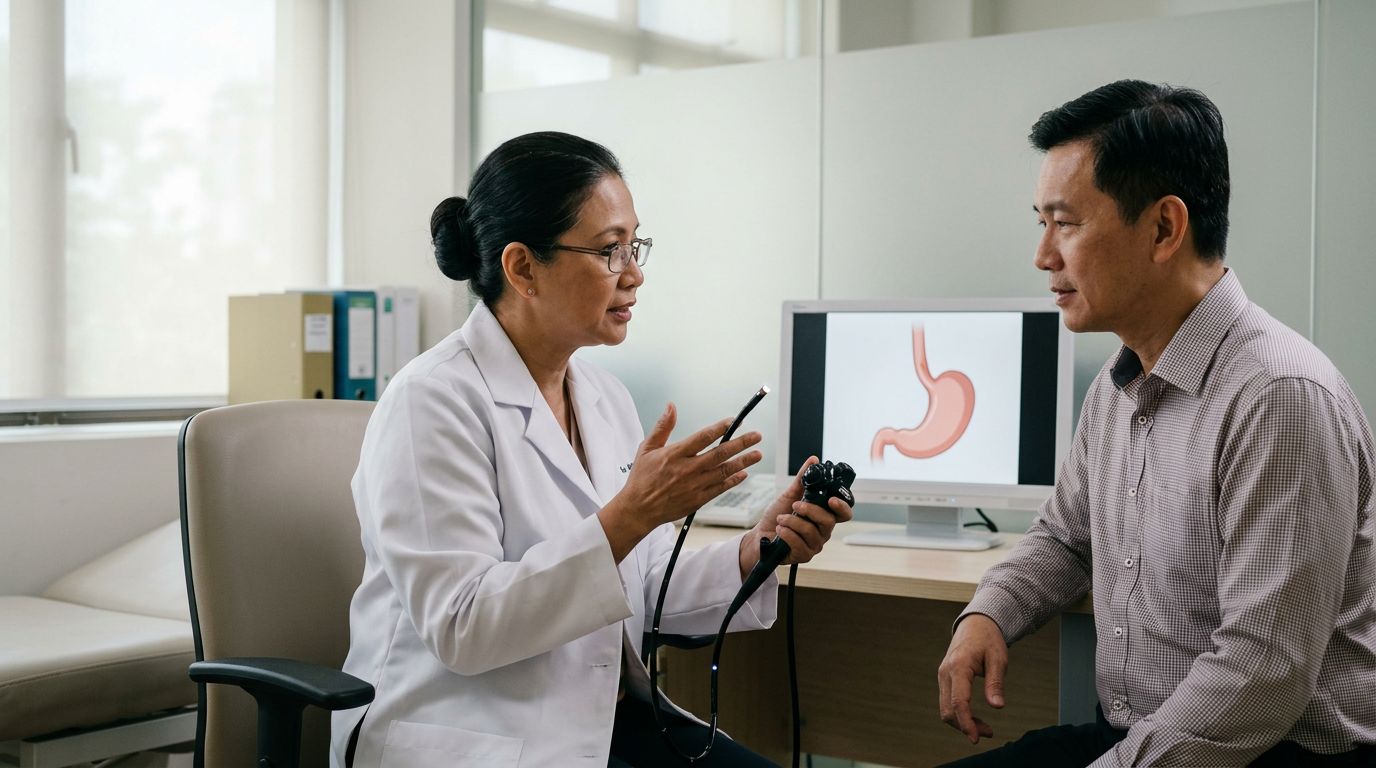
A liver lesion on an ultrasound or an abnormal blood result can leave you searching for answers before your next appointment. Liver cancer diagnosis Malaysia usually involves more than one test, because no single blood test or scan can confirm every case of hepatocellular carcinoma.
Your doctor looks at your symptoms, liver health, blood results, imaging, and sometimes a tissue sample. This combination helps distinguish cancer from conditions such as hepatitis, cirrhosis, benign cysts, or non-cancerous liver growths.
Quick answer: Most people being assessed for liver cancer in Malaysia have blood tests, an abdominal ultrasound, and a contrast CT or MRI scan. A biopsy is sometimes needed, but clear scan findings may be enough in selected cases.
Key Takeaways
- Liver cancer assessment often starts by evaluating liver cancer symptoms, running liver function blood tests, and performing an AFP test alongside an ultrasound scan.
- AFP is a useful tumour marker test, but it cannot diagnose liver cancer on its own.
- Multiphase CT and MRI scans show the size, location, blood supply, and possible spread of a hepatocellular carcinoma or other liver tumour.
- A biopsy for cancer may be needed when scan results do not give a clear answer.
- Your cancer treatment plan depends on the tumour, cancer stages, liver function, biopsy findings, biomarkers, your overall health, and your oncologist’s assessment.
Liver Cancer Diagnosis Malaysia: What Usually Happens First
Liver cancer often develops without clear early warning signs. When symptoms do appear, they can overlap with many other liver and digestive conditions. You may notice persistent abdominal pain, a swollen abdomen, reduced appetite, unusual weight loss, fatigue, nausea, or jaundice.
However, these liver cancer symptoms do not automatically mean you have cancer. Hepatitis B or C, non-alcoholic fatty liver disease, gallstones, liver cirrhosis, and infections can cause similar changes. Your doctor will therefore ask about your medical history, alcohol use, medications, family history, previous hepatitis infection, and prior liver scans.
People with chronic hepatitis B, hepatitis C, or liver cirrhosis may have regular cancer screening even when they feel well, especially if they have known risk factors. Many Malaysian hospitals advise ultrasound surveillance with an AFP blood test every six months for people at higher risk to support early detection. A Malaysian liver cancer overview explains why AFP may rise in primary liver cancer but can also increase with hepatitis and cirrhosis.
The first oncology consultation may happen after a GP, hepatologist, gastroenterologist, or surgeon finds something unusual. Bring all previous scan discs, blood test results, referral letters, medication lists, and hepatitis records. Having the full timeline can prevent repeat tests and help the cancer specialist compare changes over time.
If you were told there is a “spot” or “mass” in the liver, try not to draw conclusions from that wording alone. A lesion describes an area that looks different on an image. It may be harmless, cancerous, or require further scans before anyone can tell.

Blood Tests Used in a Liver Cancer Workup
Blood tests help your doctor assess both the possible tumour and the condition of your liver. They cannot replace imaging. Instead, they add important detail to the picture.
The best-known tumour marker test is alpha-fetoprotein, which is usually called alpha-fetoprotein or AFP. Some liver cancers produce AFP, so a raised level can prompt more investigation. Yet AFP can remain normal when cancer is present. It can also rise because of active hepatitis, cirrhosis, pregnancy, and other causes.
For that reason, a normal AFP result should not make you ignore a suspicious scan. Similarly, a high AFP result needs interpretation alongside your symptoms, liver history, and imaging. The National Cancer Institute’s liver cancer diagnosis guidance notes that doctors use tests of the liver and blood together, rather than relying on one result.
Your clinician may also check your overall health and underlying risk factors by requesting:
- A full blood count to check red cells, white cells, and platelets.
- Liver function tests, including bilirubin, albumin, and liver enzymes.
- Kidney function tests before contrast scans or certain treatments.
- Blood-clotting tests, because liver disease can affect clotting and may matter before a biopsy or cancer surgery.
- Hepatitis B and hepatitis C tests, if your status is unknown or needs updating.
In some centres, your doctor may discuss additional markers such as PIVKA-II. These results still need careful interpretation. They are not a shortcut around proper scans.
You may see terms such as “deranged LFTs” or “low albumin” on your medical report. These describe liver-related blood results, not a confirmed cancer diagnosis. A medical report review with the doctor who ordered the test is the safest way to understand what needs attention and what can wait.
Ultrasound, CT, MRI, and PET Scans for Liver Cancer
An ultrasound scan is often the first imaging choice. It is painless, does not use radiation, and can show whether there is a lump, fluid in the abdomen, or signs of chronic liver disease. This procedure can identify an area that needs closer inspection, but it may not provide enough detail to name the lesion.
If the ultrasound raises concern, your doctor will often arrange a computed tomography scan for cancer assessment or a magnetic resonance imaging scan for cancer assessment. Both usually use contrast material to make blood vessels and liver tissue easier to see.
A multiphase CT scan takes images before and after contrast reaches the liver. Liver tumours have characteristic blood-flow patterns. Radiologists study whether a lesion takes up contrast quickly, then loses it compared with nearby liver tissue. They also assess its size, number, position, and relationship to blood vessels.
MRI may give even more detailed information about certain lesions. It can be especially helpful when CT results are unclear, when the liver contains several nodules, or when doctors need a sharper view of bile ducts and blood vessels. The Beacon Hospital explanation of liver cancer scans describes how CT and MRI help assess tumours and surrounding blood vessels.
| Test | What it can show | What to expect |
|---|---|---|
| Ultrasound | A liver mass, fluid, or chronic liver changes | No radiation, usually quick |
| Multiphase CT | Tumour pattern, size, vessels, nearby organs | Contrast injection and brief radiation exposure |
| MRI | Detailed liver tissue and vessel images | Longer scan, sometimes contrast injection |
| PET scan for cancer | Possible spread in selected situations | Not routinely required for every primary liver cancer |
PET/CT scans are not the standard first test for every suspected primary liver cancer. Your team may use one if they need to assess possible spread elsewhere, or if another cancer is being considered. The scan that is most appropriate depends on the question your doctor needs answered.
Tell the radiology team if you have kidney disease, a previous contrast reaction, diabetes medication, metal implants, claustrophobia, or possible pregnancy. You may need specific preparation, blood tests, or a different type of scan.
When a Biopsy and Pathology Report Are Needed
A biopsy for cancer involves taking a small sample of tissue from the suspicious area. A pathologist examines it under a microscope to determine whether cancer cells are present and, if so, what type they are.
For some people with cirrhosis or long-term hepatitis B, a liver lesion with classic features on a high-quality multiphase CT or MRI can be diagnosed without a biopsy. In other cases, the images are not typical enough. A biopsy can then clarify whether the lesion is hepatocellular carcinoma, bile duct cancer, a non-cancerous growth, or secondary liver cancer that started elsewhere and spread to the liver.
Doctors consider the potential benefits and risks before recommending a biopsy. The location of the lesion, bleeding risk, liver function, and whether the result would change the treatment plan all matter. You may need clotting tests and instructions about blood-thinning medicines beforehand.
Ask for a copy of your pathology report once it is ready. A pathology report review can clarify the tumour type, grade, and any tests already performed. Some advanced cancer treatment decisions also depend on biomarker testing or genetic testing for cancer. These tests look for features in tumour cells that may affect whether targeted therapy, immunotherapy, or a clinical trial is worth discussing.
A liquid biopsy uses a blood sample to look for tumour-related genetic material. It may be useful in selected cases, but it does not replace standard imaging or tissue pathology when those are needed.
Cancer Staging and Liver Cancer Treatment Options
Cancer staging describes how far cancer has spread and helps your team discuss realistic cancer treatment options, including the approach for advanced cases like stage 4 liver cancer. When dealing with hepatocellular carcinoma, staging is not only about tumour size. Doctors also consider the number of tumours, blood-vessel involvement, spread outside the liver, daily functioning, and the health of the remaining liver.
Your multidisciplinary team may include a hepatobiliary surgeon, clinical oncologist, medical oncologist, radiologist, interventional radiologist, pathologist, hepatologist, and specialist nurses. Their recommendations should fit your scan results, biopsy results if available, biomarkers, medical history, hospital availability, and personal priorities.
For tumours confined to the liver, options may include a partial hepatectomy to remove part of the liver, liver transplantation in carefully selected patients, or radiofrequency ablation. Radiofrequency ablation uses heat, cold, or another energy source to destroy a small tumour without removing a large section of liver.
When surgery or ablation is unsuitable, doctors may discuss liver-directed treatment. Transarterial chemoembolization blocks the tumour’s blood supply while delivering chemotherapy through an artery. Y-90 radioembolization, also called SIRT treatment, uses tiny radioactive beads delivered into liver arteries. These procedures need assessment by an experienced interventional radiology team.
Systemic liver cancer treatment may include immunotherapy, targeted drug therapy, and sometimes chemotherapy. Radiation therapy can also have a role for selected tumours. Proton beam therapy, TrueBeam radiotherapy, MR Linac treatment, and other specialised equipment are not automatically better choices. Their suitability depends on where the tumour sits, whether it has spread, liver function, prior treatments, and local service availability.
A treatment recommendation should explain both the cancer stage and how well your liver is working. Two people with similar-looking tumours may need different care.
Second Opinions, Hospital Choices, and Questions to Ask
A cancer second opinion can be helpful if your diagnosis feels unclear, your treatment plan is complex, or you are considering major surgery, liver transplantation, TACE, Y-90 radioembolization, or systemic treatment. It does not mean you distrust your first doctor. It gives you another specialist’s view of the scans, pathology, and proposed plan.
When you compare cancer hospitals, focus on practical details. Ask whether the hospital has hepatobiliary surgery, interventional radiology, medical oncology, radiation oncology, pathology support, and multidisciplinary case discussions. You can also ask how quickly the team can review your scan and arrange the next necessary test.
If you are considering overseas cancer treatment, ask whether a remote medical report review can help you understand the proposed plan before travelling. Coordination support can help gather records and identify suitable services, but it cannot diagnose you or replace an in-person oncologist assessment.
Cancer treatment cost varies widely. Costs depend on whether you use a public or private cancer hospital, the scans required, ward class, specialist fees, medicines, procedures, complications, and the number of treatment cycles. Ask for a written cancer treatment quotation that separates consultation fees, scans, procedures, medicines, admission charges, and follow-up care.
Bring these questions to your oncology consultation:
- What does my scan show, and is the diagnosis confirmed?
- Do I need a biopsy, pathology report review, or biomarker testing?
- What is my cancer stage, and how is my liver function affecting the plan?
- Which liver cancer treatment options suit my case, and what are their likely goals based on the stage of the disease?
- Is there a waiting time that could affect when treatment starts?
- Should I seek a cancer specialist second opinion before deciding?
Writing down answers, or bringing a family member, can make the discussion easier to revisit later.
Frequently Asked Questions
Can a blood test diagnose liver cancer?
No. AFP and other blood tests can raise concern or support a diagnosis, but they cannot confirm liver cancer alone. Your doctor needs imaging and may need a biopsy.
Is an ultrasound enough to confirm liver cancer?
An ultrasound scan can find a suspicious lesion, but CT or MRI usually provides the detail needed for diagnosis and cancer staging. Some people also need a biopsy.
Does a normal AFP level mean I do not have liver cancer?
No. Some people with liver cancer have normal AFP levels. Your doctor will interpret AFP alongside scans, liver tests, symptoms, and your medical history.
How long will it take to get a diagnosis?
Timing depends on scan availability, whether contrast imaging is needed, and whether a biopsy is required. Ask your clinic when each result is expected and who will explain the findings to you.
Should I start treatment immediately after a liver cancer diagnosis?
Your team may need to complete staging, assess liver function, and review pathology before recommending treatment for hepatocellular carcinoma. Ask what needs to happen first and whether any waiting period is medically acceptable in your situation.
A Clear Diagnosis Supports Better Decisions
A possible liver cancer diagnosis can feel overwhelming, yet the next step is usually practical: collect the right blood results, complete the appropriate scans, and ask for an explanation you understand. Getting a liver cancer diagnosis Malaysia is strongest when doctors interpret every result together rather than relying on a single number or image.
Keep copies of your reports and scan discs, ask direct questions, and request a second opinion if you need more confidence before starting treatment.
This content is for general information only. It may not be fully verified or applicable to every patient and should not be treated as medical advice, diagnosis, or treatment recommendation. You must consult your own doctor, oncologist, or qualified healthcare professional before making any medical decision. SureLah does not take responsibility for medical decisions, treatment outcomes, doctor recommendations, hospital decisions, or patient actions based on this article.